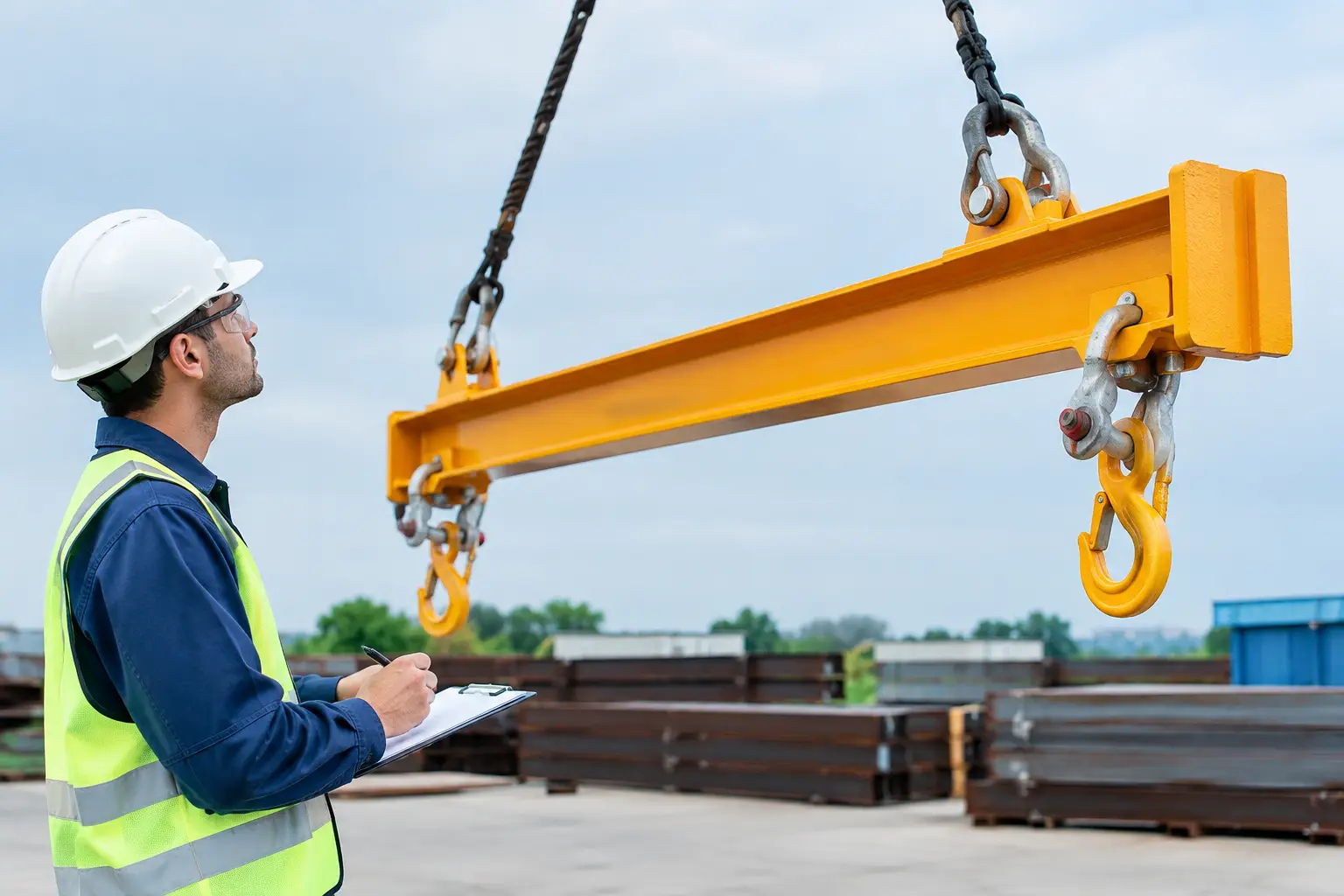
A lifting link can look serviceable right up to the point it is not. Unlike a visibly damaged sling or a bent hook, early deterioration in a master link, coupling link, or chain connection can be easy to miss during a busy shift. Knowing when to replace lifting links is therefore not a matter of appearance alone. It requires a disciplined assessment of condition, dimensions, use history, and traceable certification.
For lifting supervisors, vessel operators, and maintenance teams, the decision should always favor removing doubt before a critical lift. A replacement component is a modest cost compared with the consequences of dropped load, equipment damage, downtime, or injury.
What Counts as a Lifting Link?
The term lifting link may refer to several load-bearing components: master links at the top of chain slings, intermediate links, connecting links, welded links, pear-shaped links, and links used in multi-leg assemblies. Each has a defined working load limit, material grade, manufacturing method, and intended loading direction.
These details matter. A replacement link must not simply fit the chain physically. It must be compatible with the sling assembly, correctly rated for the configuration, and supplied with the required identification and documentation. Substituting an unverified hardware-store item, or mixing components of uncertain grade, can compromise the entire assembly even if the link appears strong enough.
When to Replace Lifting Links Immediately
Any lifting link with a reject condition should be removed from service at once, tagged to prevent reuse, and assessed by a competent person. Do not attempt to straighten, weld, heat, or otherwise repair a load-bearing link unless the manufacturer specifically authorizes a controlled repair process. In most cases, replacement is the correct action.
The following conditions require immediate attention:
- Cracks, fractures, gouges, sharp nicks, or evidence of weld damage
- Bending, twisting, stretching, flattening, or an altered link shape
- Excessive wear at the crown, bearing points, or contact areas
- Heat discoloration, arc strikes, corrosion pitting, or chemical attack
- Missing, illegible, or non-traceable identification and certification
- Unauthorized modification, including grinding, drilling, or field welding
A crack is an automatic reject condition regardless of its size. Surface cracks may develop from fatigue, shock loading, poor side loading, or environmental exposure. They are not cosmetic defects. A link that has been bent or elongated may also have suffered a change in material properties that cannot be confirmed by visual inspection alone.
Measure Wear, Do Not Judge It by Eye
Wear commonly develops where a link bears against a hook, shackle, chain, or another steel component. On chain sling assemblies, wear can be concentrated on the inside radius of a master link or at the connection between a coupling link and chain. This loss of section reduces strength precisely where the load is transferred.
Inspection should include measurement against the manufacturer’s original dimensions and applicable standards. As a practical rule, a component that has lost more than the allowable amount of its original diameter or thickness must be removed from service. The permitted limit is not universal. It depends on the component type, sling grade, manufacturer instructions, and governing standard.
For that reason, teams should retain the original product data and inspection criteria with the sling record. If original dimensions are unavailable, or the link cannot be positively identified, treating it as unserviceable is generally the safer decision. A competent inspector can determine whether further evaluation is appropriate, but uncertainty is not a basis for returning hardware to lifting duty.
Deformation Tells a Story
A distorted link is often evidence of an event, not ordinary aging. Overloading, shock loading, side loading, forcing a link over an incompatible hook saddle, or incorrect sling angles can permanently alter its shape. Look for an increased opening, a narrowed crown, asymmetric legs, twists, or contact marks that show the link was loaded against an edge.
Even slight deformation deserves investigation. The link may have been subjected to forces beyond its intended design, while the underlying cause may still be present in the lifting method. Replacing the component without correcting sling geometry, hook selection, load control, or handling practice invites a repeat failure.
Heat, Corrosion, and Marine Exposure Change the Decision
Marine, port, and offshore environments place additional demands on lifting hardware. Salt spray, standing water, cargo residues, chemicals, and long periods of outdoor storage can initiate corrosion in areas that are difficult to inspect. Pitting is particularly serious because it creates local stress concentrations rather than uniform material loss.
Heat exposure is another concern. Bluing, straw-colored staining, burned paint, weld spatter, and arc strikes may indicate that the component has been exposed to temperatures or electrical activity that affect its mechanical properties. Do not assume that a link remains suitable because it has not visibly melted or severely distorted.
Cleaning a link can improve inspection visibility, but it does not restore lost metal or remove a reject condition. Likewise, repainting must never be used to conceal corrosion, damage, or identification marks. For assemblies used in harsh service, more frequent inspection is often justified even where the formal periodic interval has not yet arrived.
Inspection Frequency Depends on Service Severity
There is no fixed calendar date that answers when to replace lifting links. Replacement is condition-based, but the opportunity to detect damage depends on inspection frequency. A properly managed program uses three levels of control: pre-use checks by the user, frequent documented inspections based on service conditions, and periodic inspections by a competent person.
A link used occasionally in controlled indoor maintenance will face different risks from one used daily in shipyard lifting, offshore support, cargo handling, or corrosive process environments. High-cycle use, abrasive contact, dynamic lifting, exposure to weather, and repeated rigging changes all increase the likelihood of wear or damage.
Pre-use checks should be practical and focused. Confirm that the link is correctly matched to the assembly, the identification is present, the shape is normal, and there are no visible cracks, distortion, or severe corrosion. If a concern is found, stop and quarantine the sling or component. The time saved by proceeding is rarely worth the risk created.
Documentation Is Part of Fitness for Service
A lifting link may appear intact but still be unsuitable for use if its origin, rating, or inspection status cannot be verified. Traceability connects the component to its working load limit, material grade, manufacturer, test certificate, and assembly record. This is especially relevant when chain slings are repaired, reconfigured, or returned to service after an incident.
For controlled lifting operations, records should show the equipment identification, inspection date, inspector, condition findings, and any action taken. When a link is replaced, the revised assembly should be documented and, where required, proof tested and certified before release. The level of documentation should match the application and site requirements, but the principle is consistent: the equipment must be identifiable and its suitability demonstrable.
C&C International can supply lifting components and chain sling assemblies configured to specification, with load-test certification and supporting documentation where required. For unusual configurations, the right approach is to verify the full assembly rather than treating one replacement link as an isolated purchase.
Replace the Link, Then Review the Lift
When a lifting link is condemned, the next question should be why it deteriorated. A worn link may point to incompatible connection hardware. A stretched or bent link may indicate overload, poor sling angle, snagging, or uncontrolled load movement. Repeated corrosion may show that storage and preservation practices need attention.
Replacement restores the component. Reviewing the cause protects the next lift. Use correctly rated, traceable hardware; keep inspection records current; and remove suspect lifting links from service before they become the weakest point in the load path.