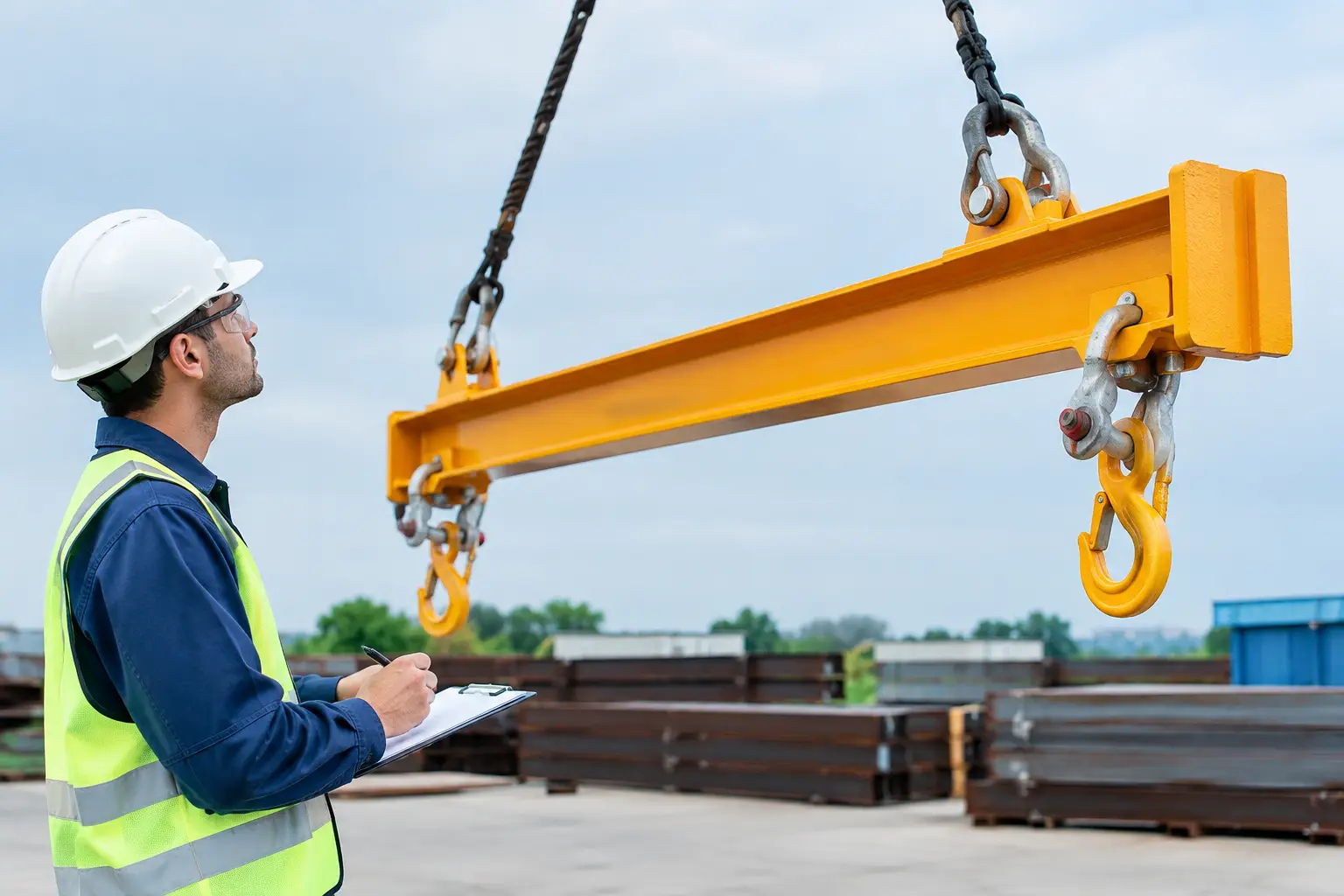
A chain sling can look serviceable from several meters away and still contain damage that changes its lifting capacity. One elongated link, a gouge at a bearing point, or a bent hook can turn a routine lift into a dropped-load event. Chain sling inspection is therefore not a paperwork exercise. It is the control that confirms a sling remains fit for the load, hitch, environment, and lifting method planned for the job.
For lifting supervisors, vessel operators, and maintenance teams, the objective is straightforward: identify damage before the sling is connected, isolate questionable equipment immediately, and retain records that demonstrate control of the lifting gear inventory. The detail matters because alloy chain slings are commonly used where loads are heavy, access is restricted, and downtime carries a real operational cost.
Why chain sling inspection requires a disciplined process
Alloy chain slings are built for demanding work, including fabrication yards, cargo handling, offshore support, plant maintenance, and construction lifting. Their toughness can create a false sense of security. Chain is highly durable, but it is not immune to overload, side loading, shock loading, chemical attack, heat exposure, and damage from sharp load edges.
A proper inspection program has three levels. The operator performs a visual check before use and during the shift when conditions change. A designated person completes documented periodic inspections at intervals set by the applicable standard, operating conditions, and company lifting plan. A competent inspector or technical provider assesses slings involved in an overload, impact, suspected heat exposure, or other exceptional event before they return to service.
The inspection frequency should reflect actual use. A sling used occasionally in a controlled warehouse does not face the same risk profile as one working daily around salt spray, welding operations, abrasive deck surfaces, or heavy fabrication. Where regulations, client requirements, or site procedures specify an interval, those requirements govern. In all cases, the manufacturer’s instructions and the sling’s marked working load limit remain central to the decision.
Chain sling inspection starts with identification
Before inspecting the links, confirm that the sling can be positively identified. The identification tag or marking should be legible and securely attached. It should provide the information needed to verify the sling configuration and rated capacity, such as chain size and grade, number of legs, working load limit for relevant hitch types, serial number, and manufacturer or certification reference.
If the tag is missing, unreadable, or inconsistent with the sling assembly, do not rely on memory or visual judgment to assign a capacity. Remove the sling from service until its identity and rating can be verified by an authorized party. A chain sling without traceable identification may be physically sound, but it cannot be properly selected for a controlled lift.
This check also prevents a common field error: using a multi-leg sling at the capacity assumed for a straight vertical lift, despite the increased leg angle. As the angle from vertical decreases, tension in each leg rises. The sling tag, lift plan, and rigger’s selection must all align with the actual hitch and geometry.
What to examine on chain links and fittings
Lay the sling out where each component can be seen and handled. Dirt, paint buildup, grease, and marine deposits can hide damage. Clean the area being assessed as needed, but do not use cleaning methods that could alter the surface or conceal a defect.
Examine every chain link, especially the areas that bear against hooks, master links, load edges, and other links. Look for wear, stretching, nicks, gouges, cracks, bent or twisted links, corrosion, weld spatter, arc strikes, and signs of unauthorized repair. A stretched link may show a visibly longer pitch or an opening that differs from adjacent links. This can indicate overload, and it requires immediate attention.
Wear is not judged by appearance alone. Measure the chain diameter at the most worn point using suitable calipers and compare it with the rejection criteria supplied by the manufacturer and governing standard. A chain that has lost too much material cannot be accepted simply because the surface is smooth or the sling has not yet failed.
Hooks deserve the same scrutiny. Check for throat opening, twist, cracks, damage at the saddle, excessive wear, and proper operation of the safety latch where fitted. The latch is not a load-bearing substitute for correct hook engagement, but it helps prevent unintended disengagement. A hook should seat properly in the load connection and must not be tip-loaded, side-loaded, or forced into an incompatible shackle or pad eye.
Inspect master links, coupling links, shortening clutches, and other fittings for deformation, wear, cracks, and correct assembly. On adjustable leg slings, confirm that shortening components are used only as designed. Do not wrap chain around a load, place a link on a hook tip, or use makeshift attachments to achieve a length adjustment.
Environmental damage can be less obvious
Heat damage and chemical exposure can reduce the properties of alloy chain even when deformation is limited. Discoloration, scale, spatter, melted coating, or a history of exposure to welding heat should trigger a closer assessment. A sling that has been exposed to high temperatures should not be returned to service based only on a visual check.
Corrosion requires judgment. Light surface oxidation may be manageable after cleaning and inspection, while pitting and material loss at critical bearing surfaces can be cause for rejection. Marine work adds another layer of exposure. Salt deposits, trapped moisture, and poor storage accelerate corrosion, particularly at interlink contact points and within hooks or mechanical fittings.
Chemical conditions also matter. Acidic or alkaline exposure, galvanizing processes, or unverified cleaning products may affect chain material or fittings. When the sling has been used outside its intended environment, quarantine it and seek a technical assessment. The cost of replacing a sling is minor compared with the consequences of relying on damaged lifting gear.
When to remove a chain sling from service
Field teams should not attempt to decide whether a serious defect is acceptable for one more lift. A clear quarantine process prevents that pressure from reaching the operator. Remove the sling from service when there is evidence of cracking, deformation, stretched links, excessive wear, damaged or missing identification, hook distortion, faulty latches, unauthorized welding, severe corrosion, or suspected overload or heat damage.
Tag the item clearly as out of service and place it in a segregated area. Do not leave it beside serviceable slings where it can return to the lifting gear rack by mistake. The record should identify the sling, defect found, inspection date, inspector, and final disposition. Depending on the defect and manufacturer approval, the sling may be repaired by a qualified party, proof tested where required, recertified, or permanently destroyed.
Unauthorized field repairs are not acceptable. Welding a link, heating a bent fitting, grinding out a gouge, or replacing a component without an approved repair process can alter the sling’s strength and invalidate its certification. Job-ready lifting assemblies require controlled assembly, correct components, and documentation that matches the equipment supplied.
Build inspections into lift preparation and storage
The strongest inspection system is the one crews can perform consistently under real site conditions. Keep current lifting gear registers available to the users who select equipment. Use a clear status method for inspected, due for periodic inspection, quarantined, and retired slings. For higher-risk operations, include the sling serial number and inspection status in the lift plan or pre-lift briefing.
Storage supports inspection quality. Hang chain slings on racks where they remain off the ground, dry where possible, and protected from vehicle traffic, chemicals, and unnecessary weather exposure. Avoid piling slings together. Tangled assemblies make pre-use checks slower and can create nicks or unintended damage when crews pull a sling free.
Documentation should be practical rather than decorative. A useful record links the physical sling to its certificate, rated capacity, inspection history, repairs if any, and retirement decision. For project and marine work, that traceability helps the lifting team demonstrate compliance during client audits, vessel inspections, and incident investigations.
C&C International can support planned inspection programs and urgent replacement needs with correctly configured chain sling assemblies, certified load testing, and documentation matched to the application. When a sling is removed from service, prompt access to a verified replacement helps protect both the crew and the work schedule.
A good lifting operation does not depend on a sling surviving one more use. It depends on the team having the discipline to stop, inspect, verify, and replace equipment before the next lift makes a hidden defect visible.