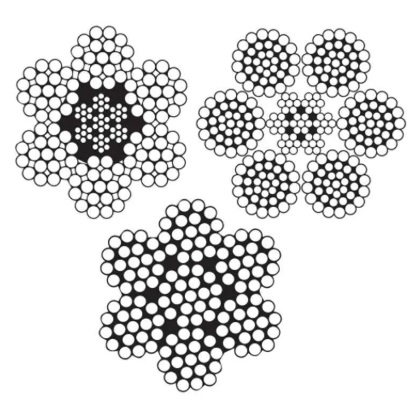
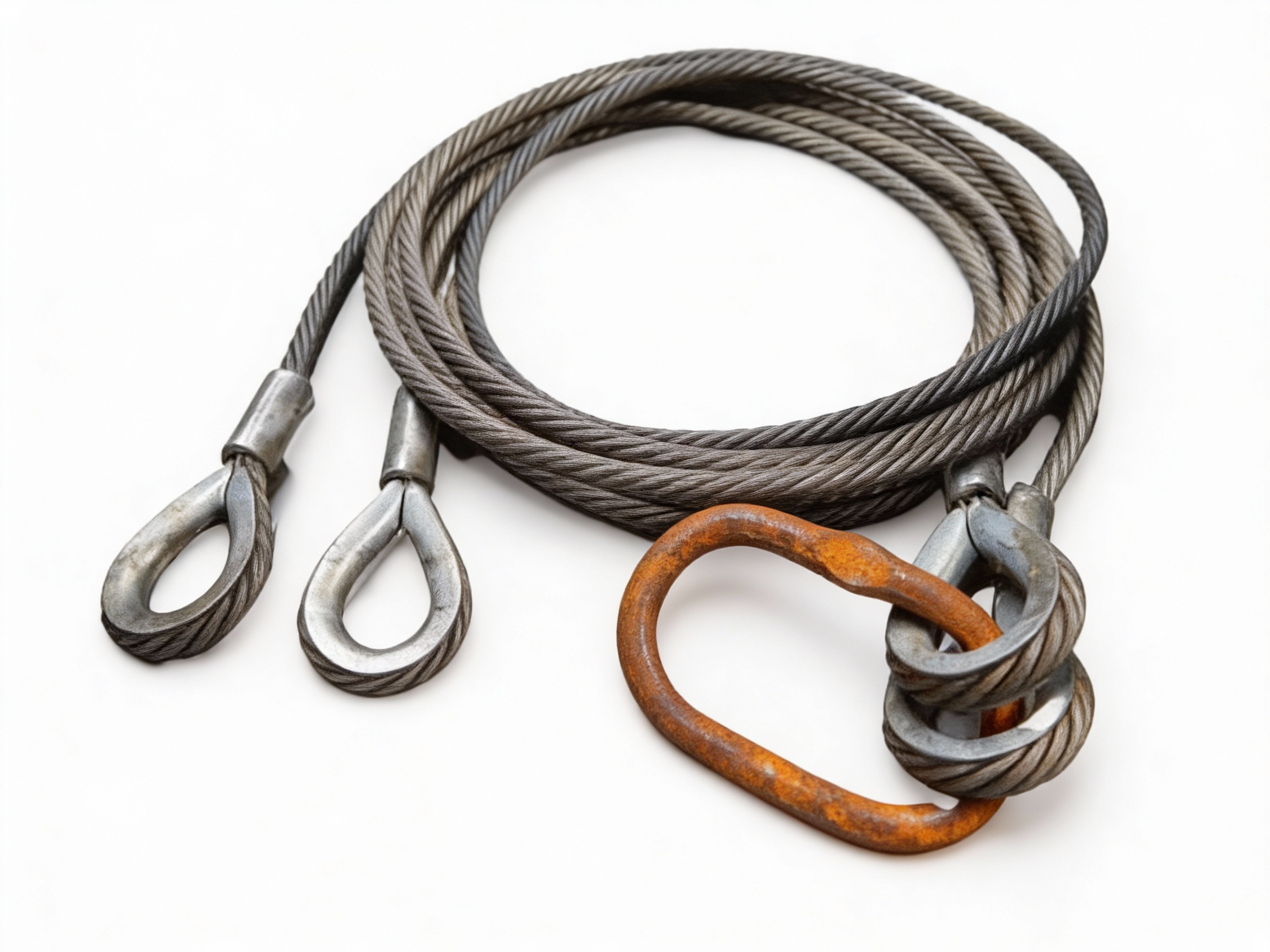
C&C supplies steel wire rope in Singapore, including 6×29 and 6×31 IWRC, compacted, rotation-resistant (19×7) and multi-strand compacted ropes, plus steel wire rope sling assemblies for lifting, cranes and marine use.
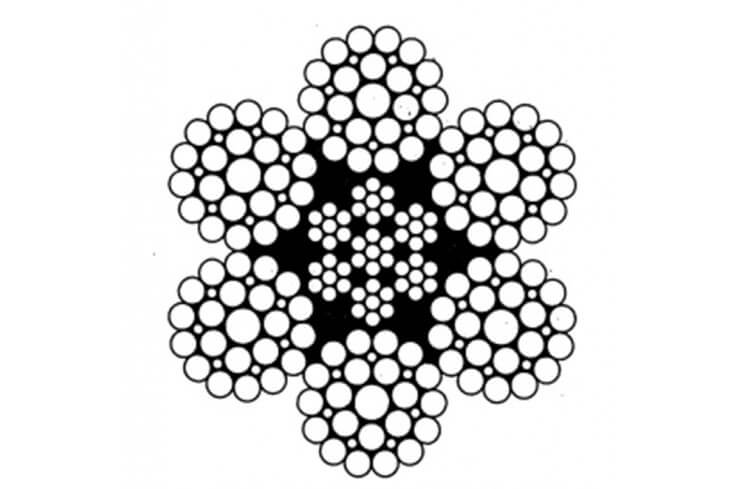
A wire rope is described by its number of strands and wires per strand. A 6×31 rope, for example, has 6 strands of 31 wires each. Ropes with more, finer wires are more flexible and suit sheaves and drums, while ropes with fewer, larger wires resist abrasion better. The core matters too: an IWRC (independent wire rope core) gives higher strength and better resistance to crushing than a fibre core (FC).
Rotation-resistant ropes such as 19×7 are built to limit spinning under load, which makes them the usual choice for single-fall hoisting and tall cranes. Compacted ropes have strands pressed to a smoother, denser profile, giving higher breaking strength and better resistance to crushing on multi-layer drums. Plastic-impregnated versions add protection against internal wear and corrosion.
Lifting gear in Singapore must be examined periodically by a MOM-registered Authorised Examiner. C&C can also arrange load testing and inspection.
It describes a rope made of 6 strands with 31 wires in each strand, laid around an independent wire rope core (IWRC).
An IWRC is a small wire rope at the centre, giving more strength and crush resistance. A fibre core is more flexible but weaker and less resistant to crushing.
Use it where the load hangs on a single fall or the lift height is large, because ordinary ropes tend to spin and unlay under load.
Replace a wire rope when broken wires exceed the allowed limit, or when it shows kinks, birdcaging, crushing, heavy corrosion or a noticeable loss of diameter.
A steel wire rope is a robust, flexible lifting and pulling device constructed by twisting multiple steel wires into strands, which are then helically laid around a central core (fiber or steel). Designed for high strength, wear resistance, and durability, they are essential for heavy-duty tasks like crane lifting, mining, and marine applications.
The design of a rope is determined by:
Wire ropes are made of steel wires classified into following tensile strength grades to meet various
requirements according to the applications.
| Right lay: | Clockwise |
| Left lay: | Counter-clockwise |
| Regular lay: | Wires in strands are laid in the opposite direction of the strands and are parallel to the rope axis Ropes with regular lay are easy to use and have higher resistance to crushing than those with lang lay Wires are laid in the same direction as the strands of the rope, and in an angle to the rope axis |
| Lang lay: | Longer lengths of the individual wires are exposed creating higher resistance to wear and improved flexibility Lang lay ropes should only be usedwhere both rope ends are “fixed” and therefore, should not be used with a swivel type terminal |