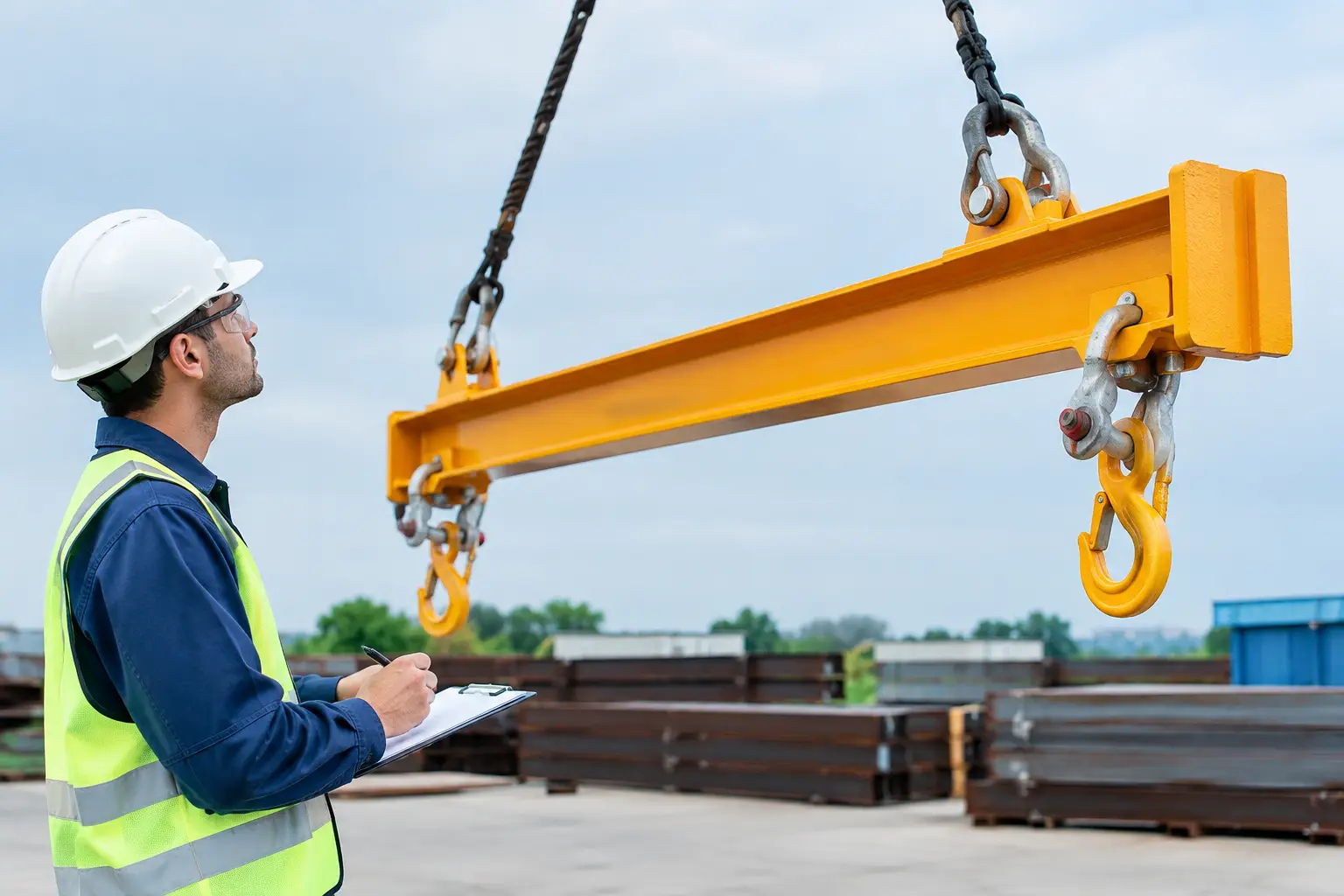
A lifting plan can look complete on paper and still fail at the point of execution. A shackle may carry the right working load limit, a sling may have a current tag, and a hoist may appear serviceable. But when equipment has been repaired, fabricated, modified, assembled into a lifting arrangement, or returned to service after damage, visual checks alone may not establish that it is fit for the intended duty. That is where lifting equipment load testing provides a measurable control before the lift begins.
For vessel operators, lifting supervisors, contractors, and maintenance teams, the objective is not simply to obtain a certificate. It is to confirm that the equipment can carry a defined test load without permanent deformation, malfunction, or other signs of compromised integrity. Done correctly, testing supports safe operations, clearer asset records, and fewer disruptive questions when equipment reaches the worksite.
What Load Testing Actually Proves
Load testing applies a controlled load to lifting equipment or an assembled lifting arrangement under defined conditions. Depending on the equipment type, applicable standard, manufacturer guidance, and client requirement, the test may assess structural capacity, operating function, brake performance, locking action, or the behavior of a completed assembly.
The result is not a blanket guarantee for every future lift. A test does not compensate for overloading, side loading, shock loading, corrosion after testing, poor reeving, or incorrect rigging in the field. It confirms that, at the time of test and under the documented conditions, the item performed as required.
This distinction matters. A 10-ton-rated shackle can be suitable for one connection and unsuitable for another if its pin is bent, its body is side loaded, or its dimensions do not match the sling eye or padeye. Similarly, a proof-tested wire rope sling remains dependent on correct sling angles, edge protection, hitch type, and the actual center of gravity of the load.
When Lifting Equipment Load Testing Is Required
Testing requirements are driven by a combination of regulation, class or marine requirements, project specifications, equipment standards, manufacturer instructions, and site rules. The precise trigger and test load should never be assumed from a generic rule of thumb. The responsible person should verify the governing requirement for the equipment and operation.
In practice, load testing is commonly requested after new fabrication, repair, alteration, or major overhaul. It may also be required before first use, following an incident or suspected overload, after long storage, or as part of a client acceptance process for critical lifting equipment.
Examples include a wire rope sling cut and swaged to a project drawing, a chain sling assembled with hooks and master links, a lifting beam fabricated for a specific load, a repaired hoist, or a cargo net intended for repeated handling. For these items, the test should reflect the final configuration, not merely the individual components that went into it.
Marine and offshore work often adds another layer of scrutiny. Exposure to saltwater, abrasive cargoes, vessel motion, remote work locations, and tight shutdown windows makes traceability especially valuable. If a lifting point, padeye, or custom rigging assembly is difficult to replace offshore, confirming it before mobilization is usually the lower-risk decision.
Proof Testing, Examination, and Inspection Are Different Controls
A common source of confusion is treating all inspection activities as interchangeable. They are not.
A visual examination checks for readily identifiable defects such as damaged threads, excessive wear, cracks, corrosion, distorted components, missing safety latches, damaged labels, or illegible markings. Dimensional checks may confirm throat openings, pin fit, wire rope diameter, chain link condition, or other measurable limits.
A thorough examination goes further by assessing the equipment condition against applicable acceptance criteria. Depending on the item and service history, this may include functional checks and non-destructive testing. It is essential for ongoing maintenance programs.
Load testing is a separate controlled event. It subjects the item to a specified test load and records the outcome. It may be paired with pre-test and post-test inspections, but it should not replace periodic examination. Conversely, a current inspection record does not automatically prove a new or repaired assembly has been tested where testing is required.
Start With the Actual Lift and Equipment Configuration
The most useful test begins before equipment reaches the test bed. The supplier or test provider needs accurate information: the item identification, working load limit, intended configuration, material or component certificates where applicable, governing standard, requested test load, and documentation requirements.
For a custom sling assembly, that means confirming the sling type, number of legs, leg lengths, fittings, terminations, and rated capacity at the intended sling angle. For a lifting beam, it includes the lifting points, load points, beam orientation, connection hardware, and whether the beam is designed for a single load position or an adjustable arrangement.
Small mismatches create large consequences. Testing a two-leg chain sling with different components from the supplied configuration does not validate the delivered sling. Testing a lifting clamp without confirming the plate thickness and material range may overlook the operating conditions that govern its safe use. The test setup must be representative and documented.
A Disciplined Testing Process
A controlled process protects both the equipment and the people carrying out the work. The sequence generally starts with identification and pre-test inspection. Markings, serial numbers, working load limits, component compatibility, and visible condition are checked before force is applied.
The equipment is then installed in a suitable test arrangement using calibrated or verified measuring equipment. Load is applied progressively to the specified value and held for the required period. The operator monitors for abnormal movement, slipping, instability, brake failure, distortion, cracking, or other unacceptable behavior.
After unloading, a post-test examination checks for permanent deformation and confirms that functional components still operate correctly. Results are recorded against the equipment identification. If an item fails, it should be quarantined and clearly marked to prevent accidental issue or use while the cause is assessed.
The test method depends on the equipment. A chain sling, wire rope sling, shackle, hook, hoist, spreader beam, or lifting clamp each has different load paths and potential failure modes. A test provider should use fixtures that do not introduce unintended bending or side loading, particularly when testing hardware designed to work in straight-line tension.
Documentation Is Part of the Deliverable
For safety-critical equipment, a verbal confirmation that an item has been tested is not enough. The documentation should allow the customer, site team, or auditor to match the record to the physical item without uncertainty.
A useful load-test certificate typically identifies the customer, equipment description, unique serial number or tag, working load limit, test load, test date, test method or applicable reference, result, and authorized signatory. Where required, supporting records may include component certificates, fabrication details, inspection findings, calibration information, photographs, and PE-endorsed documentation.
The appropriate documentation level depends on the job. Routine general lifting gear may require a straightforward certificate and traceable tag. A bespoke lifting frame for a marine project may require design calculations, material traceability, welding records, non-destructive testing, load-test results, and professional engineer review. The key is to establish the documentation package before fabrication or testing, not after delivery deadlines have compressed the process.
Avoid the Shortcuts That Create Site Delays
The fastest route to a missed lift is discovering a documentation or configuration gap at the gate. Procurement teams can reduce this risk by specifying the required working load limit, standard, test requirement, marking, and certificate format in the purchase request. Operations teams should confirm whether the equipment will be used as a standalone item or as part of an assembled system.
Do not select equipment solely by capacity. Connection geometry, sling angle, environmental exposure, material compatibility, handling method, and inspection accessibility all affect suitability. A stainless-steel fitting may be appropriate for a corrosion-sensitive application, while an alloy steel component may better suit another lifting duty. The correct choice depends on the engineered application, not appearance.
It is also prudent to separate urgent supply from rushed acceptance. Fast turnaround is valuable, particularly for vessel calls and shutdown work, but testing still requires the right fixture, load path, competent personnel, and record review. A capable provider plans these controls into the delivery schedule rather than treating certification as an administrative add-on.
Build Testing Into Procurement and Maintenance Planning
For recurring operations, load testing works best as part of an asset-control system. Give each item a durable identification, retain its certificates with inspection history, and define who reviews expiry dates, repair events, and removal criteria. This is especially helpful where gear moves between vessels, yards, warehouses, and subcontractor teams.
C&C International supports this approach by supplying equipment configured to project requirements, including wire rope processing, sling assembly, certified load testing, and documentation for job-ready delivery. Where a custom arrangement is involved, early technical review helps align the equipment, test method, and certificate package with the actual lifting task.
Before the next critical lift, ask a practical question: can the crew identify the gear, confirm its condition, match it to the lift plan, and produce the record that proves its readiness? If the answer is not clear, resolve it before the load leaves the ground.