TL;DR
For marine rigging in Singapore, specify 316 stainless steel wire rope, pick 1×19 for low-stretch standing rigging and 7×19 wire rope for anything that runs over a sheave, and size from the published minimum breaking load divided by your design factor and termination efficiency.
Even 316 suffers crevice corrosion in warm seawater, so inspect at terminals first, where failures start.
Choosing stainless steel wire rope for marine work comes down to three decisions that buyers often make separately when they should make them together: the grade, the construction and the strength margin after termination. Get the grade wrong and the rope pits inside the swage; get the construction wrong and it fatigues over a sheave or stretches on a stay; get the margin wrong and a correctly specified rope fails at a fitting. This guide covers all three with published data, then the inspection and procurement checks that matter in Singapore’s yards and anchorages.
Is 304 or 316 Stainless Steel Wire Better in Seawater?
316 is the correct choice for anything exposed to salt spray or splash. The difference is molybdenum. According to the British Stainless Steel Association, 304 (1.4301) has a pitting resistance equivalent number (PREN) of 17.5 to 20.8, while 316 (1.4401), with 2.0 to 2.5 percent molybdenum, rises to 23.1 to 28.5. BSSA adds a caveat worth repeating to any client: PREN ranks grades but cannot predict whether a grade suits a given application.
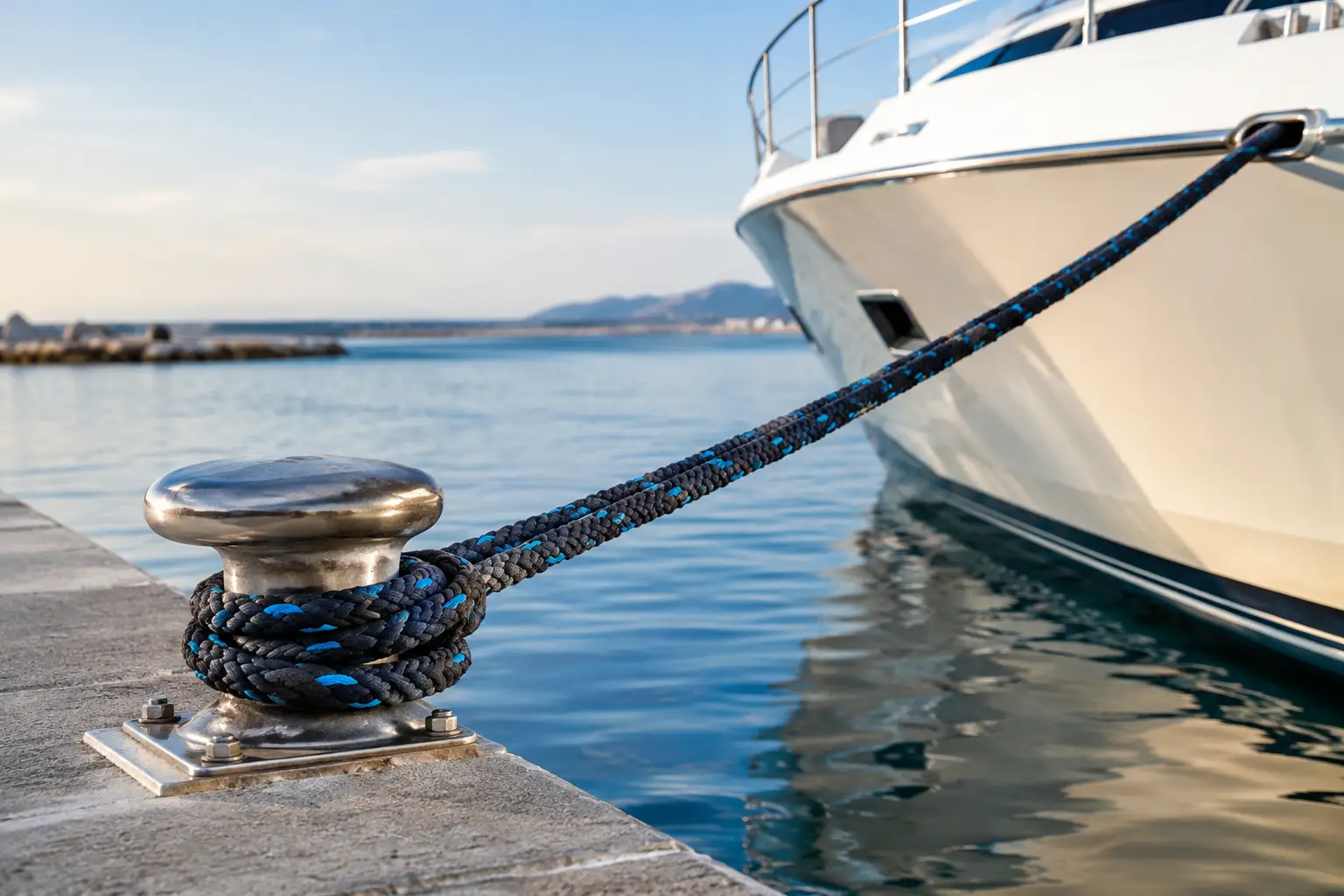
That caveat matters in the tropics. The Australian Stainless Steel Development Association states that “crevice corrosion can be expected in grade 316 at temperatures above 10-15°C in seawater, thus making it unsuitable for immersed applications where crevices exist.” Singapore’s seawater is far warmer than that all year, so 316 stainless steel wire rope belongs above the waterline, washed by rain, not permanently immersed. 304 stainless steel wire is acceptable for indoor or freshwater-washed fittings only. Chloride also concentrates where salt dries and cannot be rinsed, which is exactly inside swaged sleeves and under thimbles.
1×19 vs 7×7 vs 7×19: Which Construction Fits the Job?
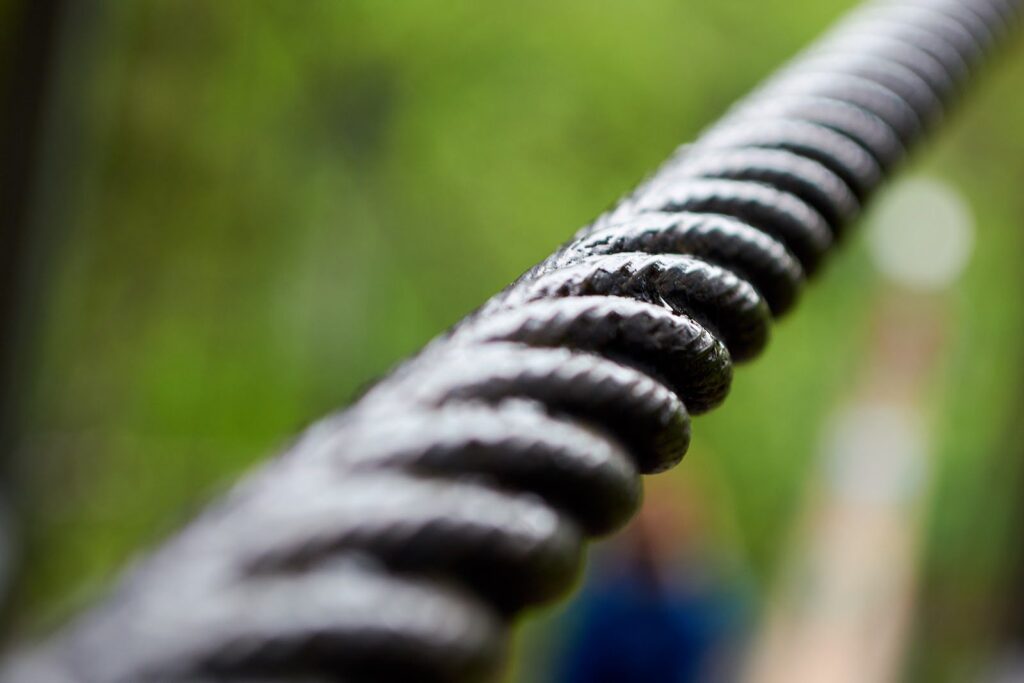
Use 1×19 for standing rigging and stays, 7×7 for moderate flexing such as lifelines and control lines, and 7×19 wire rope for running rigging, winch lines and anything bent around a sheave. More wires per strand means more flexibility and fatigue life over pulleys, but also more constructional stretch and lower breaking load at the same diameter.
| Dia. (mm) | 1×19 MBL (kN) | 7×7 MBL (kN) | 7×19 MBL (kN) |
|---|---|---|---|
| 3 | 7.42 | 5.03 | 4.69 |
| 4 | 13.2 | 8.94 | 8.34 |
| 5 | 20.6 | 14.0 | 13.0 |
| 6 | 29.7 | 20.1 | 18.8 |
| 8 | 49.4 | 35.8 | 33.4 |
| 10 | 77.2 | 55.9 | 52.1 |
Source: S3i Group published minimum breaking loads for AISI 316 1×19, 7×7 and 7×19. Always size from your own supplier’s certified figures.
At 6mm, 1×19 carries about 58 percent more than 7×19, but it is stiff, and repeated bending over a small sheave will break outer wires quickly. Our SUS 304/316 wire rope is offered in all three constructions.
How Do You Get From Minimum Breaking Load to a Safe Working Load?
Divide MBL by the design factor, then reduce for the termination. Wire rope slings are commonly built to a 5:1 design factor under ASME B30.9, and that is a sensible floor for any stainless steel cable carrying a load. Termination efficiency then cuts the usable figure: Crosby rates a properly made clipped eye at 80 percent for sizes up to 7/8 inch. Worked example: a 6mm 7×19 316 rope with MBL 18.8 kN, clipped eye, 5:1 factor, gives 18.8 × 0.8 ÷ 5 = 3.0 kN, about 307 kg. Swaged terminals are usually more efficient, but take the figure from the fitting maker in writing rather than assuming 100 percent.
Which Terminations Work Best on Stainless Steel Wire Rope?
For lifting or critical loads, a machine-swaged eye or terminal made and proof-tested by the supplier is the default; our wire rope swaging service covers this. Always use a thimble in a soft eye to keep the bend radius off the wires. Clips are for guy lines and temporary rigging only, as our guide to fitting wire rope clips explains, and they must be stainless too: carbon-steel clips on stainless rope set up galvanic corrosion in marine air.
What Should You Inspect, and When Is a Stainless Rope Finished?
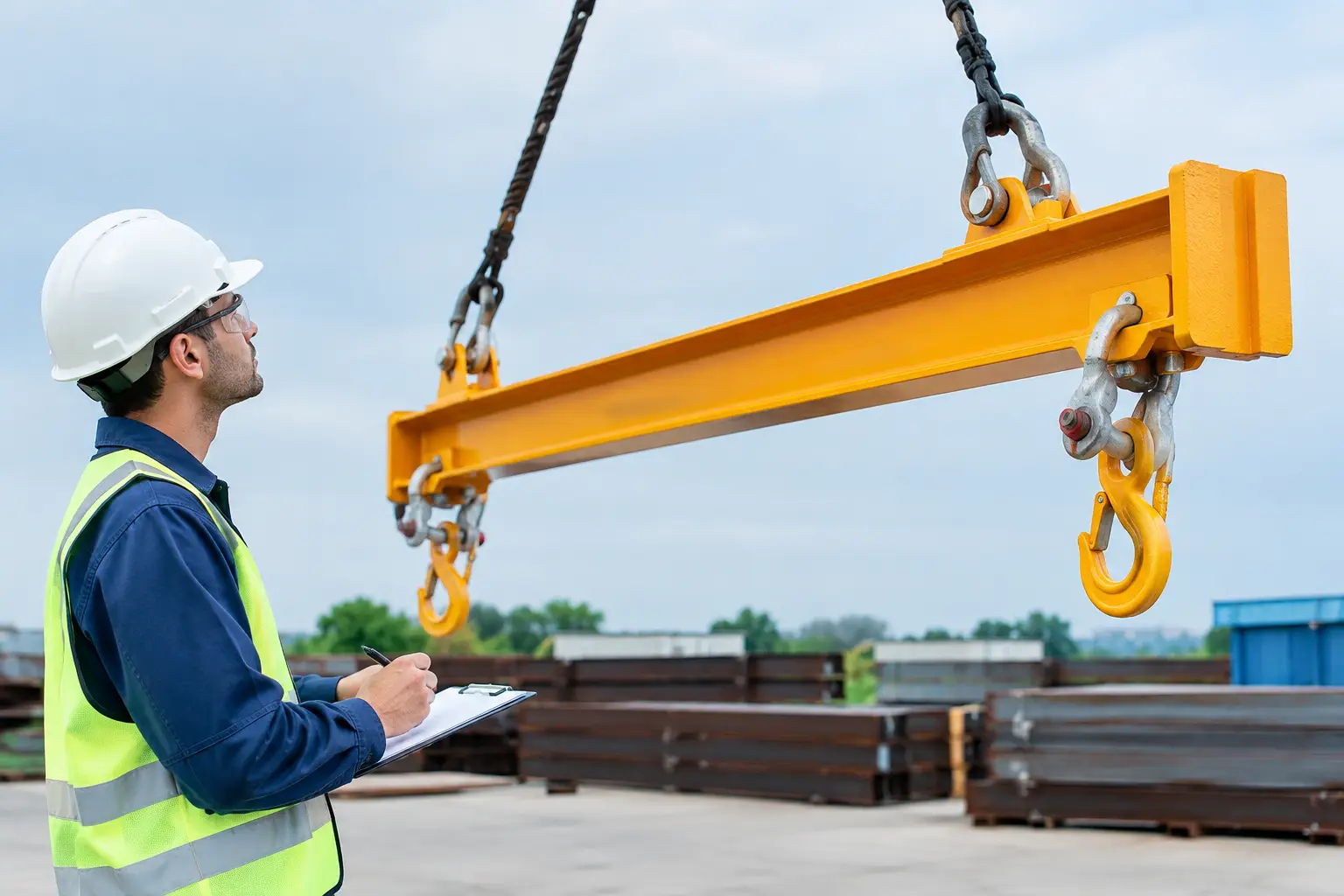
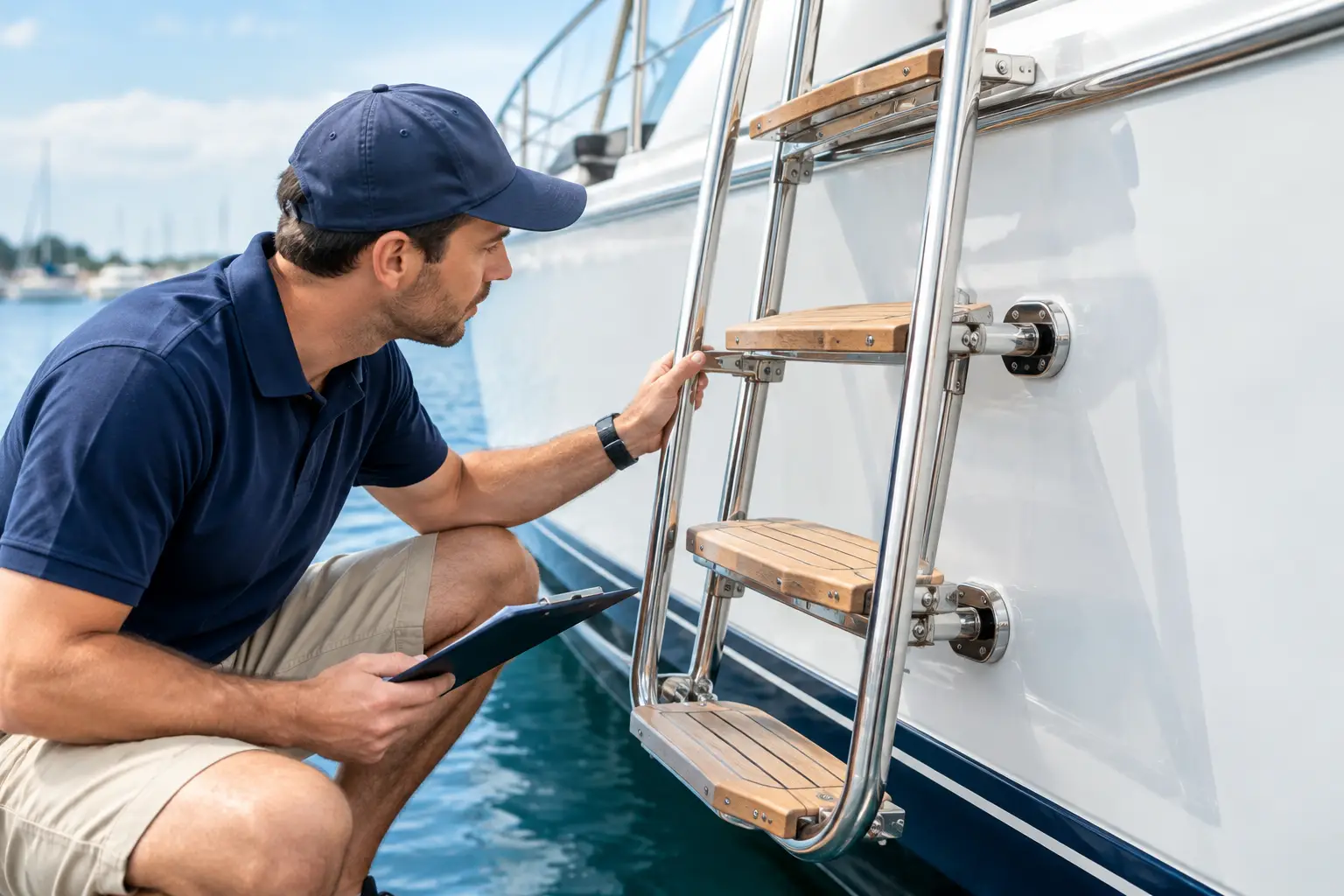
Start at the terminals, because that is where crevice corrosion and fatigue meet. Remove the rope from service for any broken wire on 1×19 standing rigging, since each wire is roughly one-nineteenth of its strength; for rust staining or weeping from a swage sleeve, which signals hidden corrosion or a cracked fitting; for kinks, birdcaging or flattening; and for any visible diameter loss. For running ropes, look hardest where they pass over sheaves. In Singapore, MOM’s updated lifting equipment requirements let occupiers appoint competent persons for periodic lifting gear re-examination, while an Authorised Examiner must inspect after any repair or modification.
What Should a Buyer Check Before Ordering?
Ask for a mill certificate showing the actual grade, not just “SS”, and a rope test certificate stating construction, diameter tolerance and actual or minimum breaking load. Check the grade is 316 (1.4401) where it will see splash zone service, and confirm the construction is written on the delivery note so 7×7 is not substituted for 7×19. A reputable wire rope Singapore supplier will provide both certificates without being chased. For ordinary wire rope Singapore jobs onshore, galvanised steel may be the better buy; stainless earns its price where salt and appearance matter.
Frequently Asked Questions
Is 316 stainless steel wire rope suitable for underwater use?
Not for permanent immersion where crevices exist. ASSDA notes 316 can suffer crevice corrosion in seawater above 10 to 15°C.
Which is stronger, 1×19 or 7×19 wire rope?
1×19, by around 58 percent at the same diameter, but 7×19 wire rope is far more flexible and handles sheaves better.
Is stainless steel cable the same as stainless steel wire rope?
In the trade, yes. “Cable” usually refers to small-diameter rope. Specify grade, construction and diameter regardless of the name.
What design factor should I use?
A minimum of 5:1 for lifting, as in ASME B30.9 for wire rope slings, then reduce further for termination efficiency.
Can I mix stainless rope with galvanised fittings?
Avoid it. Dissimilar metals in salt air corrode the fitting faster. Match stainless with stainless.
Specify the Grade, Construction and Margin Together
The right stainless steel wire rope is a matched decision: 316 for the sea, the construction for the duty, and a breaking load that still covers the load after the design factor and termination. C&C International Trading supplies 304 and 316 rope in 1×19, 7×7 and 7×19, along with matching fittings in our stainless steel range, for Singapore’s marine, offshore and shipyard customers. Talk to our team with your diameter, duty and termination, and we will quote with certificates.