A vessel approaching a berth brings kinetic energy, wind load, current, tide movement, and operational pressure to every contact point. The right marine fender types protect the hull and berth structure by controlling that contact predictably. The wrong arrangement can transfer excessive reaction force into a quay wall, damage a vessel’s shell plating, or create an unreliable berthing interface that slows operations.
Fender selection is not simply a choice between rubber and foam. It is an engineering and operational decision based on vessel class, berthing velocity, berth geometry, environmental exposure, frequency of calls, and the structure’s allowable loads. Procurement teams and marine operators should evaluate the complete system: fender body, frontal panel, facing material, chains, anchors, brackets, and the inspection requirements needed to keep it serviceable.
Marine Fender Types and Their Working Roles
Marine fenders absorb vessel berthing energy and return a controlled reaction force. Their shapes and material construction determine how much energy they can absorb, how they deflect, and how they perform over repeated loading cycles.
Pneumatic fenders
Pneumatic fenders use compressed air within a reinforced rubber body. They are commonly used for ship-to-ship transfers, temporary berths, offshore work, and locations where the berthing point may change. Their floating construction makes them practical where a fixed fender system is not feasible.
These fenders provide a relatively low reaction force for their energy absorption capacity. That characteristic can be valuable when protecting vessels with sensitive hull structures or when accommodating large tidal changes. Net-type pneumatic fenders use chain, tire, or rope netting for external protection, while sling-type designs are used where a cleaner external profile is preferred.
The trade-off is maintenance discipline. Air pressure must be checked, fittings protected, and external reinforcement inspected for wear. Procurement should confirm the pressure rating, construction standard, chain and tire net specification where applicable, and whether the fender is supplied with the required mooring and handling accessories.
Foam-filled fenders
Foam-filled fenders have a closed-cell foam core, reinforced elastomer skin, and often a tough outer coating. Unlike pneumatic units, they do not rely on internal air pressure for performance. They remain functional even if the outer skin is damaged, making them a strong choice for heavy-duty port, terminal, offshore, and tug-assist applications.
They are frequently selected for vessel-to-vessel contact, floating structures, and berths with harsh service conditions. A foam fender can be configured with chain nets, protective sleeves, or integral mounting points depending on its intended use.
Foam-filled construction generally carries a higher initial cost than basic pneumatic alternatives, but the reduced risk of deflation and its resilience in demanding environments can justify the investment. The exact choice depends on whether mobility, repairability, impact frequency, and lifecycle cost are the main operational drivers.
Cone fenders
Cone fenders are high-performance molded rubber units designed for fixed berths. Their conical geometry provides stable deflection and high energy absorption in a compact footprint. They are widely used on container terminals, bulk terminals, oil and gas jetties, and general cargo berths where vessel sizes and berthing conditions require a well-defined design solution.
A cone fender is commonly installed behind a steel frontal panel fitted with low-friction UHMW-PE facing pads. The panel spreads contact loads across the vessel side while the rubber unit manages compression. This arrangement is particularly useful for berths handling vessels with varying hull forms and operational draft.
The fender body alone is not the system. Panel dimensions, chain arrangement, face-pad thickness, anchor design, and corrosion protection must all suit the berth and vessel envelope. A properly selected cone fender system can deliver long service life, but only when the supporting steelwork and anchors are designed for the anticipated loads.
Cell fenders
Cell fenders are also molded rubber compression fenders used in fixed marine structures. Their cylindrical cell shape delivers high energy absorption and can support large frontal panels. They have been used extensively at major commercial berths because they perform reliably under repeated compression and can be configured for substantial berthing loads.
Compared with cone fenders, cell fenders may require more installation space for an equivalent performance duty. However, they remain a proven option for heavy marine applications, especially where an existing berth layout already accommodates the cell geometry.
For refurbishment work, it is often more practical to assess whether the existing cell fender arrangement can be renewed with compatible components than to change the full system geometry. A condition survey should review the rubber element, panel, chains, face pads, mounting bolts, and the concrete or steel structure behind the anchors.
Arch and element fenders
Arch fenders are simple, durable rubber fenders commonly installed directly on quay walls, dolphins, small jetties, workboat berths, and inland facilities. They are suitable where loads are moderate and a straightforward fixed solution is required. Some designs are installed with UHMW-PE facing pads to reduce hull friction during vessel movement.
Element fenders are modular rubber units that can be arranged in different combinations to achieve the required performance. They are useful where space is limited or where a custom frontal panel layout is needed. Both arch and element styles can offer good value for smaller vessels, service berths, and applications where full cone or cell systems would be unnecessary.
Their limitation is capacity. They are not automatically suitable for high-energy approaches or large commercial vessels. Selection must be based on calculated berthing energy, not on the visual size of the fender alone.
Cylindrical, D-section, and square fenders
Cylindrical fenders are versatile and widely used along quay edges, tugboats, barges, pontoons, and smaller vessels. They can be suspended, chained, bolted, or mounted on brackets depending on the application. Their round shape handles contact from different approach angles and is useful where vessel movement along the berth is expected.
D-section and square fenders are frequently used as rub rails and protective strips. They protect hulls and structures from low- to moderate-energy contact, but they are not a substitute for engineered berthing fenders at a commercial quay. Their practical strength is localized protection: landing areas, vessel sides, pontoon edges, lock gates, and workboat interfaces.
Sliding, roller, and tugboat fenders
Sliding and roller fenders reduce friction where a vessel moves vertically or laterally against a structure. They are often used at lock approaches, floating docks, and berths affected by large tidal ranges. The rolling or sliding surface protects both the vessel and the fender system during repeated movement.
Tugboat fenders are built for continuous contact, pushing, escorting, and maneuvering work. Common forms include cylindrical bow fenders, block fenders, W fenders, and M fenders. The correct profile depends on the tug’s bow shape, pushing points, and operating pattern. Installation quality matters as much as rubber selection, particularly where fenders are bolted or bonded to steel hull structures.
Selecting the Right Fender System
The starting point is the berthing assessment. Vessel displacement, approach velocity, berth configuration, environmental conditions, and the probability of simultaneous contact all affect the energy calculation. A fender with high energy absorption may still be unsuitable if its reaction force exceeds what the berth structure or vessel can accept.
Operators should also consider vessel variation. A berth serving one regular vessel class can use a tightly optimized configuration. A multipurpose berth handling tugs, supply vessels, bulk carriers, and project cargo vessels needs a broader operating envelope. Frontal panel elevation and width should account for tidal range, freeboard changes, hull curvature, and the potential for off-center contact.
Material exposure is another deciding factor. Tropical heat, UV exposure, seawater, abrasion, hydrocarbons, and floating debris affect service life. Steel panels, chains, brackets, and anchor hardware need an appropriate corrosion-protection strategy. Face pads should be selected for wear resistance and low friction, while allowing practical replacement during planned maintenance.
Documentation, Installation, and Inspection
For safety-critical berthing equipment, traceability should be part of the purchase scope. Request dimensional drawings, performance curves, material details, installation requirements, and inspection guidance. For pneumatic fenders, confirm the applicable test and construction documentation. For fixed systems, verify load paths through the panel, chains, anchors, and supporting structure.
Installation errors can shorten the life of an otherwise suitable fender. Misaligned panels, incorrect chain tension, unsuitable anchor embedment, and poor weld preparation can create concentrated loads and early failure. Site measurement and coordination with civil, marine, and steelwork teams are particularly important during berth upgrades.
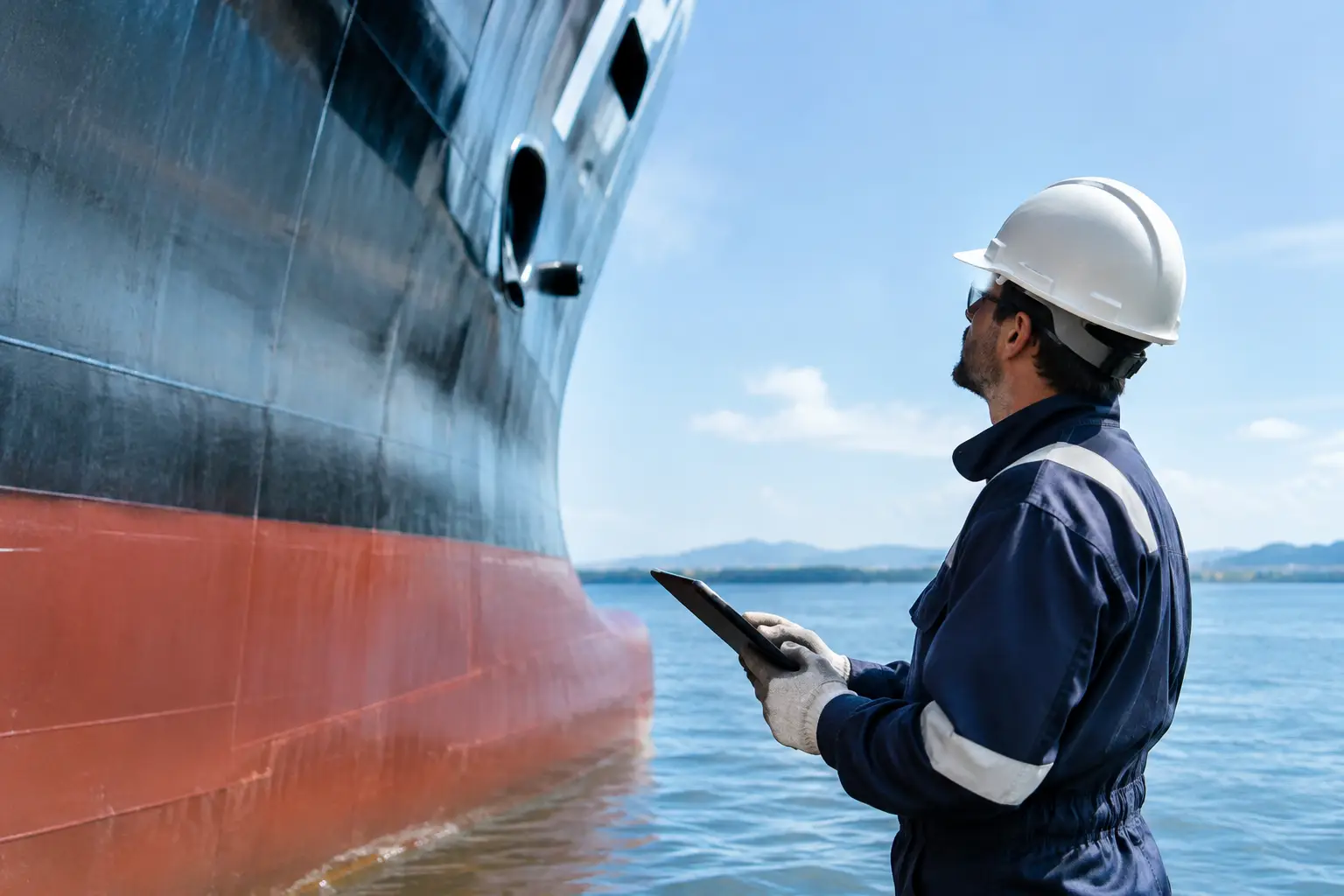
A practical inspection program checks for rubber cracking, permanent deformation, torn face pads, worn chains, corroded fittings, loose anchors, damaged panels, and loss of pneumatic pressure where relevant. Damage should be assessed before it develops into an operational restriction or an unplanned berth closure.
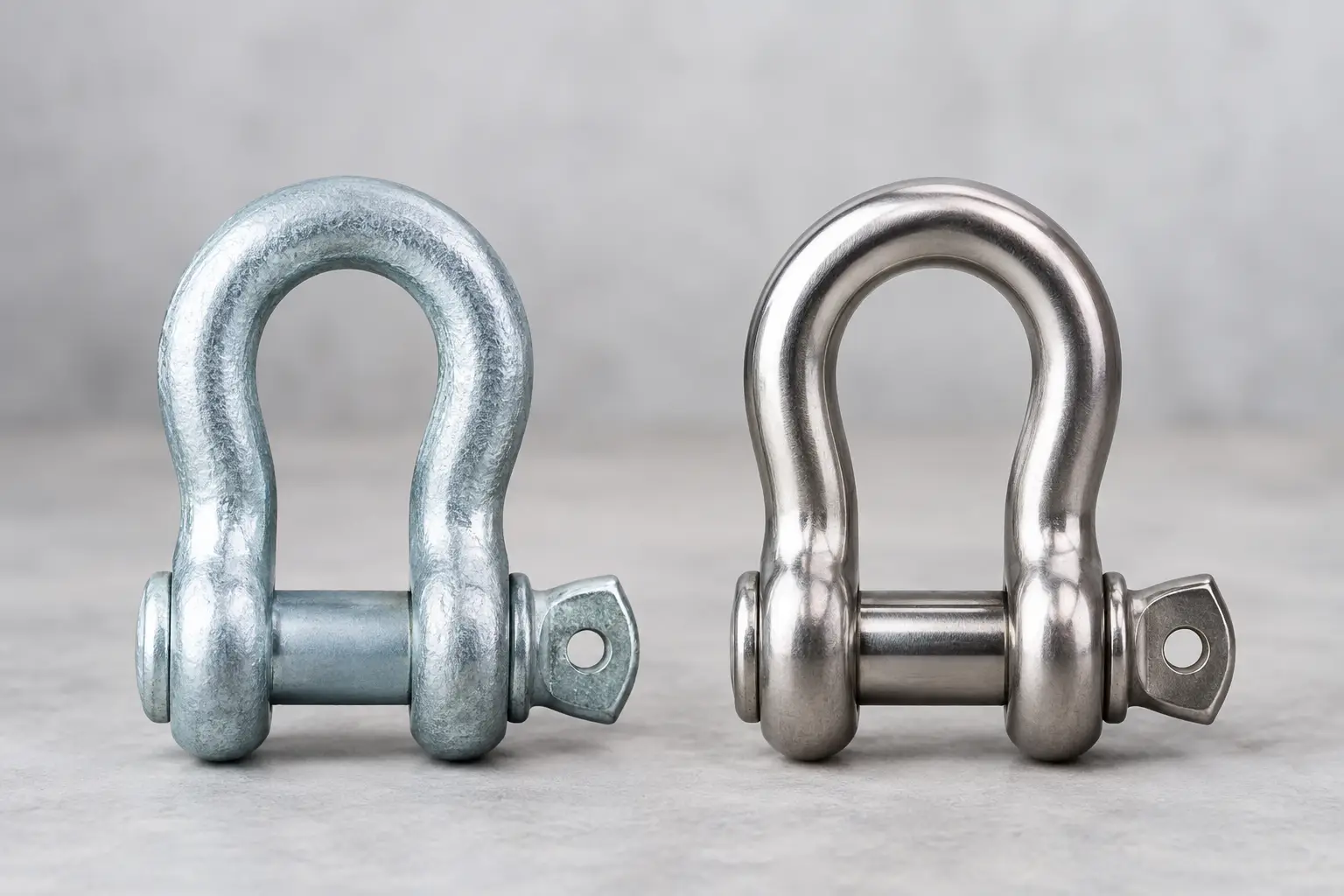
C&C International can support marine operators with application-focused supply coordination for fender-related hardware, rigging, chains, shackles, and configured equipment where project requirements call for dependable documentation and rapid execution.
The best fender arrangement is the one that matches actual vessel movements, structural limits, and maintenance capability. Establish those conditions early, specify the full assembly rather than a rubber profile alone, and give the berth team equipment they can inspect and rely on under working conditions.