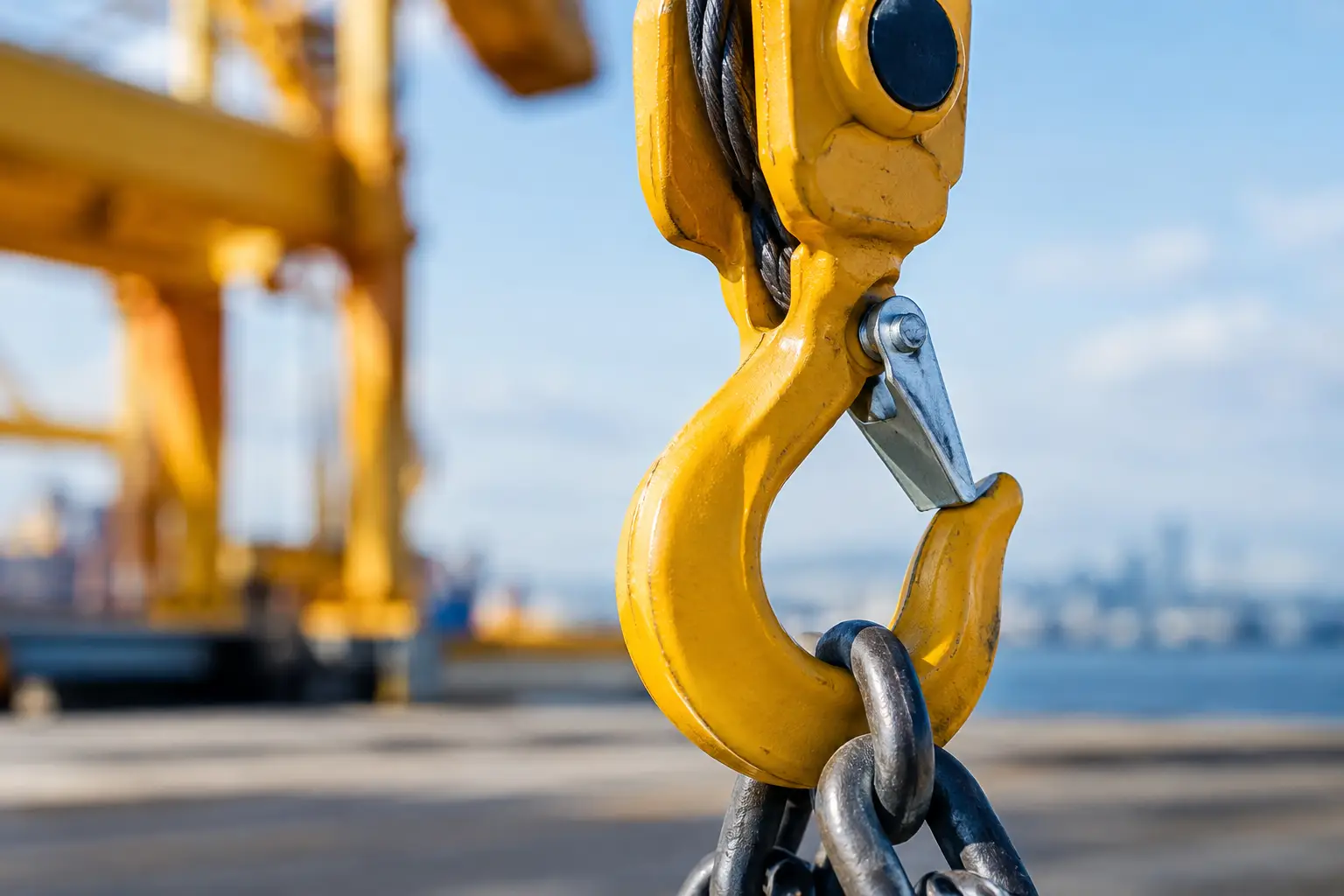
Saltwater damage rarely starts as an obvious equipment failure. It starts in thread roots, wire-rope valleys, shackle pin interfaces, and coating breaks that are easy to miss during a busy turnaround. This marine corrosion prevention guide sets out a practical control program for vessel operators, marine superintendents, and project teams responsible for safety-critical mooring, lifting, and cargo-securing equipment.
Corrosion control is not simply a paint specification or a washdown task. It is a planned process of selecting suitable materials, preventing water traps, preparing surfaces correctly, inspecting equipment at the right intervals, and replacing components before remaining strength becomes uncertain. On working vessels and offshore sites, that process protects people as much as it protects asset value.
Why Marine Corrosion Needs a System
Marine equipment is exposed to several corrosion drivers at once: chlorides from salt spray, standing water, high humidity, heat, ultraviolet exposure, vibration, and mechanical wear. A component may look acceptable on its outer face while corrosion progresses below a coating edge, inside a wire rope, or between dissimilar metals.
The splash zone demands particular attention. Equipment repeatedly wetted with seawater and then exposed to air receives both chlorides and oxygen, creating highly active conditions for steel corrosion. Deck hardware can also suffer accelerated attack where seawater remains under rope covers, inside pad eyes, around weld toes, or beneath accumulated cargo residue.
The operational consequence is not limited to appearance. Pitting reduces effective section thickness. Rust expansion can crack paint systems and seize pins or turnbuckles. Corrosion between wire strands reduces flexibility and can conceal broken wires. On a loaded connection, loss of section and restricted movement can change how forces are distributed through the assembly.
A workable prevention program therefore separates equipment by consequence and exposure. A lightly loaded stainless handrail fitting does not require the same inspection logic as a mooring shackle, lifting chain, wire-rope socket, or cargo lashing component.
Marine Corrosion Prevention Guide: Start With Equipment Selection
The best time to control corrosion is before equipment reaches the deck. Specify the correct material, finish, and configuration for the duty, rather than treating corrosion resistance as an aftermarket add-on.
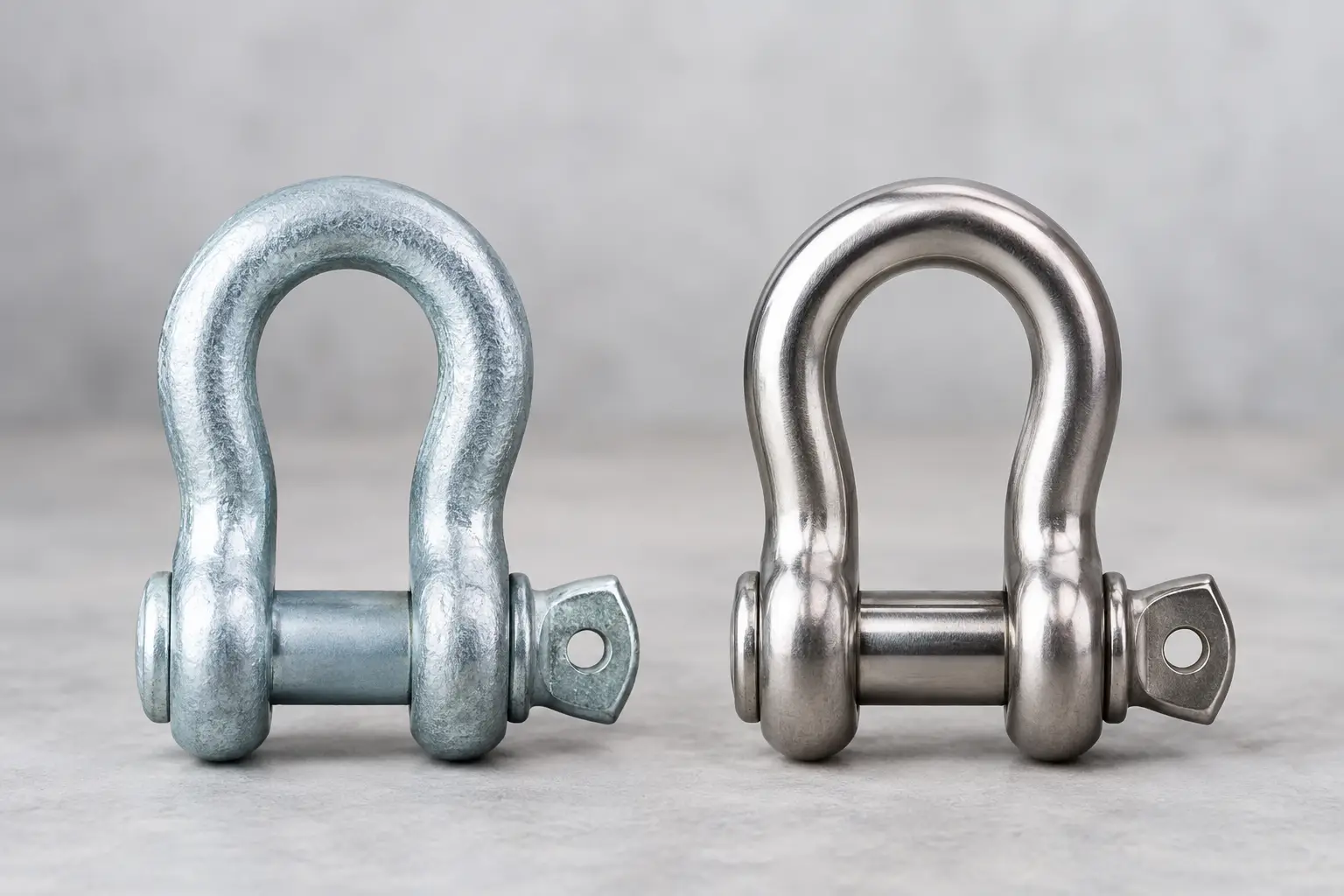
For carbon-steel lifting and mooring hardware, the coating system must suit both the intended exposure and expected handling damage. Hot-dip galvanizing provides sacrificial zinc protection and is widely used for shackles, turnbuckles, chains, and fabricated steelwork. It performs well in many marine applications, but it is not permanent protection. Abrasion, impact, acidic contaminants, and repeated thread engagement will eventually consume or damage the zinc layer.
Paint or epoxy systems can provide strong barrier protection when surface preparation and application are controlled. Their weakness is that a small defect may allow moisture to travel beneath the coating. For fabricated structures, coating specifications should define surface preparation, stripe coating on edges and welds, dry film thickness, curing conditions, and repair procedures. A coating without these controls is often only temporary cosmetic protection.
Stainless steel is not automatically maintenance-free. Chloride deposits can cause tea staining, crevice corrosion, and localized pitting, particularly where fittings remain wet or oxygen is restricted. Grade selection matters, but so do drainage, cleaning access, and avoiding contact with less noble metals. Stainless hardware used near carbon steel may require isolating washers, sleeves, or other measures to reduce galvanic action.
When combining metals, consider the full assembly rather than each item in isolation. A stainless fitting connected directly to a galvanized steel bracket can accelerate loss of zinc at the less noble component when moisture bridges the connection. Isolation may be practical, but it must not compromise the connection’s load path, electrical requirements, or certification basis.
Specify for Drainage and Access
Design details can either prevent corrosion or create it. Closed sections without proper sealing or drain holes retain water. Flat horizontal surfaces hold deposits. Tight interfaces trap chlorides. Hardware installed with no access for washing, lubrication, or inspection eventually becomes difficult to manage.
For new fabrication and replacement work, request details that allow water to drain and technicians to inspect critical areas. Avoid unnecessary crevices, confirm that dissimilar-metal interfaces are addressed, and ensure protective coatings are repaired after cutting, welding, drilling, or installation damage.
Protect the Equipment Before Corrosion Takes Hold
Routine freshwater washing is one of the most effective controls available to vessel crews. It removes salt deposits before they concentrate during drying cycles. Washing is especially useful after heavy weather, offshore transfers, cargo operations, or extended exposure to sea spray.
Washdown alone is not enough for moving assemblies. Pins, screw threads, turnbuckles, sheaves, wire ropes, and chain links need lubricants or corrosion inhibitors compatible with the equipment and its operating environment. The product must penetrate where protection is needed without attracting excessive grit, contaminating cargo, damaging synthetic fibers, or interfering with inspection.
Wire rope deserves a dedicated approach. Lubricant applied only to the exterior can improve appearance but may not reach the core or internal strand interfaces. A suitable rope dressing should be applied to clean, dry rope where possible, worked into the strands, and selected to match the rope manufacturer’s guidance and service conditions. Excessive buildup should be avoided because it can conceal broken wires, corrosion pits, and strand distortion.
For chains, shackles, hooks, clamps, and lifting accessories, clean surfaces make defects easier to identify. Remove loose corrosion products and dirt using methods that do not damage the base material, markings, proof marks, or protective finish. Do not grind a component simply to make it look serviceable. Material removal can alter dimensions and obscure evidence needed for a competent inspection decision.
Storage Is Part of Corrosion Prevention
Many corrosion problems begin before equipment is issued. Store wire ropes off the floor on suitable reels or racks, protected from direct weather and contaminated runoff. Keep slings dry and away from chemicals, oils, hot surfaces, and sharp edges. Separate stainless steel from carbon-steel grinding dust and storage debris where feasible.
Hardware should be stored so that water cannot pool inside containers or packaging. Long-term storage calls for periodic checks, especially in humid coastal facilities. Before equipment returns to service, confirm that preservative coatings remain effective and that identification markings, certificates, and inspection status are still traceable.
Inspect by Exposure, Criticality, and Use
A calendar-only inspection schedule is rarely enough. Equipment used daily in splash-zone service may need close visual attention far more often than identical equipment stored in a protected workshop. Set inspection frequency according to actual exposure, load consequence, usage intensity, manufacturer instructions, and applicable regulatory or class requirements.
Pre-use checks should focus on obvious serviceability issues: active rusting, coating loss, seized threads, deformation, missing safety latches, damaged identification, visible wire breaks, leakage from sockets, or contamination. Any item with uncertain integrity should be isolated from use until examined by a competent person.
Periodic thorough examinations should go further. For wire rope, inspect for broken wires, diameter reduction, corrosion, abrasion, birdcaging, strand displacement, heat damage, and deterioration at terminations. For shackles and hooks, check for pitting, thread condition, pin fit, jaw spread, cracks, unauthorized weld repairs, and legible working load limit markings. For chains, look for stretched links, localized wear, corrosion at link contact points, and distortion.
Use inspection records to identify trends, not just to prove that a form was completed. Repeated corrosion at the same location may point to poor drainage, unsuitable storage, incompatible lubricant, coating failure, or an exposure condition not considered in the original specification.
Know When Cleaning Is Not Enough
The difficult decision is often whether to restore, recoat, or retire equipment. Surface rust on a non-critical fabricated guard may be suitable for preparation and coating repair. Deep pitting on a load-bearing shackle, chain, or wire rope is a different matter. The decision must be based on acceptance criteria, remaining dimensions, service history, and competent assessment, not on appearance alone.
Do not use paint to conceal defects in lifting or mooring gear. If corrosion has affected identification marks, load-bearing sections, rope terminations, or moving interfaces, remove the item from service for evaluation. Where replacement is required, ensure the new assembly is correctly configured, proof tested when applicable, and supplied with traceable documentation.
For custom wire-rope assemblies, fabricated ladders, lifting sets, and mooring arrangements, corrosion prevention should be included in the job specification from the start. Details such as rope construction, termination type, galvanizing, protective sleeves, hardware grade, lubrication, labeling, and test requirements should be agreed before fabrication. This avoids a common failure point: technically suitable components combined into an assembly that is poorly matched to its exposure.
Build Accountability Into the Routine
The strongest corrosion programs are practical enough for crews to follow under operating pressure. Assign responsibility for washdown, lubrication, inspection, defect reporting, and record review. Keep replacement stock for commonly consumed hardware where downtime risk justifies it. When an urgent replacement is needed, verify dimensions, working load limits, connection compatibility, and certification requirements before fitting it.
A clean, traceable equipment register helps maintenance and procurement teams make better decisions. Record equipment identity, location, material or finish, installation date, inspection findings, repairs, coating work, lubrication intervals, and retirement date. This history supports planned replacement instead of reactive purchasing after a failure or failed audit.
Marine corrosion cannot be eliminated, but it can be managed with discipline. Treat every washdown, coating touch-up, and inspection finding as part of the equipment’s safety margin, and address small defects while they are still simple to control.