Common Configurations
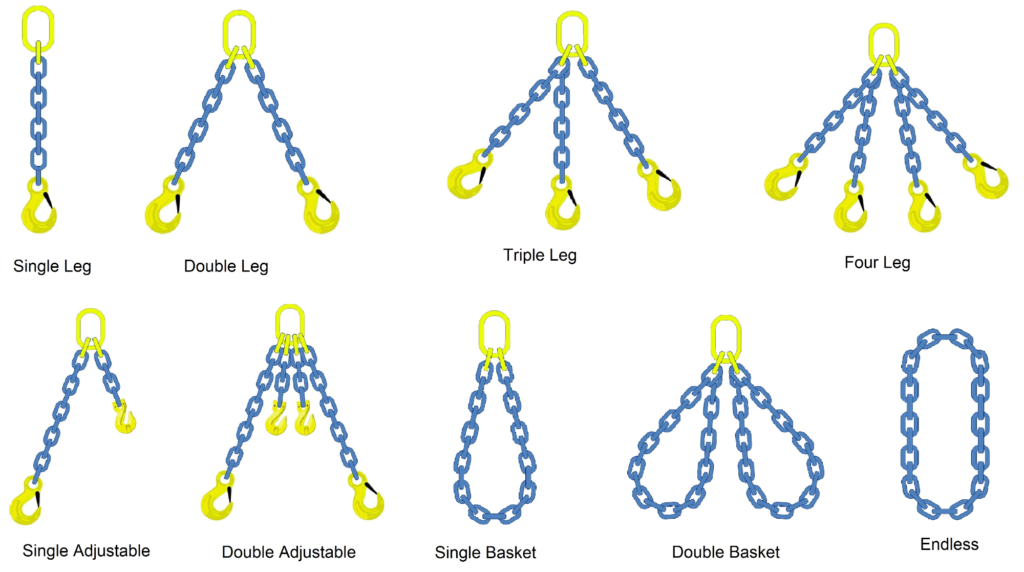
Alloy chain slings are categorized by the number of chain legs attached to the master link, each suited for different load types and stability needs:
- Single-Leg (S): Features one chain length. It is ideal for balanced, vertical lifts with a single attachment point, such as steel beams or small machinery.
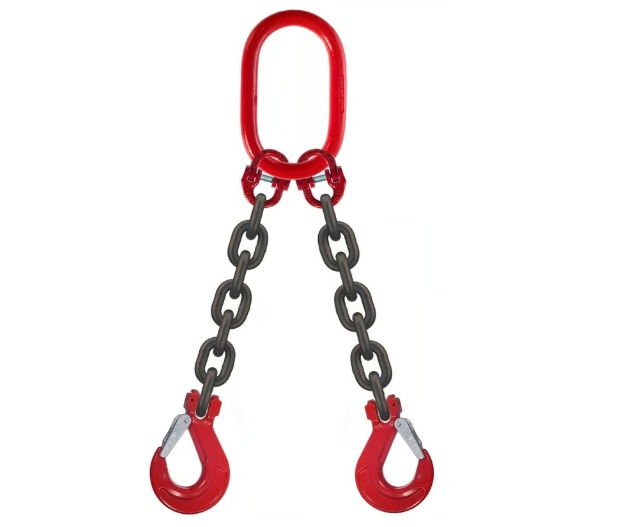
- Double-Leg (D): Uses two chains connected to a single master link. These provide better balance and are commonly used for loads requiring support at two points, such as heavy pipes or concrete slabs.
- Triple and Quad-Leg (T/Q): These multi-leg assemblies use three or four chains for maximum stability. They are essential for lifting large, complex, or irregularly shaped loads in construction and mining.
- Adjustable Slings: Equipped with shortening components (like grab hooks) that allow you to change the length of the legs to level unbalanced loads.
Some Common Configurations Examples:

Alloy Chain Grades
The “Grade” of the chain indicates its minimum tensile strength; higher numbers represent stronger materials that can lift more for their size.
- Grade 80 (G80): The standard “workhorse” grade for overhead lifting. It is highly durable and often preferred for its cost-effectiveness in general construction and manufacturing.
- Grade 100 (G100): Offers approximately 25% higher strengththan Grade 80. This allows for lighter, thinner chains to lift the same weight, reducing rigger fatigue and improving handling.
- Grade 120 (G120): An ultra-premium grade with square links that provide a even higher strength-to-weight ratio for specialized heavy-duty lifts.
Key Specifications & Safety
- Safety Factor: Standard alloy chain slings are engineered with a 4:1 safety factor, meaning their breaking strength is at least four times their rated Working Load Limit (WLL).
- Temperature Rating: Most alloy slings maintain their full WLL up to 200°C (400°F). Above this, capacity must be derated according to manufacturer charts.
- Identification: Every certified assembly must have a permanent ID tag listing the manufacturer, grade, size, serial number, and rated capacity at specific lift angles.
- Inspection: OSHA requires regular inspections for stretched links, nicks, cracks, or elongated links (over 10% wear) before every use.