In Singapore’s busy anchorages, offshore terminals, and vessel boarding operations, the pilot ladder remains one of the most important pieces of marine transfer equipment. However, transfer safety depends on more than simply using certified equipment. In real operations, incidents often occur because of improper ladder deployment, rope deterioration, poor securing arrangements, or changing sea conditions rather than the ladder itself.
At C&C International Trading, marine transfer systems are approached with a focus on operational reliability and long-term safety. Understanding the difference between a pilot ladder and an embarkation ladder is essential for safer boarding operations across marine and offshore environments.
Why Marine Transfer Safety Depends on More Than Compliance
Where Boarding Incidents Usually Begin
Many marine operators assume that if a pilot ladder is certified and visually intact, it is safe for immediate use. In practice, most boarding incidents begin long before personnel step onto the ladder. Problems often originate from poor securing arrangements, uneven ladder positioning, degraded side ropes, or improper deployment angles.
A ladder system operates under constant movement during boarding operations. Vessel motion, wave impact, and human movement create shifting forces that affect ladder stability continuously. This means transfer safety depends not only on equipment certification, but also on how the entire system behaves under operational conditions.
Why Certified Equipment Can Still Become Unsafe
Even compliant equipment gradually deteriorates through repeated marine exposure. Saltwater, ultraviolet exposure, moisture retention, and constant loading cycles slowly weaken rope fibres and structural components over time.
This is especially important for rope-based ladder systems using manila rope or polypropylene rope. Both materials behave differently under long-term environmental exposure. A ladder that appears structurally acceptable may already contain internal wear or fibre degradation that affects performance during actual transfer operations.
For this reason, experienced marine operators treat inspection as an ongoing operational requirement rather than a simple visual routine before deployment.
Pilot Ladder vs Embarkation Ladder Applications
What a Pilot Ladder Is Designed For
A pilot ladder is primarily designed for pilot boarding operations where flexibility is necessary during vessel movement. The ladder is suspended vertically along the vessel side, allowing pilots to transfer safely between the vessel and pilot boat under changing sea conditions.
The ladder must remain flexible enough to move with vessel motion while maintaining stability for personnel climbing between platforms. This balance between flexibility and structural control is one of the reasons proper rope condition and ladder construction are so important.
When an Embarkation Ladder Is Used
An embarkation ladder is typically used in transfer arrangements where additional boarding support is required. Compared to a pilot ladder, an embarkation ladder provides a more controlled transition area for personnel transfer, particularly during offshore operations or combined boarding arrangements.
In practice, embarkation ladders are often used together with pilot ladder systems when transfer height, boarding angle, or operational conditions require additional stability.
The difference is not simply about ladder design. It is about how the transfer system behaves under operational movement and whether the boarding arrangement matches the actual transfer environment.
Why Incorrect Ladder Selection Creates Risk
Many transfer risks originate from selecting the wrong ladder arrangement for the operational environment.
For example:
- A pilot ladder may provide insufficient boarding stability in certain offshore transfer situations
- An embarkation ladder may restrict movement flexibility during vessel motion
This creates instability during personnel transfer, particularly when boarding conditions change suddenly because of tide, wave movement, or vessel positioning.
In practice, the safety issue is rarely the ladder alone. The risk usually comes from how the complete transfer arrangement behaves under changing marine conditions.
Rope Materials and Their Impact on Ladder Safety
Why Manila Rope Is Still Used
Manila rope continues to be used in marine ladder systems because of its traditional grip characteristics and handling familiarity. The material provides a natural surface texture that many operators consider easier to grip during wet marine conditions.
However, manila rope also absorbs moisture more easily than synthetic alternatives. Over time, repeated water exposure can weaken the fibres internally even when the external surface still appears acceptable.
This is one reason why rope inspection remains critical for long-term ladder reliability.
How Polypropylene Rope Behaves Differently
Compared to manila rope, polypropylene rope offers improved resistance to water absorption and is significantly lighter in weight. This makes it easier to handle during deployment and storage.
However, polypropylene rope also has limitations. Continuous ultraviolet exposure and repeated environmental stress can gradually reduce flexibility and long-term durability. In marine environments where ladders are deployed frequently, this material behaviour becomes an important operational consideration.
For a deeper understanding of how rope materials behave under marine conditions, refer to this Choosing the Right Mooring Ropes: Materials & Strength which explains how environmental exposure affects rope performance over time.
Stainless Steel Wire Rope in Ladder Systems
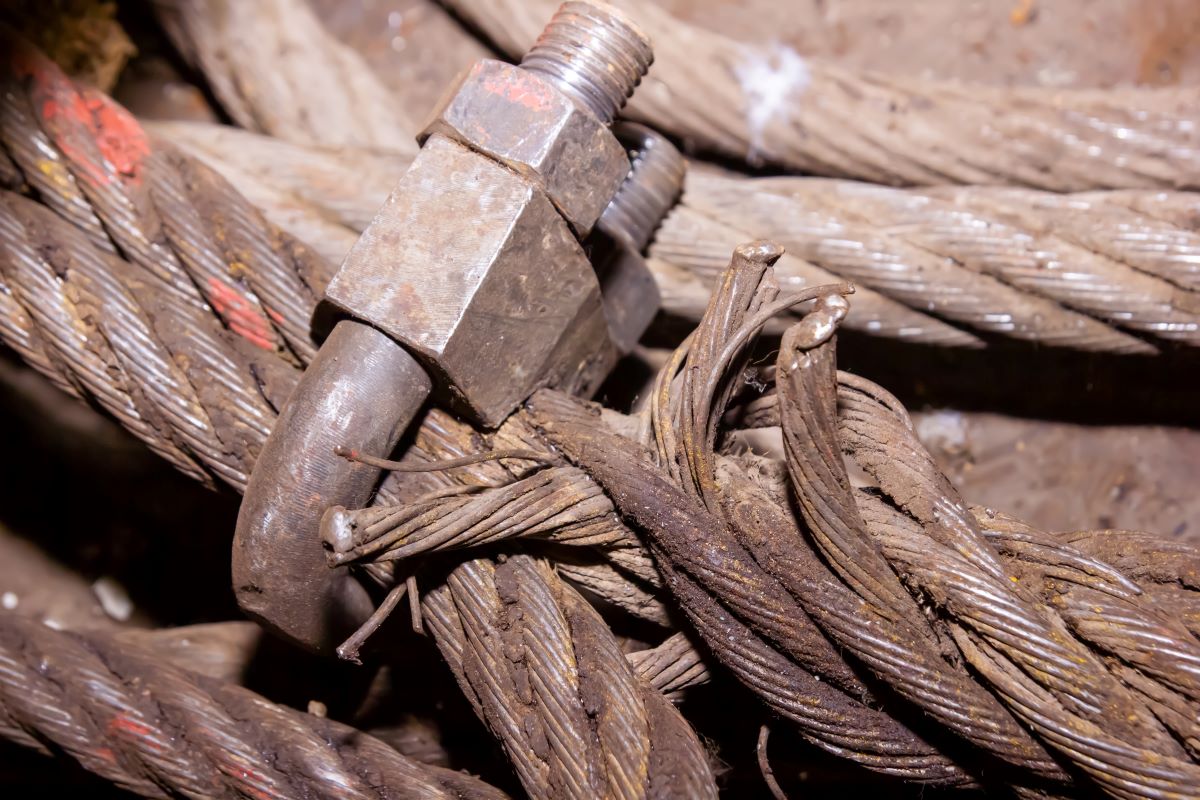
Some transfer systems also incorporate stainless steel wire rope for reinforcement or structural support. Stainless steel provides high strength and corrosion resistance, making it suitable for harsh marine environments where long-term durability is required.
However, higher strength alone does not guarantee safer transfer conditions. Incorrect installation, poor tension distribution, or corrosion at connection points can still compromise overall ladder stability.
Marine transfer safety depends on how the complete system performs rather than the strength of a single component.
How Environmental Exposure Affects Ladder Safety
Saltwater and UV Exposure
Marine environments continuously expose ladder systems to salt contamination, ultraviolet radiation, humidity, and repeated moisture cycles. Over time, this affects rope flexibility, fibre condition, and overall ladder stability.
The deterioration process is often gradual. Operators may not immediately notice reduced rope performance until the ladder begins showing visible wear or instability during deployment.
Operational Wear During Repeated Use
Repeated boarding operations also create mechanical wear at high-stress contact points. Ladder steps shift under load, side ropes experience constant tension changes, and equipment rubs against vessel surfaces during movement.
This repeated stress gradually changes how the ladder behaves under operational conditions.
In practice, marine ladder systems rarely fail because of a single overload event. Most failures develop progressively through repeated environmental and operational exposure.
What Operators Should Inspect Before Deployment
Before deploying a pilot ladder or embarkation ladder, operators should inspect the entire transfer arrangement rather than focusing on only visible surface appearance.
Important inspection areas include:
- Rope fraying and uneven wear
- Ladder step stability
- Spreader condition
- Corrosion at connection points
- Securing arrangement integrity
Particular attention should be given to how the ladder is secured to the vessel. Poor attachment positioning or unstable securing angles can significantly increase ladder movement during transfer.
Operators sourcing marine transfer equipment can also refer to the Ladders for equipment suited to marine and offshore applications.
Marine Transfer Safety Depends on the Entire System
A pilot ladder or embarkation ladder should never be evaluated as an isolated product alone. Safe marine transfer depends on rope condition, ladder stability, securing arrangements, environmental exposure, and operational discipline working together as a complete system.
When marine transfer equipment is selected, inspected, and deployed with proper operational understanding, boarding operations become significantly safer and more reliable across offshore and marine environments.
For marine transfer equipment enquiries or application support, refer to the Contact Us page to speak with an experienced marine and industrial supply specialist.