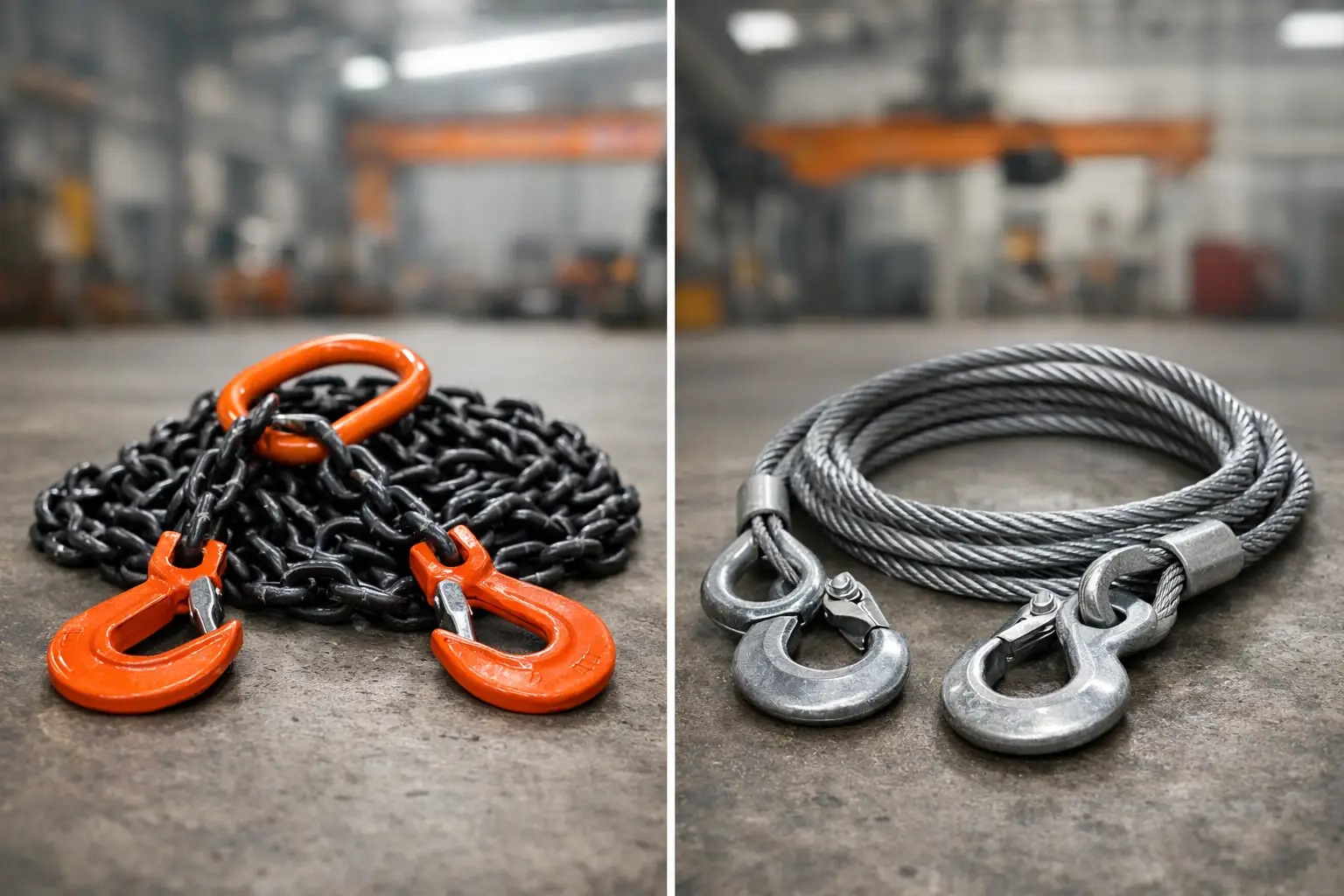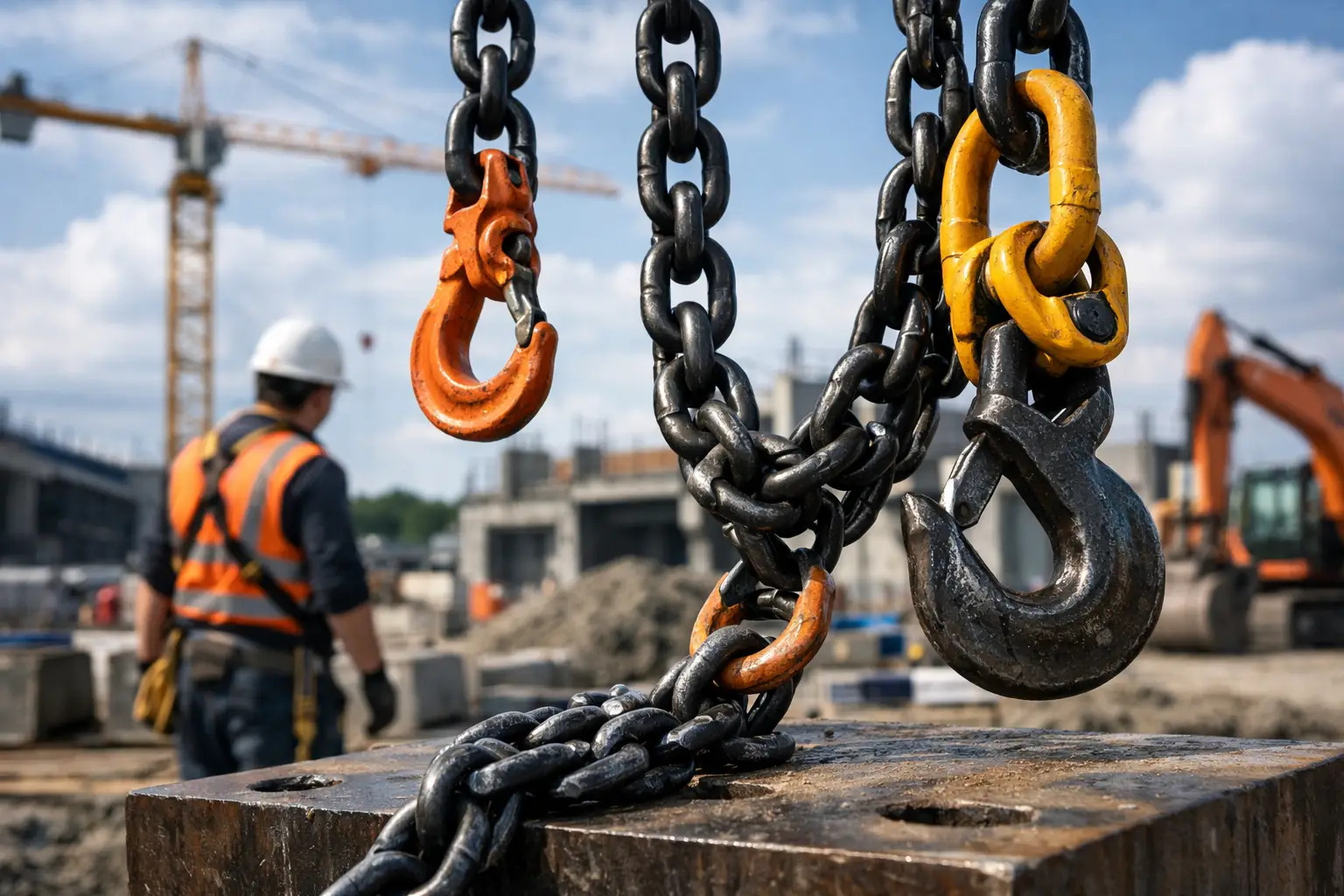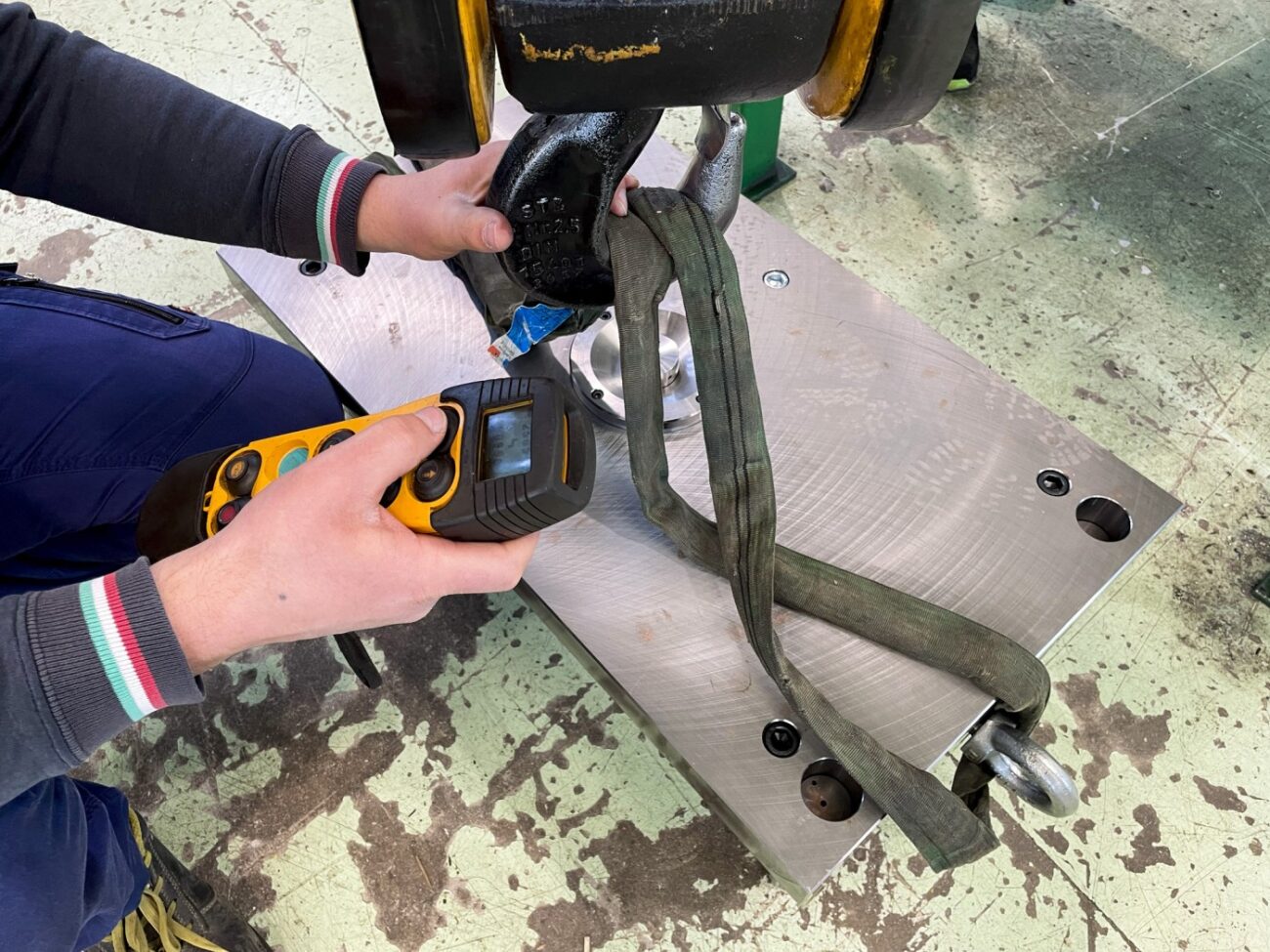
Singapore’s lifting equipment rules no longer require periodic overload testing once equipment is registered. MOM’s reasoning, set out when the requirement was revised in September 2025, was blunt: repeated overload testing was fatiguing the very gear it was meant to prove. Non destructive testing is what fills the gap that leaves behind. A proof load tells you the gear survived one pull on one day. It cannot tell you a fatigue crack is spreading inside a hook shank.
Why Periodic Overload Testing Was Dropped
The current requirements followed a review that benchmarked Singapore against the UK, US, Australia and Japan.
| Change | Effect on your yard |
| Periodic overload testing removed after registration. Overload tests still required at first registration, re-registration, and after modification or major repair | Less repeated stress on gear in service |
| Competent persons may conduct periodic lifting gear re-examinations | Authorised Examiners still mandatory before first use and after major repair |
| Hoist test and examination moved from 6 months to 12 months | Halved statutory testing frequency |
The reasoning is an admission. The regulator accepted that pulling 125% of the safe working load through a component, year after year, does not simply prove it. It slowly consumes it. Metal fatigue is cumulative, and every proof cycle adds damage no paperwork reverses.
That was the right call, but it carries a consequence nobody is discussing. Take proof loads out of the cycle, and the burden shifts onto the quality of your examination. Non destructive testing is the only tool that raises it. Our load testing guide for lifting equipment and rigging systems covers what a proof load does well. This covers what it cannot do at all.
Load Testing vs Non Destructive Testing: What Each One Detects
The two are not alternatives. Load testing asks, did it hold? Non destructive testing asks, is it about to stop holding?
| Method | What it detects | Depth | Material limits |
| Proof load test (125% of SWL) | Gross weakness, permanent deformation | Neither. A pass or fail event | None |
| Visual examination | Wear, corrosion, deformation | Surface only | None |
| Magnetic particle inspection (MPI) | Surface and near-surface cracks | Shallow subsurface | Ferrous metals only |
| Dye penetrant testing (DPI) | Surface-breaking cracks | Surface only | Any non-porous metal, incl. stainless |
| Ultrasonic testing (UT) | Subsurface flaws, thickness loss | Deep | Most metals |
A hook carrying a 4mm fatigue crack in the shank will pass a 125% proof load without complaint. It will also fail, without warning, somewhere in the next hundred lifts. Only non destructive testing sees it coming.
The Two Non Destructive Testing Methods That Matter Most in Rigging
Magnetic Particle Inspection for Hooks, Shackles and Chain
The component is magnetised, iron particles are applied, and any crack disturbs the magnetic field, pulling those particles into a visible line. It is fast, it works in your yard rather than a laboratory, and it is highly sensitive to tight fatigue cracks. For any carbon or alloy steel lifting hook, magnetic particle inspection is the default, not the optional extra.
Dye Penetrant Testing for Stainless and Non-Magnetic Gear
MPI only works on ferrous material, so stainless gear and aluminium fittings are invisible to it. Dye penetrant testing covers that ground, drawing a dye into any surface-breaking flaw, then pulling it back out as a visible indication. It will not find a buried void, but for stainless rigging in a marine environment, where chloride attack begins at the surface, that is exactly where trouble starts.
Where Cracks Actually Start, Component by Component
Cracks are not random. They start where stress concentrates, and after three decades supplying Singapore’s yards, the pattern is consistent.
| Component | Where it fails first | Best method |
| Lifting hooks | Shank thread, saddle radius, throat opening | MPI |
| Chain blocks and lever blocks | Interlink wear on load chain, brake, latch | MPI, gauge check |
| Lifting clamps | Cam teeth, pivot pin, spring tension | MPI, function test |
| Shackles | Crown, pin thread, bow stretch | MPI |
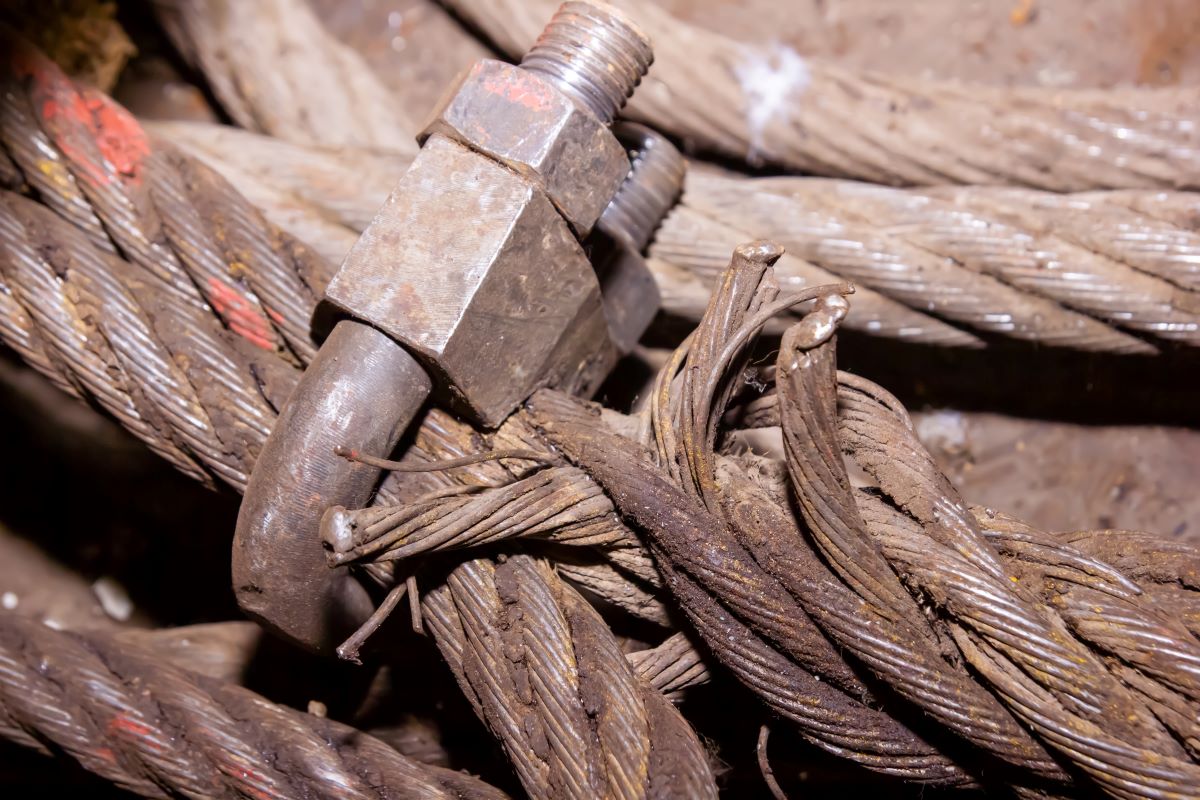
| Wire rope slings | At the ferrule, and inside the core | Visual, MRT |
Chain blocks and lever blocks take the most abuse, because a lever block invites a cheater bar and a side load in a way a chain block does not. Lifting clamps fail quietly: worn cam teeth do not look dramatic, but they slip under load, and a slipping clamp drops a plate. Wire rope is worse still, because its corrosion often begins in the core, a point covered in our wire rope sling safety guide.
In practice, this is what disciplined inspection looks like: our team recently mobilised to a client’s yard to inspect used 76 mm U3 anchor chains together with 150T shackles and associated gear, an estimated 10 tonnes of equipment, before it was cleared for mission-critical deployment. Working through that scope with in-house competent inspectors and Class-recognised inspection experience is exactly the discipline this article is arguing for.
Run Non Destructive Testing Before the Load Test, Not After
Sequence your inspection this way: visual, then non destructive testing, then proof load, then certificate.
Reverse it and you build a trap. A crack already present can be propagated further by 125% of the safe working load. You then certify gear you have just damaged, and the paperwork says it passed. Testing in the right order costs nothing. It means finding the flaw before you stress it.
What Singapore’s Rules Require, and What They Leave to You
Under the Workplace Safety and Health (General Provisions) Regulations, lifting gear cannot be used unless an Authorised Examiner has tested it and issued a signed certificate specifying its safe working load, with thorough examination at least once a year thereafter. Under the current requirements, competent persons may handle those periodic re-examinations, though an Authorised Examiner remains mandatory before first use and after major repair. Our testing requirements page sets out what a compliant certificate must show.
Two things the rules leave to you. Once a year is a floor, not a target: offshore gear in a chloride-saturated environment has earned a shorter interval than gear lifting pallets in a dry warehouse. And a certificate records an examination, it does not replace one. In 2019, MOM fined a Professional Engineer $50,000 and revoked his Authorised Examiner status for certifying scissor lifts he never examined. Every certificate he issued looked perfectly valid.
Frequently Asked Questions
What is the difference between load testing and non destructive testing?
Load testing applies a proof load, typically 125% of the safe working load, to confirm the gear holds. Non destructive testing inspects for flaws without stressing the item. A load test confirms present capacity. NDT predicts future failure.
Which non destructive testing method is best for a lifting hook?
Magnetic particle inspection, in almost every case. Hooks are ferrous, and their failures begin as surface cracks at the shank thread and saddle radius, which is precisely what MPI is built to find.
Does proof load testing damage lifting gear?
It can. MOM removed periodic overload testing in September 2025 because of industry concerns about equipment fatigue from repeated overload testing. Each proof cycle contributes cumulative fatigue.
Inspect Smarter, Not Just More Often
The current rules give Singapore’s yards fewer statutory tests, not fewer obligations. Gear still fails the way it always has, from the inside out, at a stress concentration nobody can see. The operators who stay ahead of it built non destructive testing into their regime and stopped treating the annual certificate as the finish line.
That discipline is reinforced internally too. Our team recently completed a technical training session built around our KAE framework, Know-how, Ability, Execution, led by our Senior Technical Consultant and in-house ACLP 2.0-certified trainer, who brings over 25 years of practical experience across marine, offshore, wire rope, rigging, heavy-lifting, testing, inspection, certification and operational development.
C&C International Trading has supplied and tested rigging gear across Singapore’s marine, offshore, construction and logistics sectors for more than 30 years, recent examples include anchor chain and shackle inspections, wire rope spooling and anchor installations, with in-house load testing backed by PE endorsement. If you are rebuilding your inspection regime, talk to our team.