| TL;DR: A lifting hook usually fails in one of three places, a worn saddle, a stretched throat opening, or a safety latch that no longer springs back. In Singapore, forged steel lifting hooks should meet SS 343-2:2014 and be thoroughly examined by a Competent Person at least once every 12 months. Match the hook to the load, and never point-load the tip. |
A lifting hook is the most handled item in any rigging set and the most taken for granted. It looks indestructible, so nobody watches it until the day the latch is missing or the throat has quietly opened. Yet it is the single point every load passes through. This guide covers which lifting hook suits which job, why the safety latch is not optional, and the five failures that condemn a hook, including the sling-angle mistake that overloads a perfectly good one, all measured against Singapore’s SS 343 standard and WSH requirements.
What Are the Different Types of Lifting Hook, and When Do You Use Each?
There is no universal hook. Each shape solves a specific problem, and using the wrong one is where trouble starts.
| Hook type | When it matters | The catch |
| Swivel hook | Loads that rotate or need aligning | Swivels to position, not to spin under load. A true load-rated swivel is not the same as a positioning swivel |
| Self-locking hook | Overhead and man-riding | Latch locks under load; the only safe choice where a dropped load hits people |
| Grab hook | Shortening a chain leg | Not a lifting point on its own, and it derates the chain unless it is a cradle-grab type |
| Sorting hook | Aligning holes during fit-up | Tapered tip, never rated for lifting, yet constantly misused as one |
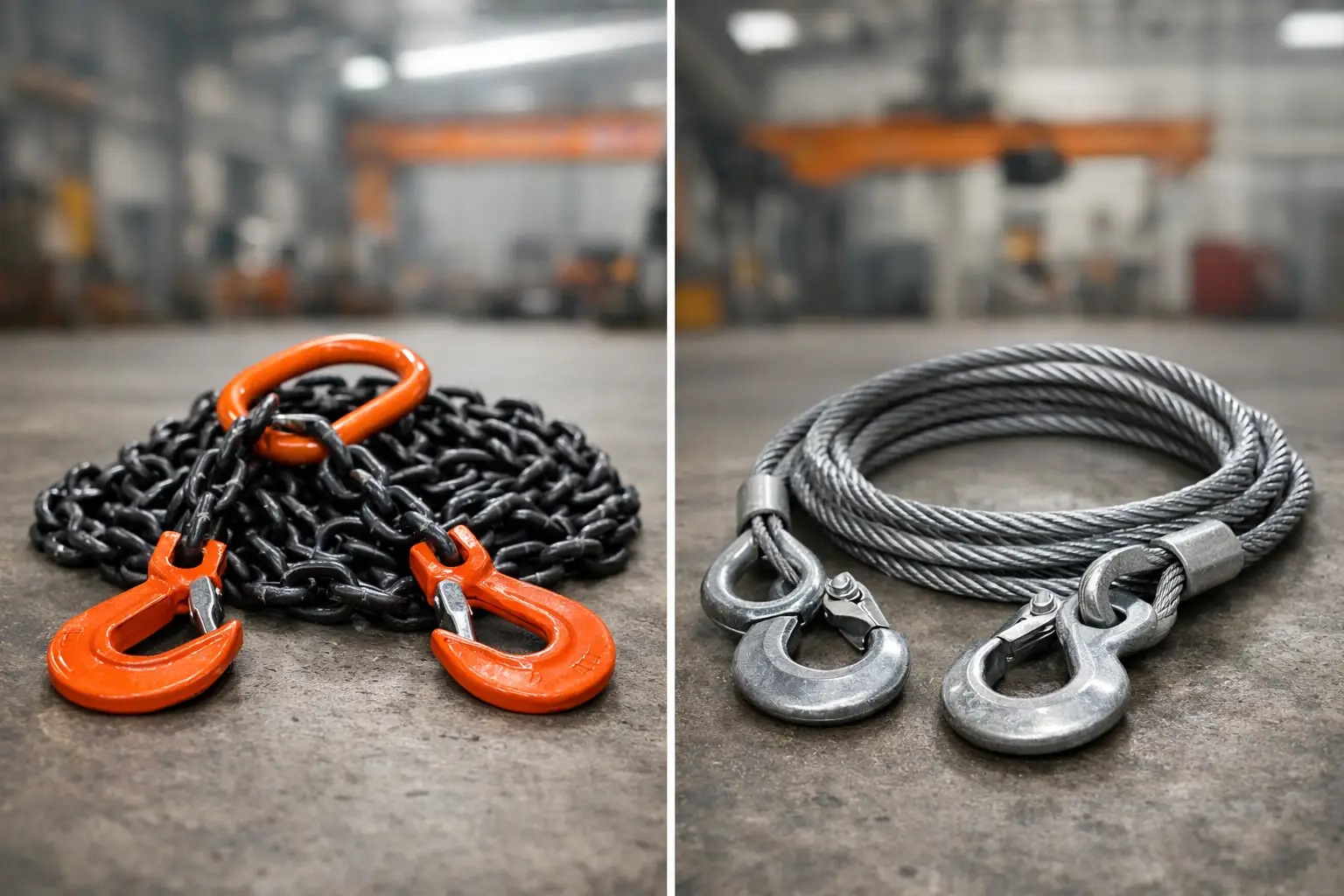
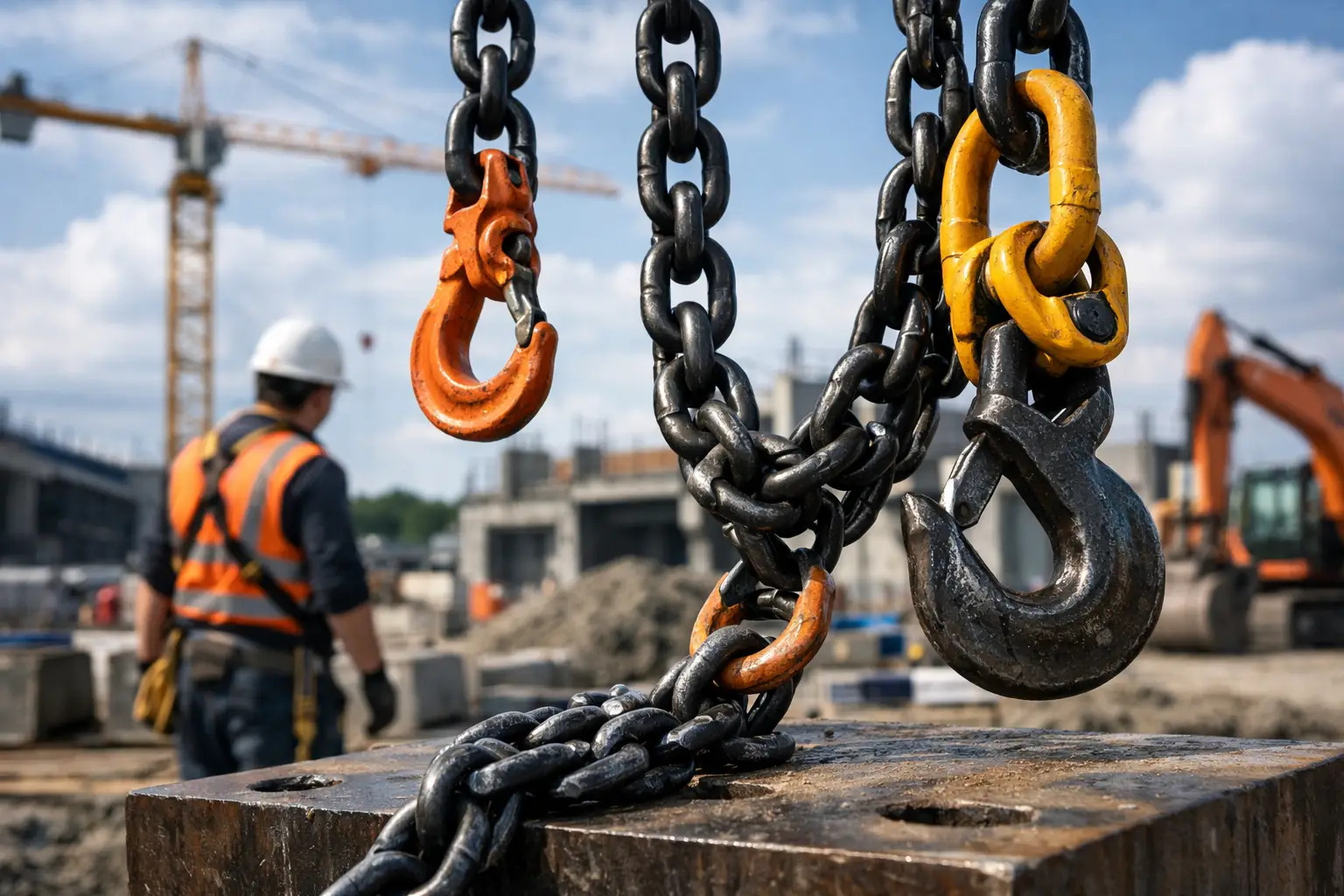
The hook rarely works alone. It sits at the end of a wire rope sling or chain and connects to the load through a shackle: a D shackle for straight-line pulls, a bow shackle for multi-directional loads. A hook, a wire rope sling and the wrong shackle can fail together even when each part is sound, which is why our load testing guide for lifting equipment treats the assembly as one system.
Why Does the Safety Latch Matter So Much?
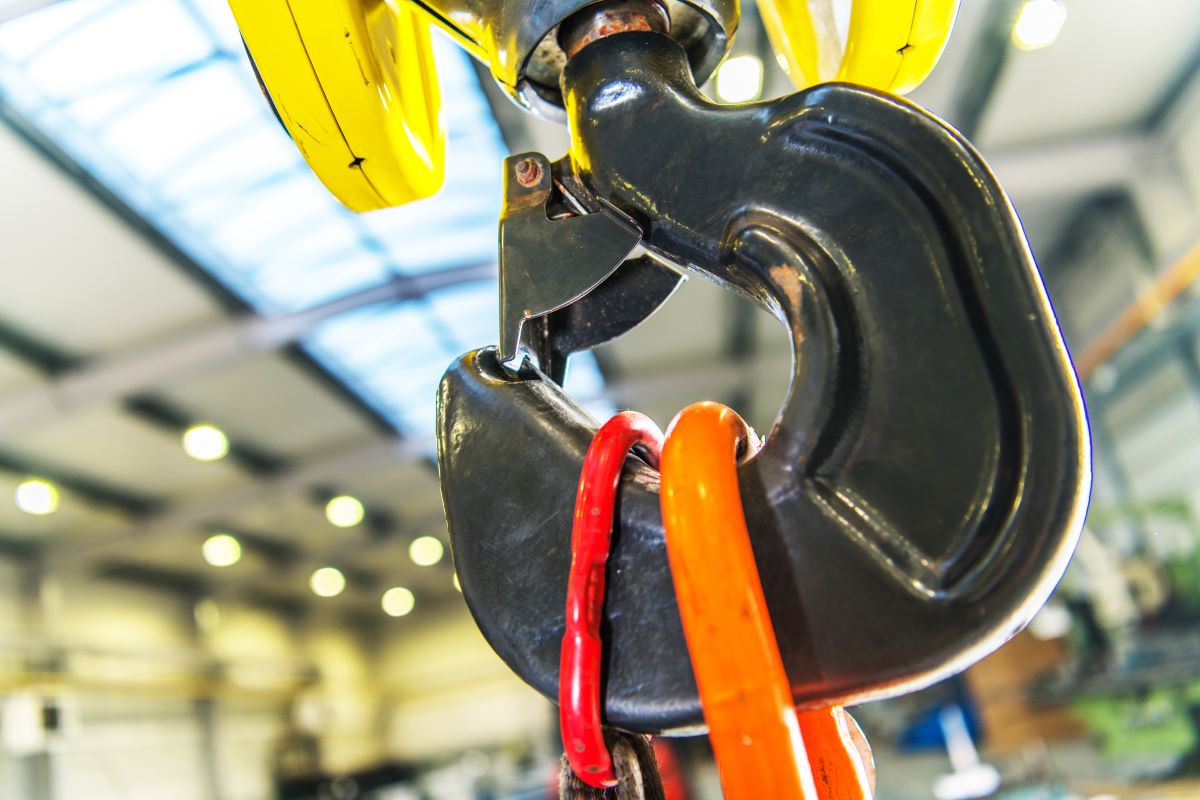
The safety latch is the cheapest part of a lifting hook and the one most often missing. It bridges the throat so a sling or chain cannot jump out when a load goes slack then snatches tight, which happens every time a load settles, swings or lands unevenly. Singapore’s WSH guidance is specific: during examination, the latch must spring back into place. A latch that is bent, seized or gone will fail inspection, and it should. It is the same two-dollar part that gets overlooked on a chain block or lever block, and the consequence is identical: an open hook that can release its load.
Where Does a Lifting Hook Fail First?
Hooks fail in predictable places, and reading them early is the whole skill.
The throat opening is the first tell. An overloaded hook stretches at the throat before it cracks, so any increase beyond the maker’s tolerance means it has already been overloaded and must be removed from service. The saddle, where the sling rides, is the second: wear here thins the load-bearing section.
Point loading is the third and most common silent killer. The hook is built to carry its load in the bowl of the saddle, not the tip. Loading the tip can cut effective capacity by up to 50 percent, so a two-tonne hook may be at the edge of failure under a one-tonne tip load.
The fourth failure hides in the rigging around the hook: sling angle. As the angle between two sling legs widens, the tension in each leg climbs fast. At a 120-degree included angle, each leg carries the full weight of the load, double what a straight vertical lift puts through the same hook. Riggers who would never overload a hook directly do it constantly through a wide sling angle they never calculated. The hook cannot tell the difference between a heavy load and a bad angle.
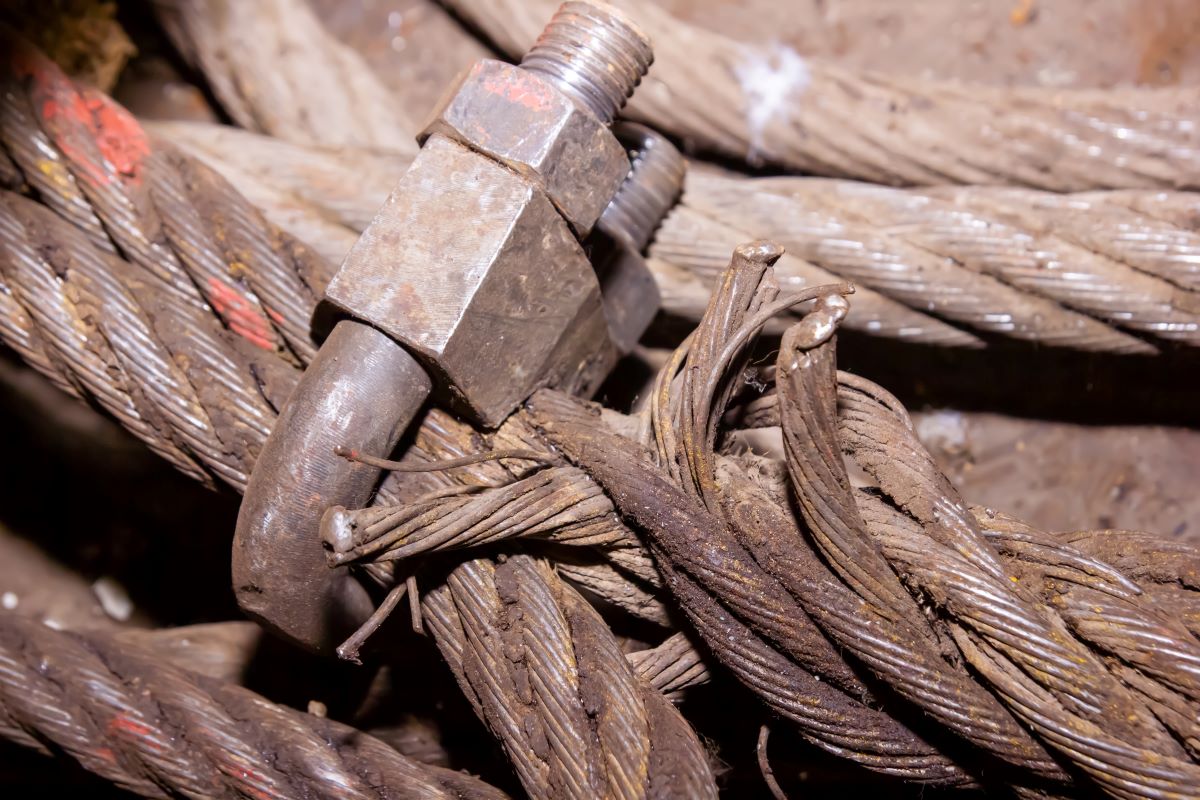
The fifth failure is invisible: fatigue cracks at the shank and saddle radius that only non-destructive testing will find, which is why annual examination matters.
How Often Must Lifting Hooks Be Inspected in Singapore?
Two layers apply. Before every lift, the operator checks visually: latch springs back, throat looks true, no cracks, nicks or gouges, hook not twisted. Then, at least once every 12 months, the lifting hook and its gear must be thoroughly examined by a Competent Person, in line with WSH Council lifting guidance. Each hook should carry a valid tag stating its safe working load.
“Check the throat opening first. If it has started to open up, the hook has already told you it was overloaded.” – Denis Koh, Senior Technical Consultant, C&C International Trading
Frequently Asked Questions
What is the working load limit of a lifting hook?
The working load limit (WLL) is the maximum load a hook may carry in service, stamped on it by the manufacturer. It already includes a safety factor against breaking load. Never exceed it, and never use a hook with no readable WLL.
Can you use a lifting hook without a safety latch?
No. The latch stops the sling jumping the throat when the load goes slack. WSH guidance requires it to spring back during inspection, and a hook with a missing or seized latch should be taken out of service.
What does it mean when a hook’s throat is open?
An opened throat means the hook has been overloaded and permanently stretched. It cannot be bent back. Any throat opening beyond the maker’s tolerance is a condemn-and-replace finding, not a repair.
Is point loading a lifting hook dangerous?
Yes. Loading the tip instead of the saddle can reduce a hook’s capacity by up to half. The load should always sit in the bowl of the hook, and a self-locking or correctly sized hook helps keep it there.
How often should a lifting hook be inspected in Singapore?
Visually before every lift, and thoroughly at least once every 12 months by a Competent Person, following WSH Council guidance. High duty-cycle or offshore gear often warrants a shorter interval.
Buy the Hook the Load Deserves
A lifting hook is small, cheap and easy to ignore, which is exactly why it causes incidents. Match the type to the job, read the markings, keep the latch working and watch the throat, and the hook will outlast the loads it carries.
C&C International Trading has supplied and tested rigging and lifting gear across Singapore’s marine, offshore and construction sectors for more than 30 years. As a MOM Authorised Examiner, we load test and certify hooks, a d shackle or bow shackle, wire rope sling assemblies and chain block units with full traceability. Talk to our team about the right hook for your lifting system.
Author:
Written by the C&C International Trading technical team, reviewed by Denis Koh, Senior Technical Consultant, with over 25 years in marine, offshore and lifting gear. Last updated: September 2026.