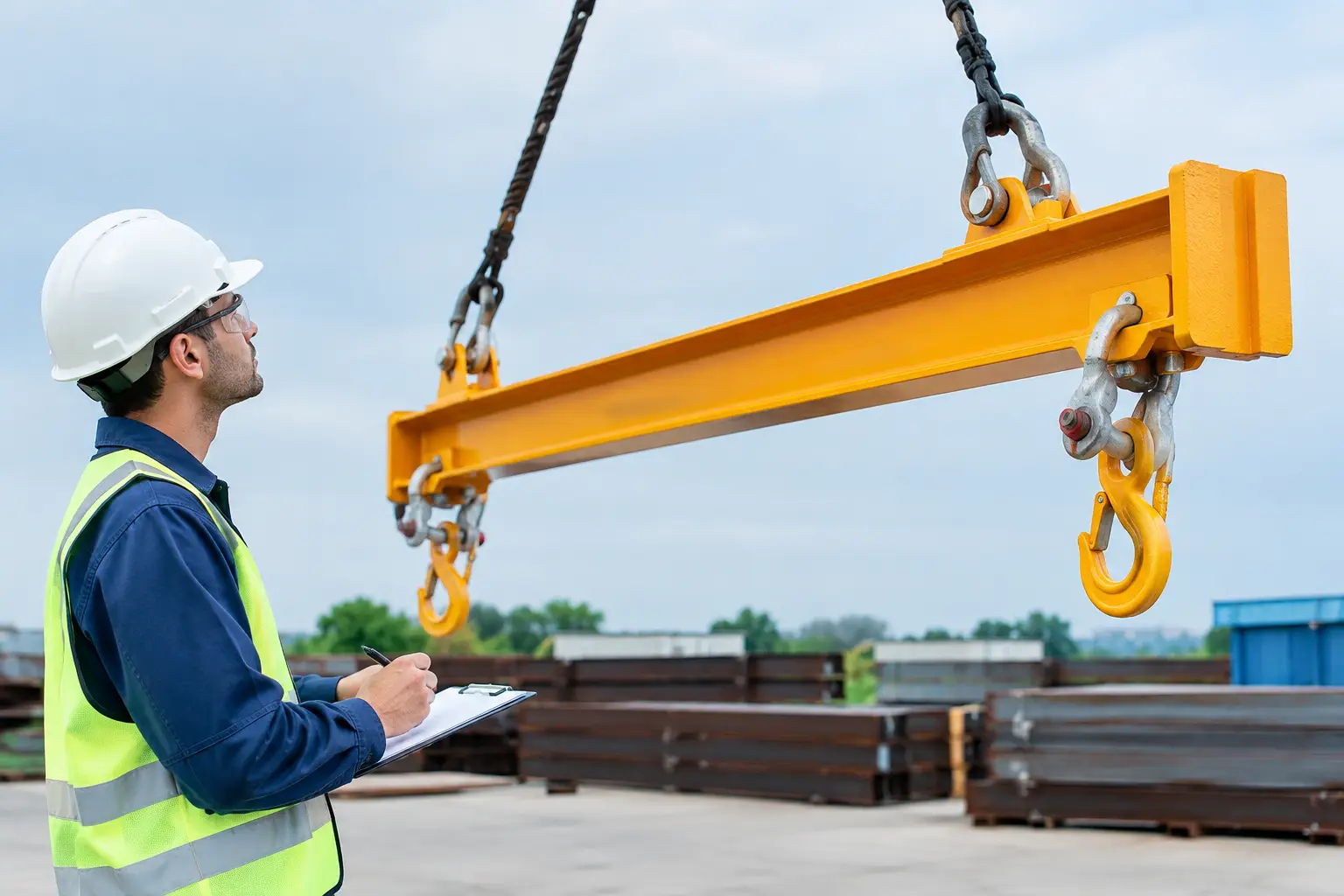
A hook found with an opened throat or a stem that no longer sits true has already delivered a warning. Understanding why lifting hooks bend is not simply an inspection exercise. It helps lifting supervisors identify an unsafe load path, remove compromised hardware before failure, and correct the conditions that caused the damage.
A lifting hook is designed to carry load through a specific geometry: load seated in the bowl, force acting along the hook’s centerline, and a compatible sling, shackle, or lifting eye bearing correctly. When that geometry is altered, the hook can deform permanently. Even minor visible bending can reduce strength, affect latch operation, and make the next lift less predictable.
Why Lifting Hooks Bend Under Load
Permanent hook deformation occurs when the material has been stressed beyond its elastic limit. Within its intended working load limit, a properly selected and correctly loaded hook should return to its original shape after the load is removed. Once the hook stays open, twisted, stretched, or offset, it has been overloaded or improperly loaded, or has suffered damage that has changed its capacity.
The most obvious cause is a load that exceeds the marked working load limit. This may result from incorrect weight estimates, lifting a load that is snagged or still secured, or adding rigging components without accounting for their effect on the load. Dynamic loading is equally significant. A load that is jerked, suddenly stopped, dropped onto a sling, or pulled free can impose forces well above the calculated static weight.
However, many bent hooks are not caused by a straightforward overload. They are caused by force being applied in the wrong direction.
Side Loading and Off-Center Pulls
Standard lifting hooks are generally intended for in-line loading. Side loading occurs when the load pulls across the hook rather than through its center plane. This introduces bending stresses that the hook was not designed to carry.
Typical field causes include a sling leg running at an angle across the hook, a chain link bearing against the point of the hook, or a load shifting during hoisting. In multi-leg lifts, unequal sling-leg tension can also pull the master link or hook assembly out of alignment. The problem is especially common where there is insufficient headroom and rigging is forced into an awkward configuration.
A hook may appear suitable by capacity, yet still be unsafe when its orientation and connection do not allow the load to seat correctly. Capacity markings do not override the manufacturer’s loading restrictions.
Point Loading and Incorrect Seating
The strongest area of a lifting hook is the bowl, where the load is intended to bear. Loading at the tip, latch, or throat creates a concentrated stress point and opens the hook under load. This is often seen when an oversized chain link, shackle bow, or lifting eye does not fit the hook bowl and is allowed to sit near the point instead.
Forcing a connection into a hook is not a field adjustment. It is an indication that the hardware is incompatible. A correctly configured connection should seat naturally, allow free movement as the load aligns, and avoid contact with the latch or hook point.
Sling Angles and Uneven Load Distribution
As sling angles decrease, tension in each sling leg increases. A two-leg sling arrangement does not automatically divide the load evenly, particularly when the center of gravity is off-center, sling legs differ in length, or connection points are not symmetrical. The resulting increase in tension can overload hooks, master links, shackles, and other components even when the total load weight seems acceptable.
Unequal loading is also common in cargo handling and machinery lifts where one lifting point takes more weight during the initial take-up. A controlled trial lift allows the team to confirm balance, connection seating, and load behavior before proceeding to full height.
Damage That Can Make a Hook More Likely to Bend
Not every issue begins at the moment of a lift. Corrosion, mechanical damage, unauthorized heat exposure, and poor repair practices can reduce the margin of safety built into the hook.
Deep gouges, sharp nicks, and abrasion create stress concentrations. Corrosion may remove material and obscure cracking, particularly on equipment used in marine, port, and offshore conditions. Repeated impacts from handling, contact with steel structures, or dropping the hook onto deck plating can also damage the surface and alter the hook profile.
Heat is another concern. Welding on a hook, heating it to reshape it, or exposing it to uncontrolled high temperatures can change the mechanical properties of alloy steel. Plated and coated hooks may also conceal defects if inspection is limited to a quick visual check. Hooks must not be modified unless the manufacturer provides a documented and approved procedure.
What a Bent Hook Tells the Inspection Team
A bent hook is evidence, not just a defective item. The deformation should trigger a review of the lift arrangement and operating practice. Replacing the hook without investigating the cause can place the replacement into the same damaging conditions.
During pre-use and periodic inspections, look for throat opening, twisting, a bent or stretched shank, wear in the bowl, cracks, corrosion pitting, and damage to the latch. Check that identification markings and working load limit information remain legible. The latch should close properly, but a functioning latch does not make an improperly seated load safe.
Hook throat opening should be assessed against the manufacturer’s rejection criteria. A small change can be difficult to judge by eye, so comparison with original dimensions, gauges, or documented inspection records is valuable. Any visible permanent deformation is a clear reason to remove the hook from service pending assessment by a competent person.
Do not straighten a bent hook in the workshop or on site. Straightening can create hidden cracking or alter heat treatment, leaving a hook that looks acceptable but no longer performs as designed. The same caution applies to welding, grinding away major defects, or fitting unauthorized replacement latches.
Preventing Hook Deformation Before the Lift
Prevention starts with equipment selection. The hook must have an appropriate working load limit for the planned lift, but it must also be compatible with the sling type, connection hardware, load geometry, and anticipated angle of pull. A larger hook is not automatically the answer if its bowl does not suit the connecting component or it introduces poor alignment.
The lift plan should identify the load weight, center of gravity, pick-point condition, sling angles, and route. For non-routine, heavy, or constrained lifts, it should also define the rigging configuration and any restrictions on side loading. The team needs a common understanding of who controls the lift and when to stop if the load shifts, snags, or fails to balance.
Before hoisting, confirm that the hook is centered over the load and that every connection is fully seated in its intended bearing area. Take up slack slowly. A trial lift just clear of the support surface is the practical point to recheck balance and alignment. If the hook rotates, the sling migrates toward the point, or a connection bears on the latch, lower the load and re-rig.
For marine and industrial operations, inspection discipline must account for the actual environment. Salt exposure, abrasive cargo, frequent handling, and time pressure during port calls can accelerate damage and encourage shortcuts. Traceable equipment, documented inspections, and correctly matched rigging reduce uncertainty when schedules are tight.
When Replacement and Certification Matter
A hook removed from service should be segregated so it cannot return to a lifting set by mistake. Replacement hardware should match the application and maintain the capacity of the complete assembly. Where hooks are part of chain slings, wire-rope slings, hoists, or custom lifting arrangements, the assembly may require inspection, proof testing, and updated documentation after replacement.
For critical lifts and regulated work scopes, records matter as much as the physical hardware. Identification, inspection status, test certificates, and applicable PE-endorsed documentation help the lifting team verify what is in service and whether it is suitable for the job. C&C International supports this process with correctly configured lifting gear, certified load testing, and job-ready assemblies cut, swaged, and documented to specification.
A bent hook should never be treated as cosmetic damage. It is a visible sign that the load path, equipment condition, or lifting method needs attention. Remove it from service, establish what caused the deformation, and correct the rigging arrangement before the next lift turns that warning into an incident.