A lift that looks routine alongside a vessel can become a high-consequence operation once vessel motion, wind, restricted deck space, and suspended loads are involved. This offshore lifting operations guide sets out the controls that help lifting teams plan the work, select suitable gear, and maintain positive control from the first toolbox talk through final set-down.
Start With the Lift, Not the Equipment
Offshore lifting starts with a defined lifting plan. The team must know exactly what is being lifted, where it will travel, how it will be landed, and who has authority at each stage. Selecting slings and shackles before these questions are answered is a common source of unsuitable configurations.
Establish the load weight using verified information, not estimates. Include all items carried with the load: lifting frame, spreader beam, lifting points, hoses, transport saddles, and any loose components that could shift. Where the center of gravity is uncertain, treat it as a planning issue that requires engineering input or a controlled test lift. An off-center load can overload one sling leg even where the calculated total load appears to be within capacity.
The lift plan should identify the crane, applicable operating radius, hook height, load path, landing area, exclusion zone, communications method, and environmental limits. It should also state whether the lift is routine, non-routine, or critical under the project’s lifting procedure. Requirements vary by operator, vessel, flag state, client, and local regulation, so the governing rules must be confirmed before work begins.
Define the Load Path and Landing Condition
A clear route matters as much as lifting capacity. Check for pipework, handrails, antennae, open hatches, personnel access routes, and areas where a load could snag or strike equipment. On a moving vessel, the planned path must account for relative motion between the crane, supply vessel, and receiving deck.
The landing area needs enough bearing capacity and space for the load and its rigging. Plan how slings will be released without placing hands beneath a suspended load or forcing personnel into a pinch point. If the load will be landed on dunnage, ensure the dunnage is level, stable, and positioned to prevent damage to the load or lifting gear.
Offshore Lifting Operations Guide: Control the Environment
Weather is not a background condition offshore. It changes load behavior, visibility, deck footing, and the ability of the crane operator and banksman to maintain control. Wind limits must be based on the crane’s approved load chart, the load’s sail area, and site-specific procedures. A large, light structure may become unmanageable at a wind speed that would not affect a compact machinery item of the same weight.
Sea state and vessel motion are equally relevant for ship-to-ship and vessel-to-platform transfers. Dynamic forces can be substantially higher than static load weight. A lift may need to be delayed when heave, roll, or pitch prevents safe hook engagement, stable landing, or clear communication. The correct decision is not always to find a stronger sling. Often it is to wait for an acceptable weather window or revise the transfer method.
Visibility, lightning risk, rain, and slippery deck surfaces should be addressed during the pre-lift review. Set clear stop-work criteria before the lift starts so the team does not have to negotiate basic safety controls under time pressure.
Select Rigging for the Actual Configuration
Every item in the rigging arrangement must be suitable for the service, not simply rated above the load weight. Confirm the working load limit of each sling, shackle, hook, master link, and connection point. Check that ratings remain adequate at the planned sling angle. As the angle from vertical increases, tension in each sling leg rises quickly.
For multi-leg slings, do not assume all legs share the load equally. Uneven loading can result from center-of-gravity position, different leg lengths, poor connection geometry, or a load that settles during lifting. The applicable rated capacity should reflect the manufacturer’s information and the governing lifting standard.
Wire rope slings are well suited to demanding industrial and marine service when correctly selected, protected, and maintained. They require attention to bend radius, termination type, abrasion points, and damage from crushing or kinking. Polyester web slings can protect finished surfaces and provide flexibility, but they need protection from sharp edges, hot surfaces, chemicals, and abrasive contact. Alloy chain slings offer durability and adjustability, but the team must inspect links, shortening devices, and hooks for wear, deformation, and unauthorized repair.
Shackles deserve particular care. Match the shackle type and pin arrangement to the connection, avoid side loading unless the manufacturer permits it, and ensure the pin is fully engaged. Do not force multiple sling eyes into a shackle body when crowding prevents correct seating. A larger properly configured shackle, a master link, or an engineered lifting arrangement may be required.
Protect Against Edge Damage and Rotation
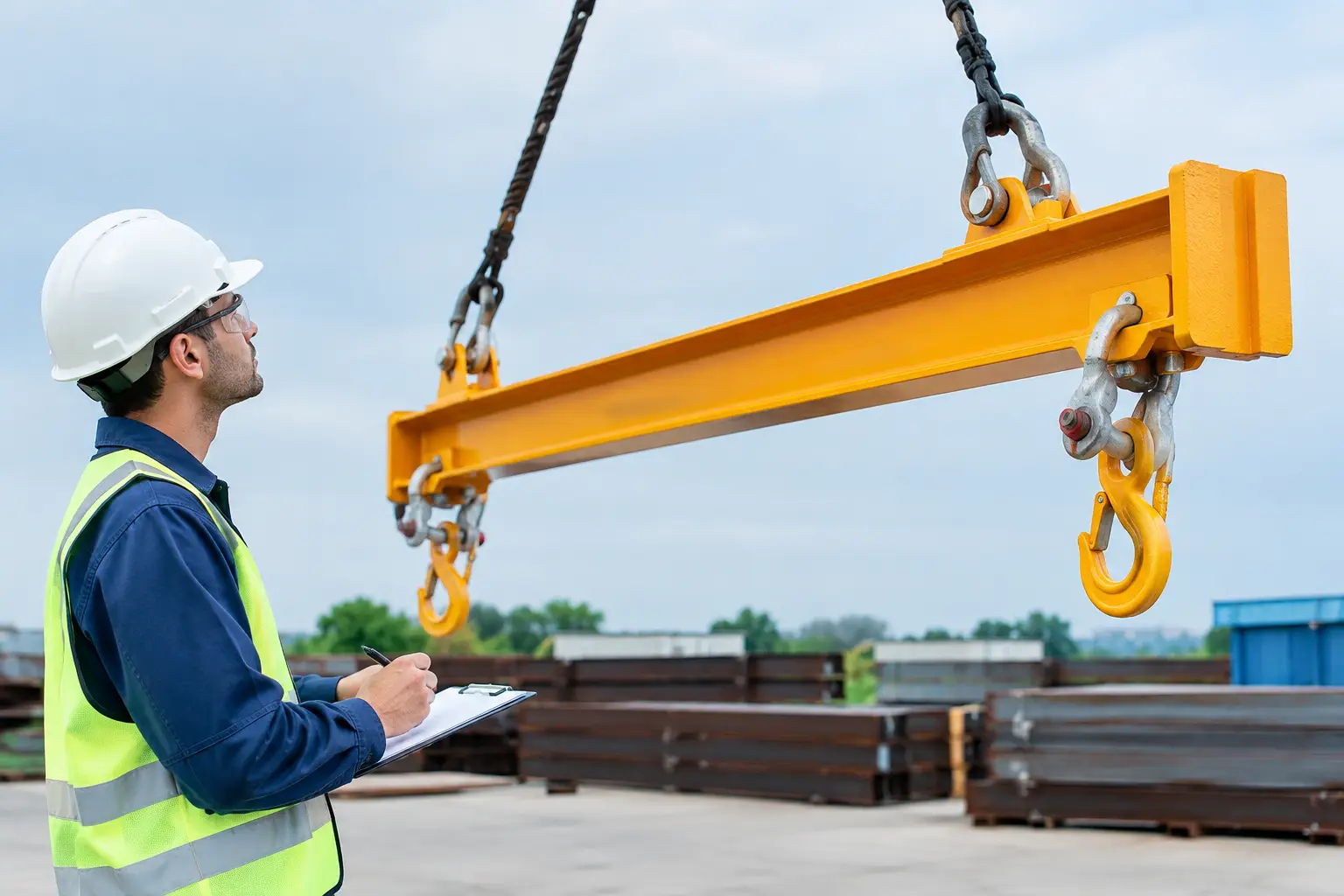
Sharp edges can reduce sling capacity or cut a synthetic sling during the lift. Use suitable edge protection designed for the load and sling type, rather than improvised packing that can shift under load. Where the load may rotate, assess whether tag lines, a spreader beam, lifting beam, or purpose-designed lifting points are needed.
Tag lines help control a load, but they do not make an unstable lift safe. They must be long enough to keep personnel out of the drop zone and should not be wrapped around a hand, body part, or fixed structure. Teams should also consider wind effects before relying on tag lines for control.
Inspect Gear and Verify Documentation
Pre-use inspection is a field control, not a paperwork exercise. The lifting supervisor and rigging team should examine all equipment for visible defects before deployment. Remove gear from service if there is doubt about its condition, identification, or certification status.
Check wire rope slings for broken wires, severe abrasion, corrosion, birdcaging, crushing, kinks, damaged thimbles, and compromised ferrules. Inspect web slings for cuts, melting, chemical attack, damaged stitching, and unreadable labels. For shackles, hooks, and chain components, look for distortion, cracks, excessive wear, damaged threads, latch defects where fitted, and missing identification marks.
Certificates must be traceable to the equipment in use. Confirm working load limits, unique identification numbers, test records, inspection dates, and any project-specific requirements. For offshore projects, documentation may need review by the client, certifying authority, or professional engineer before mobilization. Certified load testing, traceable tagging, and PE-endorsed documentation can prevent delays when equipment reaches the vessel or worksite.
C&C International can cut and swage wire rope to specification, complete certified load testing, and supply job-ready lifting assemblies with supporting documentation. For planned campaigns and urgent replacements alike, that preparation reduces the risk of assembling an unverified rigging arrangement offshore.
Run the Lift With One Clear Command Structure
A controlled lift requires defined roles. The crane operator controls the crane. The designated signaler or banksman gives signals. The lifting supervisor directs the operation and has authority to stop it. Everyone involved must understand those boundaries before the hook takes weight.
Hold a focused pre-lift briefing at the work location. Confirm the load, rigging arrangement, travel path, landing point, radio channel or hand signals, weather status, exclusion zone, and emergency response. The crew should understand when a test lift is required and what will be checked during it, including load balance, rigging seating, brake response, and clearance.
Use a slow, deliberate test lift to take slack out of the rigging and verify that the load is stable. Pause before raising the load further. If a sling shifts, a shackle side-loads, the load tilts unexpectedly, or communications fail, lower the load and correct the issue. Do not attempt to adjust rigging while it is under tension.
Stop the lift immediately when any of these conditions occur:
- Wind, vessel motion, or visibility exceeds the agreed operating limit.
- Personnel enter the exclusion zone or move beneath the suspended load.
- The load becomes unstable, rotates unexpectedly, or contacts an obstruction.
- Communications are lost, conflicting signals are given, or the signaler is not visible.
- Damage, abnormal noise, hydraulic issues, or a rigging defect is observed.
Manage People, Not Just Hardware
Most lifting controls depend on disciplined behavior. Crews need enough time to inspect gear, establish barriers, and discuss changes to the plan. Schedule pressure is never a reason to bypass a pre-use check or proceed with uncertain load information.
Fatigue is also a practical offshore risk. Long shifts, heat, noise, and vessel movement can reduce concentration during tasks that require precise judgment. Supervisors should watch for rushed signaling, missed checks, and informal substitutions of lifting gear. If conditions change, stop and reassess rather than treating the original plan as fixed.
Good offshore lifting performance is built before the crane moves: verified load data, correctly rated and inspected rigging, a realistic weather assessment, and a crew that knows exactly when to stop. That discipline protects people, equipment, and the operating schedule when conditions are least forgiving.