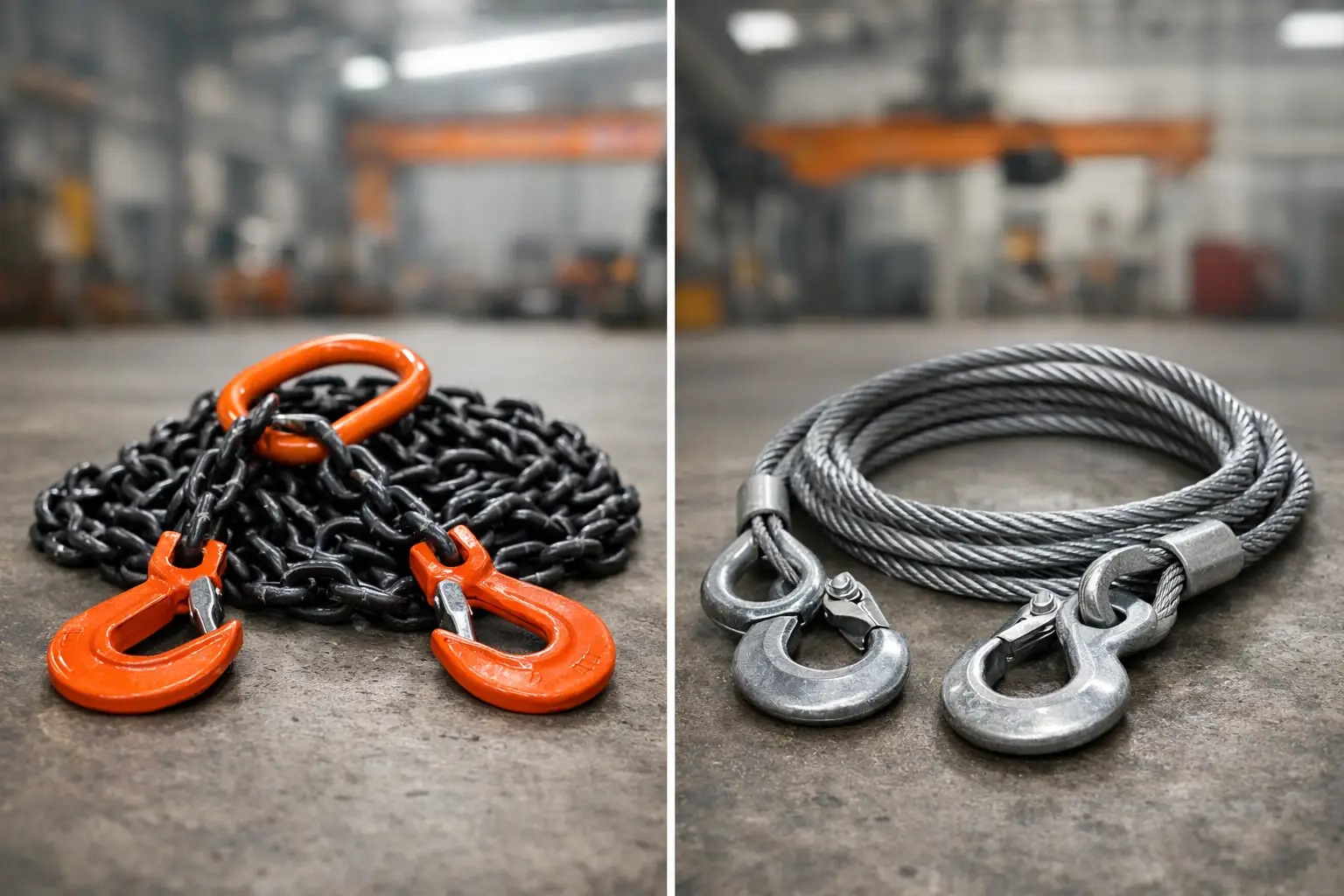
A wire rope that looks right on a drawing can fail early when its construction does not suit the sheave, drum, load path, or exposure it will face. For lifting supervisors, vessel operators, and project teams, selection is not a catalog exercise. This wire rope selection guide focuses on the decisions that determine safety, service life, and whether the finished assembly is fit for the job.
Start with the application, then specify the rope. Diameter alone is never enough. A correct specification considers load, duty cycle, bending, abrasion, corrosion, termination, and the documentation required for handover or inspection.
Start With the Working Conditions
Define what the rope must do before comparing constructions. Is it a single-part hoist line, a multi-part reeving system, a towing or winch line, a luffing rope, a crane pendant, or a fixed sling assembly? The answer changes the preferred balance between flexibility, abrasion resistance, rotation resistance, and fatigue performance.
The load case needs the same discipline. Establish the maximum working load, the number of falls in the reeving arrangement, the line pull, and any shock loading. Consider off-lead angles, side loading, acceleration, snatch effects, and whether the load can move unexpectedly. A rope used for controlled static support is not exposed to the same forces as one operating on a frequently cycled winch or crane.
Environmental exposure also affects the choice. Marine and offshore equipment may face salt spray, standing water, heat, abrasive cargo, sand, or chemical contamination. Galvanized wire rope can provide useful corrosion protection in many exposed applications. Where corrosion resistance, hygiene, or a particular site specification demands it, stainless-steel rope may be appropriate. The trade-off is that material selection, strength, availability, and cost must all be reviewed together.
Wire Rope Selection Guide: Match Construction to Duty
Wire rope construction describes the number of strands, the number and arrangement of wires within each strand, and the core. These features influence how the rope behaves in service.
A 6-strand rope is a common industrial choice because it offers a practical balance of strength, abrasion resistance, and flexibility. Within that family, a construction with fewer, larger outer wires generally handles abrasion well, while one with more, smaller wires is usually more flexible and better suited to repeated bending over sheaves. Neither is universally better. A rope dragged across rough surfaces has different priorities from one running continuously through a block system.
An 8-strand construction can offer higher flexibility for certain reeving applications. Rotation-resistant ropes are designed for lifting situations where load spin must be controlled, particularly with long single-part falls or guided loads that cannot freely rotate. They require careful handling, correct installation, and compatible equipment. Substituting one rope type for another without checking the crane or winch manufacturer’s requirements can create handling and inspection problems.
The core matters as well. A fiber core can improve flexibility and lubricant retention, but it may not suit applications requiring greater resistance to crushing on a drum. An independent wire rope core, often called an IWRC, provides higher metallic support, better crushing resistance, and improved performance in many demanding lifting and winching duties. It is commonly selected where high line pull, multilayer spooling, or elevated temperatures are part of the operating condition.
Lay direction and lay type should not be treated as minor details. Regular lay is widely used and tends to be more stable under ordinary handling. Lang lay can provide greater abrasion resistance in some circumstances, but it has different torque characteristics and may be less suitable where rope rotation or handling stability is a concern. The specified lay must suit the drum groove, reeving arrangement, and equipment manufacturer’s guidance.
Select Diameter, Grade, and Strength Correctly
Diameter must match the system, not merely the desired breaking strength. Sheaves, drum grooves, wedge sockets, clamps, swage dies, and other fittings are sized for a specific rope diameter and construction. An undersized rope can be overloaded. An oversized rope may sit incorrectly in grooves, bend poorly, or prevent proper termination.
Check the rope’s minimum breaking force and calculate the required design factor according to the application, governing standard, equipment instructions, and site rules. The working load limit of a completed sling or assembly is not simply the rope’s breaking force divided by a generic number. Termination efficiency, sling angle, reeving, hardware rating, and the intended mode of use all affect the final allowable load.
Wire grade also changes the strength and behavior of the rope. Higher-grade wires can increase minimum breaking force for a given diameter, but that does not automatically make them the best answer. The complete system must be compatible, including sheave diameter, drum design, fittings, and inspection criteria. A practical specification identifies the required construction, nominal diameter, grade, finish, core, lay, and minimum breaking force rather than relying on a shorthand description.
Bending ratio deserves early attention. A rope repeatedly bent over undersized sheaves experiences accelerated fatigue. As a rule, equipment with larger sheaves relative to rope diameter supports longer fatigue life, but the applicable ratio depends on rope type and duty. Inspect sheave grooves for wear, damage, and incorrect profile before installing a new rope. A good rope on a damaged sheave will not deliver its expected service life.
Specify the Termination as Part of the Assembly
The termination is part of the load-bearing system. It must be selected for the rope construction, the application, and the required proof-load or certification regime.
Swaged sockets provide a compact, engineered termination for many lifting, structural, and marine applications when correctly selected and processed. Spelter sockets are used where high termination efficiency and demanding service requirements apply. Wedge sockets can be practical for certain crane and winch applications because they allow replacement, but correct dead-end orientation, tail length, and installation method are essential. Wire rope clips may be acceptable only in specific temporary or non-critical arrangements and must be installed in the correct quantity, spacing, and orientation.
Do not assume a termination rated for one rope type is suitable for another. Rotation-resistant ropes, compacted ropes, and ropes with particular lay characteristics may require specific socketing procedures or manufacturer-approved fittings. Mixing components from different systems without technical review can reduce efficiency or invalidate the intended rating.
For finished lifting assemblies, specify the required end configuration clearly: eye size, thimble type, socket, ferrule, master link, hook, shackle, or other connection hardware. Every item in the assembly must have a compatible working load limit and traceable identification.
Plan for Installation, Inspection, and Records
Premature rope damage often begins during installation. Prevent kinks, birdcaging, crushed sections, and uncontrolled unspooling by using the correct payoff method and maintaining tension during winding. New rope should be spooled onto a clean, serviceable drum under controlled tension so the wraps seat properly. Cross-winding, loose wraps, and poor fleet angle can quickly damage a rope, especially during multilayer spooling.
Lubrication is another operational decision, not a cosmetic one. The rope needs lubrication compatible with its original lubricant, service environment, and inspection process. Proper lubricant reduces internal friction and helps protect against corrosion. Excessive buildup, however, can conceal broken wires or make inspection more difficult.
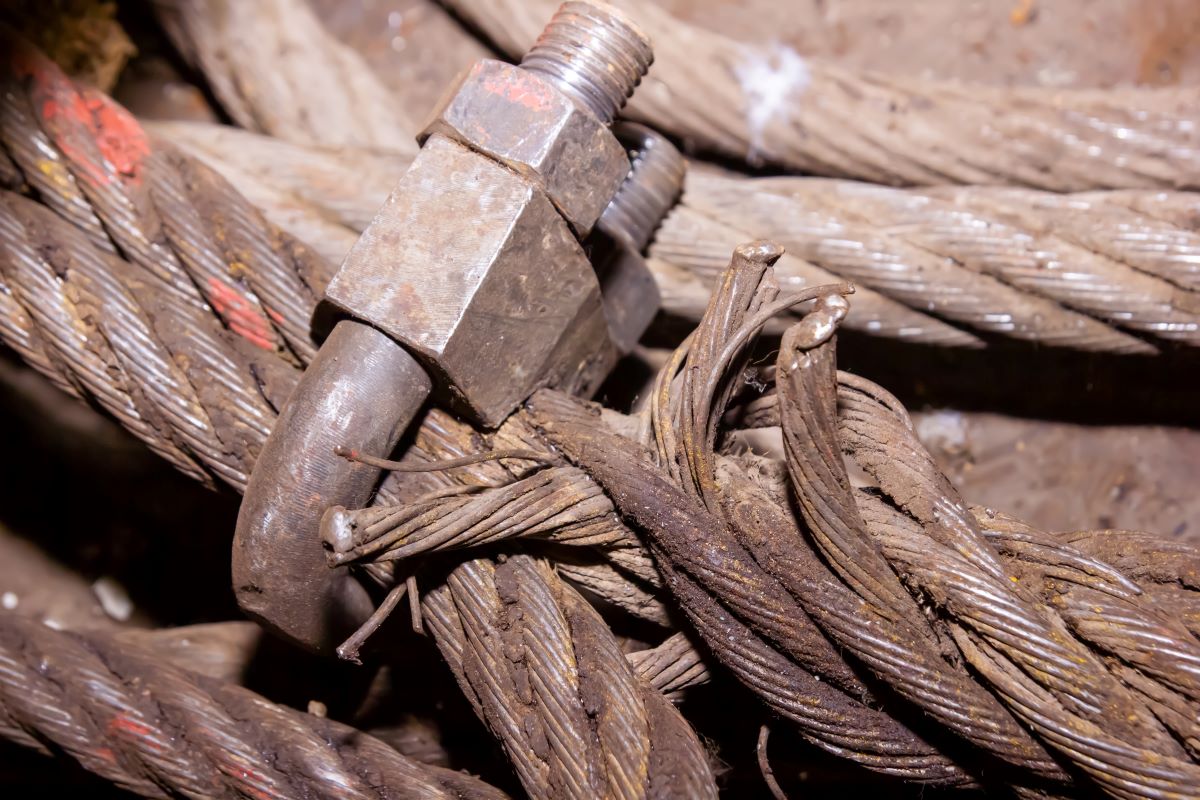
Inspection intervals should reflect the severity of service, usage frequency, and applicable regulations. Inspect for broken wires, diameter reduction, corrosion, distortion, heat damage, damaged strands, crushed areas, and termination condition. Record findings and remove equipment from service when discard criteria are reached. A current certificate is valuable, but it does not replace routine pre-use checks and competent examination.
For project work, the procurement package should state the application, rope specification, required assembly configuration, working load limit, test requirement, marking, and documentation needed. This avoids last-minute changes at the quay, yard, or site. C&C International can cut and swage wire rope to specification, arrange certified load testing, and provide PE-endorsed documentation where the project requires it.
The best wire rope choice is the one that fits the complete operating system and can be inspected, maintained, and replaced without guesswork. Bring the actual duty, equipment details, and documentation requirements into the specification early, and the finished assembly will be safer to deploy when the job is under pressure.