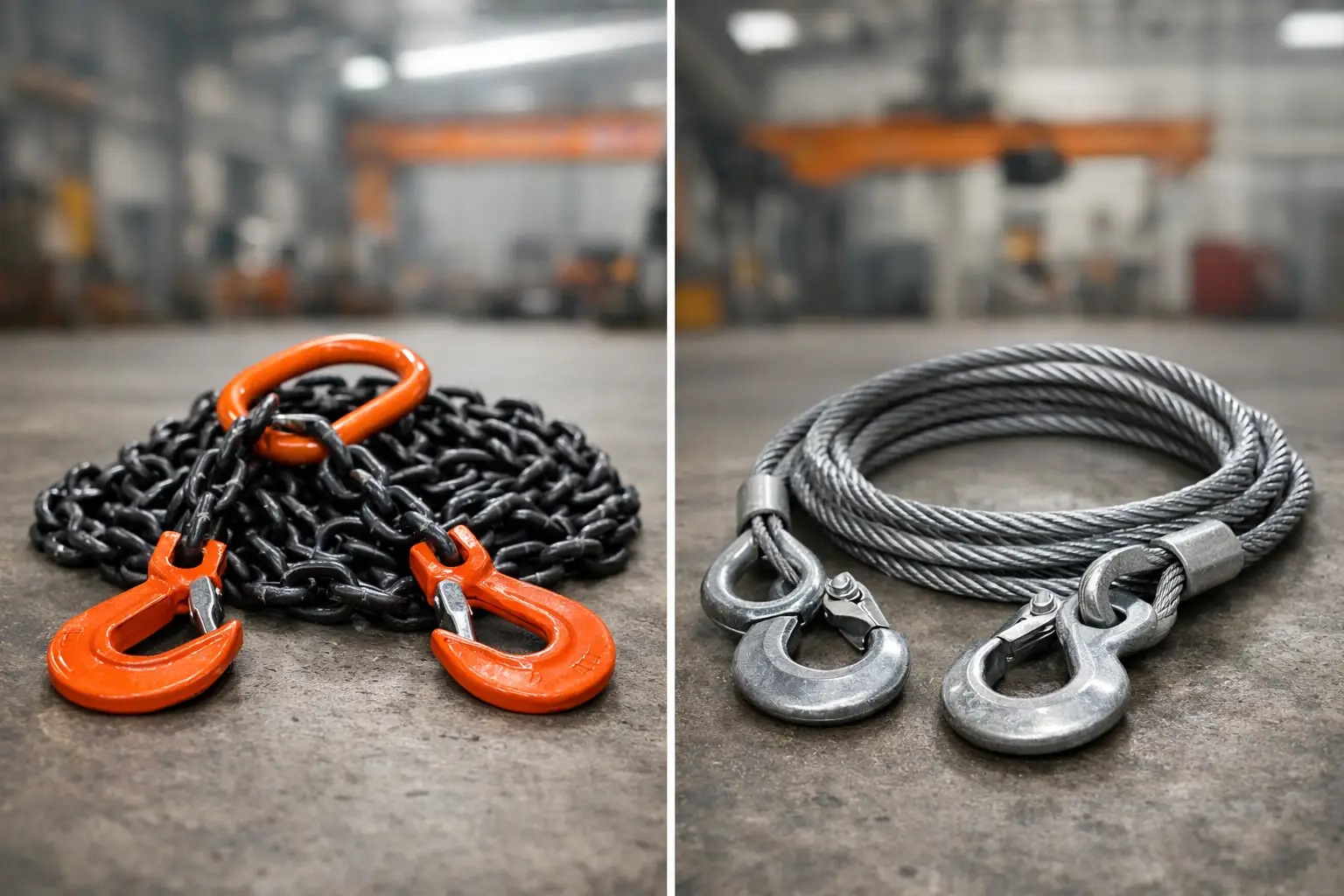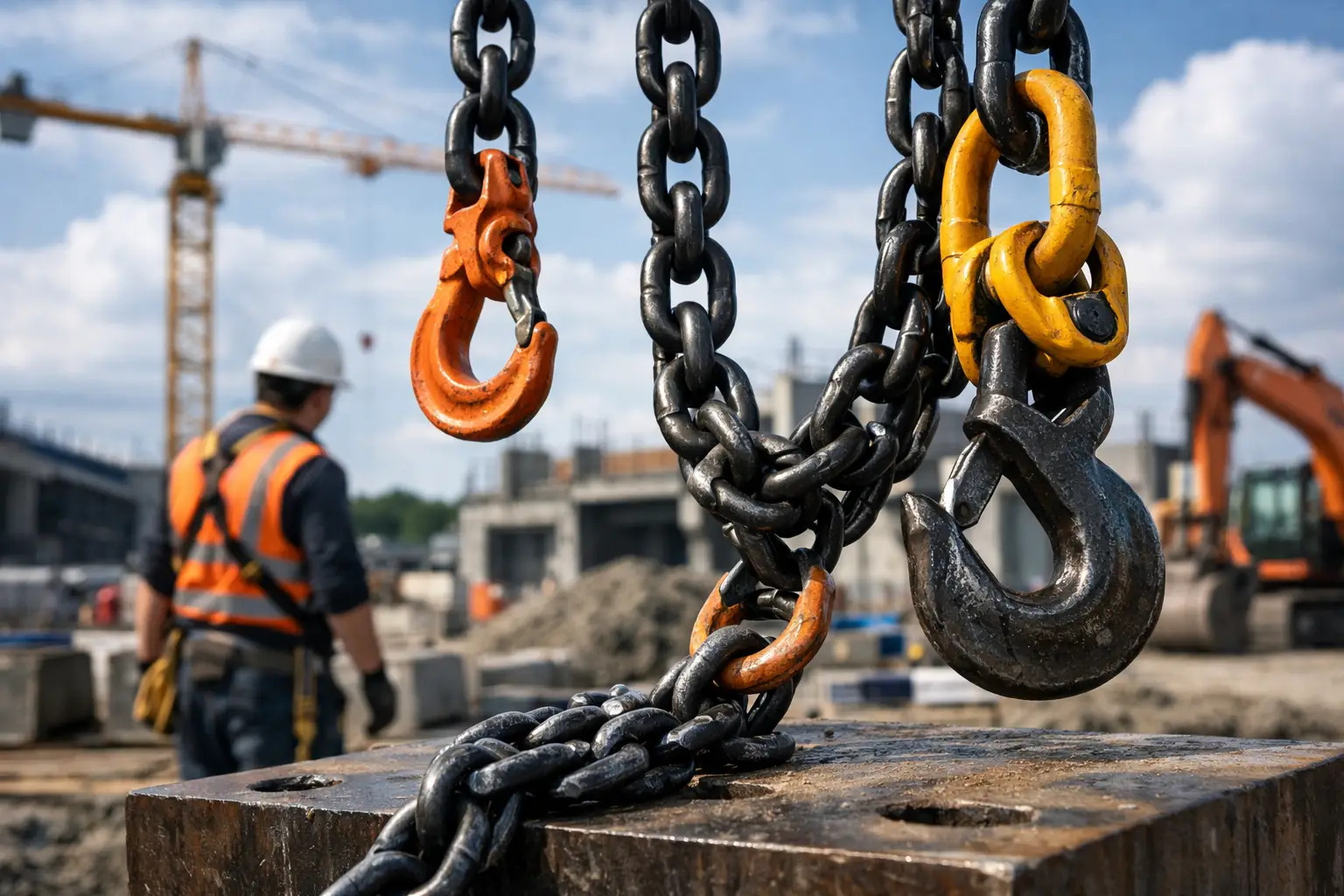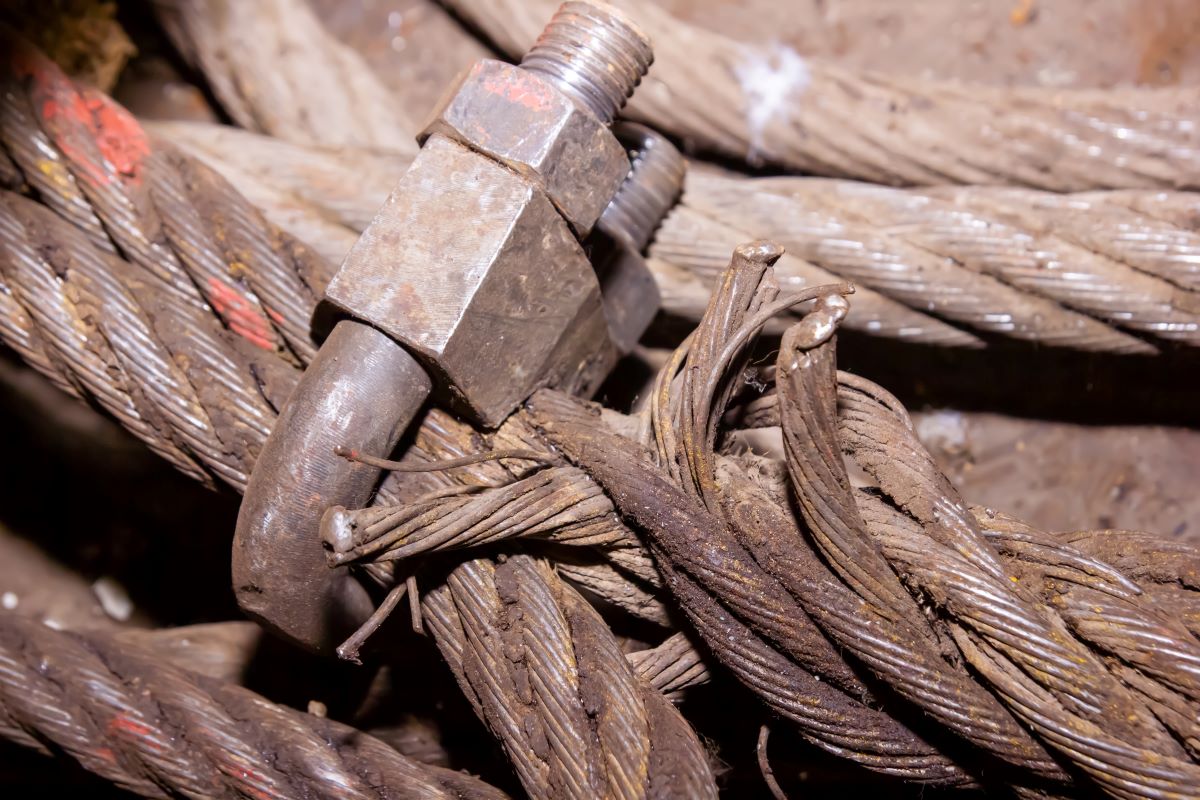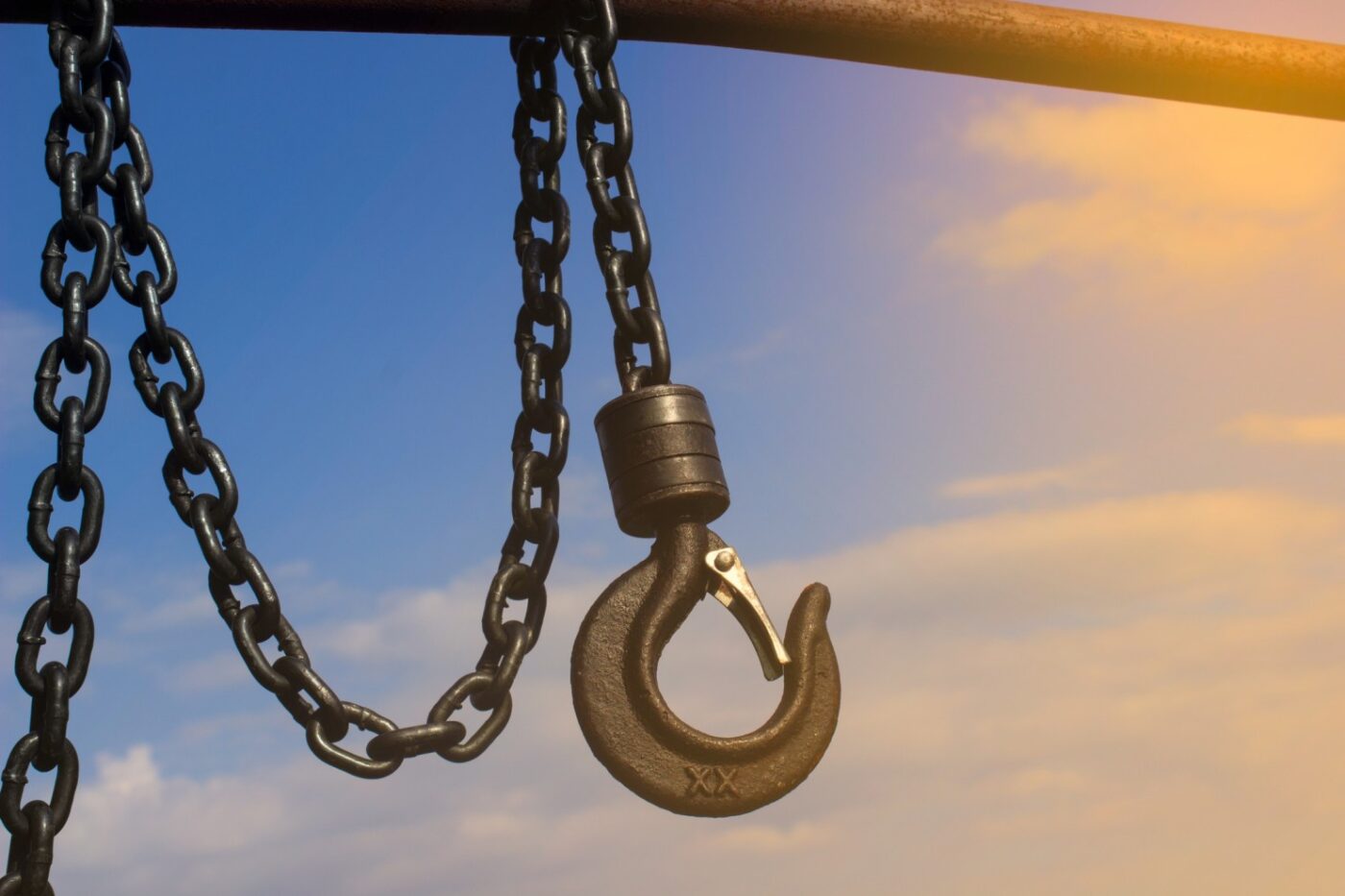
A chain block that comes back to the workshop is usually worn. A lever block that comes back is usually broken. Not because of build quality, since both come off the same lines to the same standards, but because of how they get used. Almost every chain block and lever block failure in Singapore’s yards traces back to the same few habits, and none of them cost money to fix.
The Four Ways a Chain Block or Lever Block Actually Fails
| What fails | What caused it | What it costs you |
| Bent or sprung lever | Cheater bar | The whole unit |
| Stretched load chain | Sustained overload, side loading | Chain replacement, often scrap |
| Missing safety latch | Snapped off, never reordered | A failed inspection |
| Slipping or burnt clutch | Repeated attempts to lift an overload | Unit condemned |
Notice what is absent. No casting failures. No gear train failures. The bodies outlive the abuse. What dies is the lever, the chain and the hook: the three parts a rigger actually touches.
The Cheater Bar Is an Overload, Not a Workaround
A lever block’s handle is not an arbitrary length. It is engineered so that one person at full effort produces close to the rated load, and no more. The lever is the load limiter.
Slide a scaffold tube over it and you have not found leverage. You have defeated the only mechanism stopping you exceeding the working load limit. If the load will not move on the standard lever, the tool is not underpowered. The load is too heavy. Bent levers are not evidence of a weak product. They are evidence of a load the block was never rated to lift.
Your Chain Block’s WLL Is Set by the Load Chain, Not the Casting
The casting says 2 tonne. The casting is not the authority.
Working load limit is set by the grade and diameter of the load chain. Grade 80 and Grade 100 chain of the same diameter carry different loads, and the difference is stamped on the chain, not moulded into the housing. Replace a worn chain with the wrong grade, which happens whenever a unit is repaired cheaply, and you have quietly downgraded a block that still reads 2 tonne to every rigger who picks it up. After any chain replacement, find the grade stamp and confirm it matches the certificate. No stamp means no rated block, only an unknown. Our chain and lever blocks range carries both.
The Chain Block Safety Latch Nobody Replaces
The safety latch is treated as a convenience feature. It is not. Its job is to stop the sling jumping the hook throat when a load goes slack then snatches, which happens every time a load settles, swings, or lands unevenly. The latch snaps off, nobody reorders a two-dollar part, and the unit stays in service another year. An inspector will fail it, and will be right.
While you are there, measure the lifting hook throat. An overloaded lifting hook opens up before it cracks, and throat opening beyond tolerance is the clearest deformation warning you get. A chain block safety latch that no longer closes properly is often the first sign the throat has already spread.
Load Chain Elongation: The Five-Minute Check Most Yards Skip
Load chain does not snap without warning. It stretches first. Measure across a defined number of links, compare against the manufacturer’s discard limit, and you will know the chain is finished long before it fails. Most yards skip this because it takes five minutes and finds nothing nine times out of ten. The tenth time is the one that matters.
Elongation is the visible warning. The invisible one is a fatigue crack at the interlink contact point, and no gauge finds that. Magnetic particle inspection does, which is why load chain deserves proper load testing and examination, not a glance from the ground.
When You Should Have Reached for the Chain Block
Most of this damage lands on lever blocks for one reason: someone used a lever block for a chain block’s job because it was closer.
| Task | Right tool |
| Sustained vertical chain block lifting | Chain block. Hand chain and gear reduction hold a load indefinitely, with control. |
| Tensioning, pulling, short travel | Lever block. Fast, one-handed, works at awkward angles. |
| Long lifts, precise positioning | Chain block. |
| Tight spaces, horizontal pull | Lever block. |
A lever block is a tensioner that can lift. A chain block is a lifter. The moment chain block lifting becomes the actual task, walk back and get the right unit.
Frequently Asked Questions
Can you use a cheater bar on a lever block?
No. The lever length is engineered so that full effort from one person produces the rated load. Extending it exceeds the working load limit by design, and it is the leading cause of bent levers and stretched load chain.
What is the difference between a chain block and a lever block?
A chain block uses a hand chain and gear reduction for sustained vertical lifting with fine control. A lever block uses a ratchet lever for tensioning, pulling and short travel at awkward angles. They are not interchangeable.
Does a chain block need a safety latch?
Yes. The chain block safety latch prevents the sling leaving the hook throat during slack and snatch conditions. A missing or non-closing latch fails inspection and should take the unit out of service.
How do you know when a load chain is worn out?
Measure elongation across a defined number of links against the manufacturer’s discard limit. Chain stretches before it breaks. Cracks at the interlink contact point need magnetic particle inspection to detect.
Buy the Right Block, Then Keep It Right
None of these failures are exotic. A cheater bar, an unreplaced latch, a chain nobody gauged, and a lever block asked to do a chain block‘s work. Fix those four habits and your gear will outlast the people who called it fragile.
We hold our own gear to the same standard. Our Know-how, Ability, Execution (KAE) framework runs through every inspection we carry out, reinforced by regular in-house technical training led by our Senior Technical Consultant, an ACLP 2.0-certified trainer with over 25 years of hands-on experience in rigging and lifting gear, so that spotting a bent lever, a missing latch or a stretched chain becomes routine rather than guesswork.
C&C International Trading has supplied and tested lifting gear across Singapore’s marine, offshore, construction and logistics sectors for more than 30 years, including a recent inspection of 76 mm anchor chains and 150T shackles before mission-critical deployment, with in-house testing backed by PE endorsement. Talk to our team about specification, or book load testing and certification for the blocks already in your yard.