A lift can be delayed by a single missing certificate, an unreadable identification tag, or a shackle with a working load limit below the rigging arrangement. Preparing certified lifting gear is therefore not a paperwork exercise performed after equipment reaches the worksite. It is a controlled process that starts with the lift plan and ends only when the gear is correctly connected, inspected, and released for use.
For vessel operations, offshore maintenance, port handling, construction, and industrial shutdowns, the objective is straightforward: provide gear that is fit for the specific lift, traceable to its supporting documents, and ready for field conditions. The details matter because lifting systems are only as reliable as their lowest-rated or poorly selected component.
Start With the Lift, Not the Equipment Shelf
Certified gear cannot be selected by load weight alone. The lifting supervisor or appointed person should first define what is being lifted, how it will be lifted, where the operation will take place, and what could change during the lift. A 5-ton item may require substantially more than 5 tons of rigging capacity once sling angles, center of gravity, dynamic effects, and connection geometry are considered.
The lift plan should establish the load weight from a reliable source, including any lifting frame, spreader beam, loose accessories, or retained contents. It should identify the center of gravity and approved lifting points, the intended crane or hoist, the rigging configuration, travel path, landing area, and any restrictions such as limited headroom, vessel motion, wind exposure, or confined access.
This information drives the selection of slings, shackles, hooks, clamps, chain assemblies, lifting beams, and hoists. It also determines whether standard equipment is suitable or whether a custom wire-rope sling, fabricated lifting arrangement, or engineered solution is required. Selecting equipment first and trying to make it fit the lift is a common source of unsafe substitutions.
Calculate the Actual Load on Each Leg
A multi-leg sling does not automatically divide load evenly. Sling angle is one of the most significant variables. As the angle between sling legs increases, tension in each leg rises. Uneven loading can also result from an off-center center of gravity, unequal sling lengths, flexible loads, or lifting points that are not aligned.
The lift planner must use the applicable sling-angle factors and manufacturer information to determine the tension imposed on each leg. The selected sling assembly, shackles, master links, hooks, and lifting points must all have a working load limit appropriate for that configuration. A component rated for the total load may still be inadequate if its individual connection sees a higher force.
Where there is uncertainty, reduce the angle, use a spreader beam, revise the connection points, or obtain competent technical advice. The safest arrangement is not always the quickest one to assemble.
Confirm the Complete Certified Lifting Gear Set
A certificate for one component does not certify the whole lifting system. Each item needs clear identification and supporting traceability appropriate to its use and applicable standards. Before dispatch or mobilization, check that the physical gear, identification marking, and documentation agree.
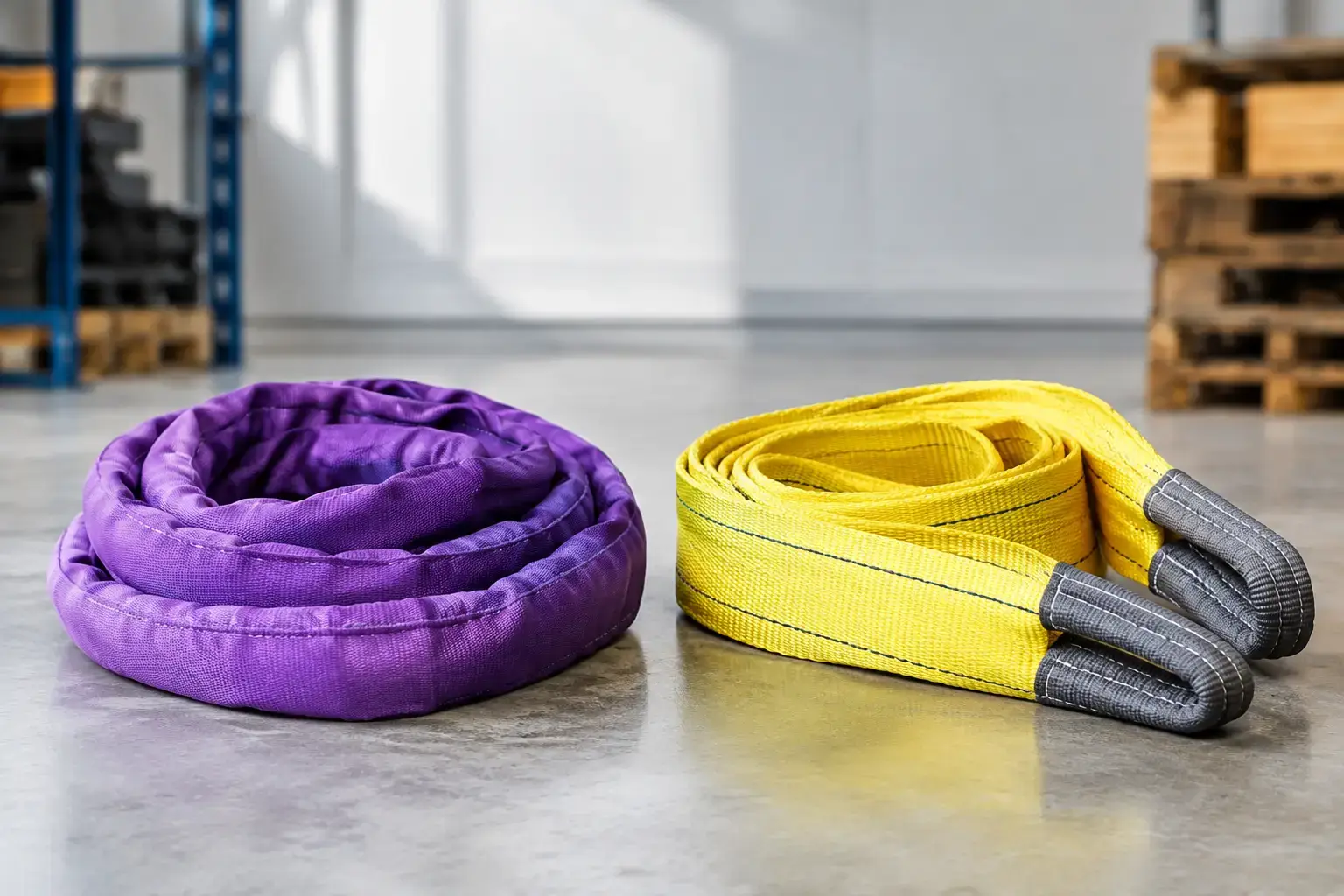
For wire-rope slings, confirm the rope diameter and construction, sling type, eye and ferrule details, leg length, working load limit, serial number, and any thimble or end-fitting specification. For chain slings, verify chain grade, diameter, number of legs, shortening devices, master links, hooks, and any safety latches. Polyester web slings and round slings require legible labels showing capacity, length, material, and identification details.
Hardware demands the same discipline. Shackles must have the correct type, size, pin arrangement, and working load limit. Hooks should be suitable for the connection and protected against unintended disengagement where required. Lifting clamps must match the plate thickness, material condition, lift direction, and approved operating range. Do not assume that a clamp suitable for vertical lifting can be used for lifting, turning, or transferring plate horizontally.
Documentation should include the relevant test certificate or certificate of conformity, inspection records where applicable, and identification that matches the item. For project-controlled lifts, a register tying each gear serial number to its certificate simplifies site verification and prevents uncertified substitutions.
Inspect Before the Gear Reaches the Hook
Certification confirms that equipment met stated requirements at the time of manufacture, test, or examination. It does not remove the need for pre-use inspection. Gear can be damaged in storage, transport, previous lifts, welding areas, marine exposure, or rushed handling on deck and on site.
The competent person conducting the inspection should look for deformation, cracks, sharp gouges, corrosion, heat damage, excessive wear, damaged threads, stretched links, broken wire strands, crushed rope, damaged splices, distorted hooks, faulty latches, and missing or illegible tags. Synthetic slings need particular attention for cuts, abrasion, chemical contamination, melted fibers, and damaged protective sleeves.
Quarantine any item with a defect, missing identification, or uncertain history. Marking it “for light use” is not an acceptable control. The gear should be removed from the lifting inventory until a competent person has assessed it, repaired it where permitted, or condemned it.
Storage condition is part of preparation. Keep slings off the ground, protected from standing water, welding spatter, direct chemical exposure, and sharp edges. Separate lifting gear from general tools so certified items are not mixed with unverified hardware. In marine environments, regular cleaning and corrosion checks are especially relevant because salt exposure can obscure markings and accelerate deterioration.
Load Testing and PE-Endorsed Documentation
Some equipment requires proof load testing, periodic examination, or project-specific acceptance before it can enter service. Requirements depend on the equipment type, intended application, client rules, flag-state or port requirements, and local regulations. The lift team should establish these requirements early, particularly where gear will be used offshore, on board a vessel, or for critical lifts.
Load testing should be carried out using suitable calibrated test equipment and a documented procedure. The resulting certificate must identify the item tested, test load, date, standard or method applied, result, and authorized signatory. If a client requires PE-endorsed documentation, this should be confirmed before fabrication or testing begins, not after gear has been delivered to the job.
For custom wire-rope slings, swaged assemblies, lifting frames, and bespoke rigging sets, documentation must reflect the final configuration. A generic certificate for raw material does not replace certification for the finished assembly. This is where an integrated supplier can reduce coordination risk by cutting and swaging to specification, conducting load testing, and issuing the required records as one controlled scope.
C&C International supports this process through in-house wire-rope processing, certified load testing, and documentation for lifting applications where readiness and traceability cannot be separated.
Check Compatibility at Every Connection
Many lifting incidents begin at the interface between otherwise certified components. A shackle pin that does not seat correctly in a lifting lug, a hook that bears against the side of a shackle, or a sling forced over an edge can compromise the assembly.
Confirm that the shackle bow has enough room for the connected sling or link and that the pin is fully engaged. Avoid side loading shackles unless the manufacturer specifically permits it and the reduced rating is understood. Do not point-load a hook tip or use a hook that cannot fully accept the sling or master link. Pin orientation also matters: use the arrangement that best resists rotation and prevents the pin from backing out during the lift.
Protect web slings, round slings, and wire rope from sharp corners and abrasive surfaces. Edge protection must be selected for the actual edge and loading condition, not added as a token sleeve. For unusual lifting points or complex geometry, conduct a trial fit before the planned lifting window.
Prepare the Team and the Release Process
Certified gear still requires competent use. Before lifting begins, the team should review the lift plan, equipment register, rigging sequence, hand signals or radio protocol, exclusion zone, and stop-work authority. Everyone involved should understand who directs the lift and who can halt it when conditions change.
The final pre-lift check is the point to confirm that the serial numbers match the documentation, pins are secured, hooks are correctly seated, sling legs are free from twists, load-control lines are in place where needed, and the load path is clear. A controlled test lift just clear of the support surface can reveal imbalance, shifting, or unexpected rigging behavior before the load is committed to travel.
Good preparation does not slow lifting work. It removes the rework, stand-downs, and last-minute substitutions that create pressure at the hook. When the gear, documents, connection details, and crew are ready together, the lift can proceed with the discipline the operation demands.