A load securement system is only as dependable as its tensioning point. Selecting between load binder types affects how crews apply force, release tension, inspect equipment, and manage risk around chain-secured cargo. For transport operations, marine yards, construction sites, and industrial projects, the correct binder must match the chain, lashing arrangement, cargo characteristics, and applicable securement requirements.
Load binders are designed to tension transport chain and hold cargo in place during transit. They are not lifting devices, and their working load limit must be evaluated as part of the complete tie-down assembly. A binder with the right rating can still be the wrong choice if it does not suit the access conditions, required adjustment range, or crew’s operating procedures.
The Main Load Binder Types
The two primary load binder types are lever binders and ratchet binders. Both are commonly used with alloy transport chain, but they create tension in different ways and present different operating considerations.
Lever load binders
A lever binder, sometimes called a snap binder, uses an over-center handle mechanism. The operator connects the binder hooks to the chain, takes up available slack, then pulls the handle through its arc until the mechanism locks over center. This design can generate substantial tension quickly and is valued where experienced crews need a fast, straightforward method of securing loads.
Its principal advantage is speed. On repetitive jobs with clear access and trained personnel, a lever binder can be applied and released efficiently. It also has fewer moving components than a ratchet design, which can simplify routine inspection and maintenance.
The trade-off is stored energy. When a lever binder is tensioned, the handle can release forcefully if it is not correctly seated, if the chain shifts, or if the binder is operated improperly. The handle swing also needs adequate clearance. Operators should never use improvised handle extensions unless the manufacturer specifically permits them, and they should stand clear of the handle’s travel path during tensioning and release.
A positive locking arrangement, such as a retaining clip or safety latch where fitted, should be used to prevent accidental opening. The binder should also be positioned so the handle is accessible without placing personnel in a pinch point or directly beside the load path.
Ratchet load binders
A ratchet binder uses a threaded screw mechanism and ratchet handle to draw chain ends together incrementally. The operator turns the handle through short strokes until the required tension is reached. Reversing the ratchet releases tension in a controlled sequence.
For many operations, the controlled adjustment is the deciding factor. Ratchet binders do not rely on an over-center snap action, reducing the sudden handle movement associated with lever binders. They are particularly useful where personnel need to fine-tune tension, where clearance is limited, or where the crew must work around irregular cargo profiles.
Ratchet binders generally take longer to operate than lever binders. Their threaded components also require attention. Dirt, corrosion, damaged threads, bent handles, and poor lubrication can make adjustment difficult or compromise the tool’s condition. In marine and offshore environments, corrosion control and regular functional checks are especially necessary.
Choosing Between Lever and Ratchet Binders
The right selection depends on the job, not simply on preference. Lever binders may suit controlled, high-volume applications where trained crews have sufficient handle clearance and established safe-release procedures. Ratchet binders are often preferred where controlled tensioning, reduced recoil exposure, and precise adjustment are priorities.
Consider the cargo itself. Machinery, structural steel, pipe bundles, fabricated modules, and equipment on skids can settle or shift slightly after initial tensioning. A ratchet binder makes it easier to re-tension the chain without fully releasing the assembly. For loads with straightforward anchor points and consistent geometry, a lever binder may provide the speed a transport crew requires.
Work conditions matter as much as load geometry. Wet decks, restricted work zones, night operations, and congested laydown areas all increase the consequences of poor access or uncontrolled release. The safest binder is one that allows the operator to apply and remove tension according to the task’s risk controls.
Match the Binder to the Entire Chain Assembly
A load binder must be compatible with the transport chain grade and size in use. Do not select equipment by appearance alone. Hooks must engage correctly with the chain links, and the binder’s working load limit must meet or exceed the requirement for the tie-down leg it serves.
The assembly is limited by its lowest-rated component. That includes the chain, binder, hooks, attachment points, and any connecting hardware. A higher-capacity binder does not increase the working load limit of undersized chain or an inadequately rated anchor point.
Before deployment, confirm the manufacturer’s identification marks are legible. These should show the working load limit and relevant size or model information. Hardware without clear identification, equipment with unauthorized modifications, or components of uncertain origin should not be placed into cargo securement service.
Avoid mixing incompatible chain grades, hook profiles, and binder sizes. A hook that only partially seats in a chain link can deform under load or disengage when the cargo moves. Likewise, forcing a chain into a binder hook or using a shackle as an improvised connector can change the load path and introduce failure points.
Inspection Points Before Every Use
Load binders work under tension, often in exposed outdoor conditions. A brief pre-use inspection can identify damage before the binder becomes part of a loaded assembly. Check the body, hooks, handle, pivots, threads, and locking features for deformation, cracks, excessive wear, corrosion, and signs of repair.
For lever binders, confirm the handle moves correctly and the locking arrangement functions as intended. Inspect hook throats for spreading and check that pivot pins are secure. For ratchet binders, run the mechanism through its travel without load where practical. The screw should move smoothly, and the ratchet should engage positively in both tensioning and release directions.
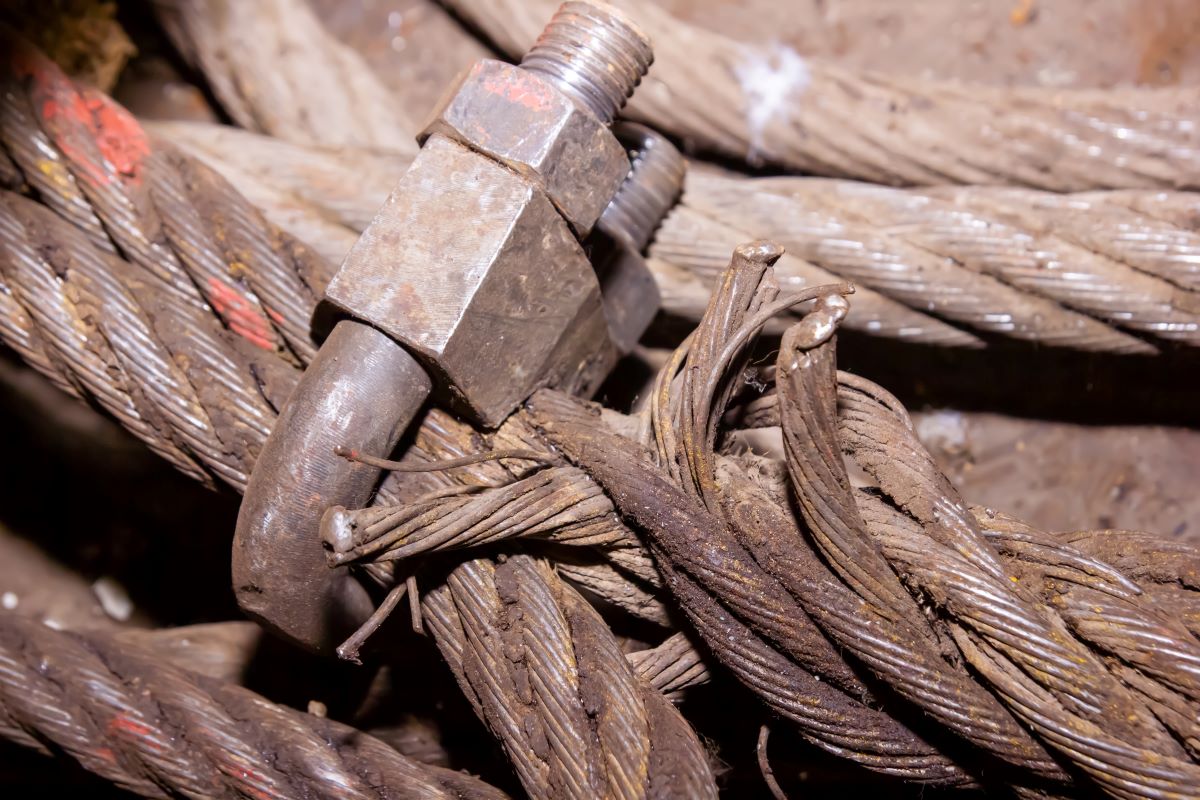
Remove a binder from service if it is bent, cracked, welded without manufacturer authorization, severely corroded, missing identification, or difficult to operate. Do not attempt field straightening or heat treatment. Those actions can alter the material properties and make the actual capacity impossible to verify.
Correct Tensioning Is Not Maximum Tension
The goal is to achieve effective cargo restraint, not to apply as much force as possible. Excessive tension can damage chain, binder components, anchor points, or the cargo itself. It can also make release unnecessarily hazardous.
Apply tension evenly across the securement arrangement. Where several chain tie-downs are used, secure the load progressively rather than fully tightening one side before addressing the others. This helps maintain load position and prevents one assembly from carrying more force than intended.
After initial tensioning, verify that the chain is not twisted, the hooks are seated, and the binder is aligned with the chain pull. Side loading can damage hooks and bodies. The binder should not bear against sharp cargo edges, deck structures, or other hardware that could interfere with its operation.
Use edge protection where chain passes over vulnerable cargo or sharp corners. Chain is durable, but it is not immune to damage from severe edge contact, abrasion, or shock loading. Protective measures also help prevent damage to coated equipment, fabricated surfaces, and finished cargo.
Release Procedures Deserve Equal Attention
Many incidents occur during removal, when personnel assume the load has remained stable and the binder has lost tension. Cargo movement, vibration, settling, and changes in load distribution can leave significant energy in the securement assembly.
Before releasing any binder, assess whether the cargo is supported and stable. Keep personnel outside the likely path of a moving handle, chain, or shifting load. Release tie-downs in a planned sequence, particularly for tall, round, stacked, or uneven loads. A controlled release procedure should be part of the job plan, not an afterthought at delivery.
For lever binders, use the designated operating method and retain control of the handle throughout the release. For ratchet binders, release tension gradually and monitor the chain as the mechanism backs off. If a binder is under abnormal side load or cannot be operated safely, stop and reassess the arrangement rather than forcing it.
Build Securement Around the Actual Job
Binder selection should be made alongside chain selection, anchor-point assessment, cargo blocking, and the required number and layout of tie-downs. A binder alone cannot compensate for unstable cargo, poor load distribution, or inadequate restraint geometry.
For planned projects and recurring fleet requirements, standardized binder and chain configurations can improve inspection consistency and reduce selection errors. For unusual cargo, offshore equipment, or time-critical mobilization work, a technical review of the complete securing arrangement provides a more reliable basis for procurement and field use.
The best choice among load binder types is the one that gives the crew controlled operation, verified capacity, correct chain compatibility, and a secure load path. Treat the binder as a critical component of the restraint system, maintain it accordingly, and make safe release part of every securement plan.