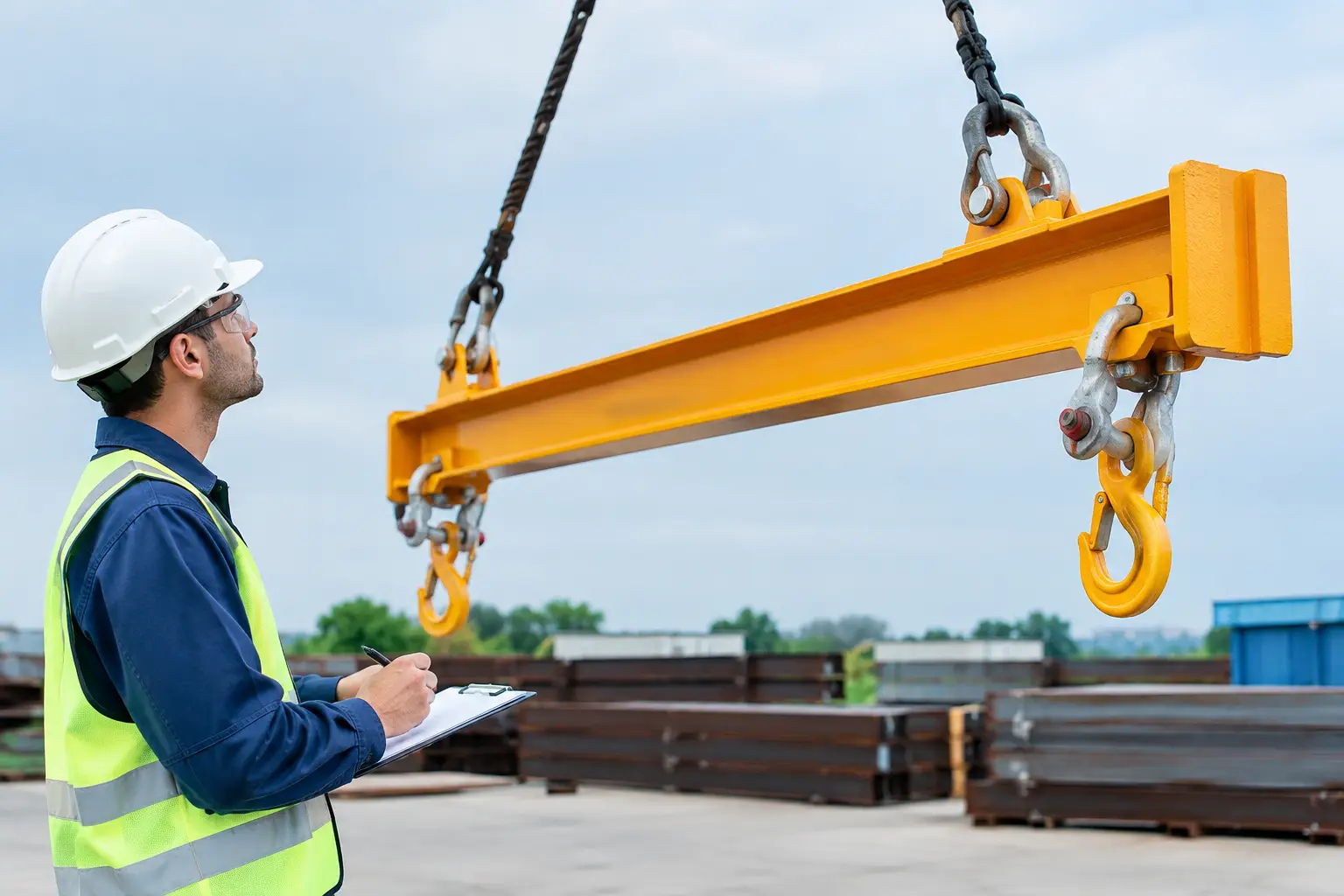
A chain sling versus web sling decision is rarely about capacity alone. The lifting point geometry, load surface, sling angles, available headroom, temperature, and inspection exposure all affect which sling gives the crew a safer, more workable lift. Selecting the wrong type can damage a finished load, slow a critical operation, or introduce avoidable risk at the hook.
For marine, construction, cargo-handling, and industrial maintenance work, the right answer depends on the lift plan. Chain slings are built for hard service, adjustment, and repeated contact with demanding loads. Web slings are lighter, protect sensitive surfaces, and conform around irregular shapes. Both require correct configuration, rated hardware, documented inspection, and disciplined use within their working load limits.
Chain Sling Versus Web Sling at a Glance
| Selection factor | Chain sling | Web sling | |—|—|—| | Best suited to | Rugged, repetitive, high-abrasion lifts | Finished, painted, delicate, or irregular loads | | Weight and handling | Heavier and more demanding to position | Lightweight and easy to carry or rig | | Length adjustment | Often adjustable using shortening clutches or hooks | Fixed length unless a different configuration is supplied | | Contact with load | Can mark or damage soft surfaces | Broad bearing surface helps reduce load damage | | Heat exposure | Better suited to elevated temperatures within manufacturer limits | Restricted by fiber and temperature limits | | Damage concerns | Wear, bent links, stretched links, damaged fittings | Cuts, abrasion, melted fibers, chemical attack, UV degradation | | Typical service life | Long when maintained and inspected | Can be shorter in abrasive or sharp-edge applications |
This comparison is a starting point, not a substitute for a lift assessment. Capacity must be confirmed for the sling type, number of legs, hitch, angle, and any reductions specified by the manufacturer or applicable site rules.
When a Chain Sling Is the Better Choice
Alloy chain slings are the practical choice where the work is hard on lifting gear. They are commonly used for fabricated steel, machinery, pipe bundles, concrete components, offshore equipment, and other loads with rough edges or repetitive handling cycles. A properly specified chain sling also gives the rigger useful adjustment options when lifting points are uneven or the center of gravity needs careful control.
A multi-leg chain sling can be configured with master links, shortening devices, sling hooks, and specialized end fittings to suit the load. This matters when a standard fixed-length sling would leave the load out of level. For operations involving frequent changes in lift geometry, adjustable chain assemblies can reduce setup time while helping the crew maintain a controlled load attitude.
Chain is not indestructible. Dragging it across deck plating, forcing a hook into an undersized lifting point, side-loading hooks, or allowing the load to bear on a link edge can cause damage. Chain slings also need protection where they contact sharp corners. Their resistance to abrasion does not eliminate the need for edge management or sound rigging practice.
Heat is another reason crews often choose alloy chain. However, temperature capability varies by chain grade, fittings, and manufacturer instructions. Elevated temperature use may require a reduction in working load limit, while extreme heat, welding spatter, or corrosive conditions may call for a different lifting method altogether. The sling tag and manufacturer data must govern the decision.
When a Web Sling Is the Better Choice
A web sling is often the smarter option when protecting the load is as important as lifting it. Flat polyester web slings distribute pressure across a wider area than chain, helping to prevent damage to painted equipment, coated pipe, polished components, composite structures, and finished machinery. They are also far easier for a crew to carry, pass beneath a load, and position in restricted spaces.
The flexibility of a web sling is especially useful around round, oversized, or awkwardly shaped loads. In a basket hitch, the sling can cradle the load rather than concentrating contact at a few hard points. This is valuable for cargo handling and maintenance work where the lifted item has no dedicated lifting lugs.
The trade-off is vulnerability to cutting and abrasion. A web sling must never be placed directly over a sharp edge without suitable protection designed for the sling and application. A small burr, plate edge, or damaged corner can cut load-bearing fibers quickly, sometimes without the obvious warning signs seen in steel components. Padding is not automatically sufficient – the protection must resist both the edge and the movement expected during the lift.
Chemical compatibility also deserves attention. Polyester webbing has different resistance characteristics from nylon and other synthetic fibers. Exposure to acids, alkalis, solvents, or marine contaminants can degrade sling material depending on the fiber type. Identify the sling material, assess the environment, and remove from service any sling showing chemical damage, stiffness, discoloration, or fiber deterioration.
Capacity Is Determined by the Whole Lift
The rated capacity stamped on a chain sling tag or printed web sling label applies only under defined conditions. Changing from a straight vertical lift to a choke or basket hitch changes capacity. Increasing the angle between sling legs raises the force in each leg, often significantly. Adding a second leg does not automatically double the safe lifting capacity.
The load must be stable before it leaves the ground. Confirm the center of gravity, lifting-point strength, hook seating, and potential for the load to shift. Avoid forcing a sling leg into position with a side pull. The hook throat should not be overloaded, and latch-equipped hooks should not rely on the latch to carry load.
For complex lifts, uneven loads, long components, or lifts near operational constraints, the configuration should be reviewed against the site lift plan. A competent lifting person should verify sling selection and angle factors before work starts. When equipment needs to be supplied for a specified job, the most useful request includes the load weight, dimensions, pick-point locations, hitch type, required reach, operating environment, and any certification requirement.
Inspection Priorities Are Different
Chain and web slings both need pre-use checks and periodic documented inspections, but the defects crews look for are different. A chain sling should be checked for stretched, bent, twisted, gouged, cracked, or excessively worn links; damaged master links; missing safety latches; worn hook throats; and illegible identification tags. Any unauthorized repair, weld spatter, or heat damage requires further assessment before the sling returns to service.
For web slings, inspect both faces, edges, eyes, stitching, and protective sleeves. Look for cuts, broken fibers, fraying, abrasion, holes, knots, burns, melted sections, discoloration, damaged stitching, and missing or unreadable labels. A web sling with a damaged identification label should not be used because its capacity and material can no longer be verified.
Inspection records matter as much as the visual check in safety-critical operations. Traceable identification, working load limit, test documentation where required, and defined inspection intervals support safer procurement and simplify audit readiness. Equipment should be quarantined immediately if its condition or rating is in doubt.
Specify the Sling for the Job, Not the Store Room
A chain sling may be available on site, but it is not automatically the right answer for a painted pump skid. A web sling may be lighter and faster to deploy, but it is not the right answer for a load with unprotected sharp steel edges. The best selection usually follows four questions:
- What is the true load weight and center of gravity?
- What hitch, sling angle, and reach are required?
- What will contact the sling during lifting and landing?
- What environmental, documentation, and inspection conditions apply?
For urgent projects, having slings cut, configured, tagged, and load-tested to the job specification can prevent last-minute substitutions. C&C International Trading supports this approach with lifting equipment configured to requirements, certified load testing, and documentation for operational use.
Before the next lift, put the sling selection beside the actual load rather than the purchasing description. A clear lift plan, protected contact points, and equipment with visible, traceable ratings give the crew a better starting point than choosing solely by what appears strongest.