| TL;DR: Fit a wire rope clip with the saddle on the live, load-bearing end and the U-bolt on the dead end. The trade rule is “never saddle a dead horse.” Use at least three clips for any eye that matters, space them about six rope diameters apart, and re-torque after the first load. Even fitted perfectly, a clipped eye holds only about 80 percent of the rope’s strength, so never use clips for an overhead lifting sling. |
A wire rope clip is the most common way to terminate wire rope, and the most commonly fitted wrong. It looks foolproof, so people reverse it, leave the nuts loose, or trust it for a lifting job it was never built for. This guide covers how to fit a wire rope clip correctly, how many you need, and the one job you should never give it. A clip is a termination tool for guy lines, stays and temporary rigging, not a lifting sling, and that line runs through everything below, to recognised rigging practice used across Singapore’s trades.
What Is a Wire Rope Clip, and What Is It Actually For?
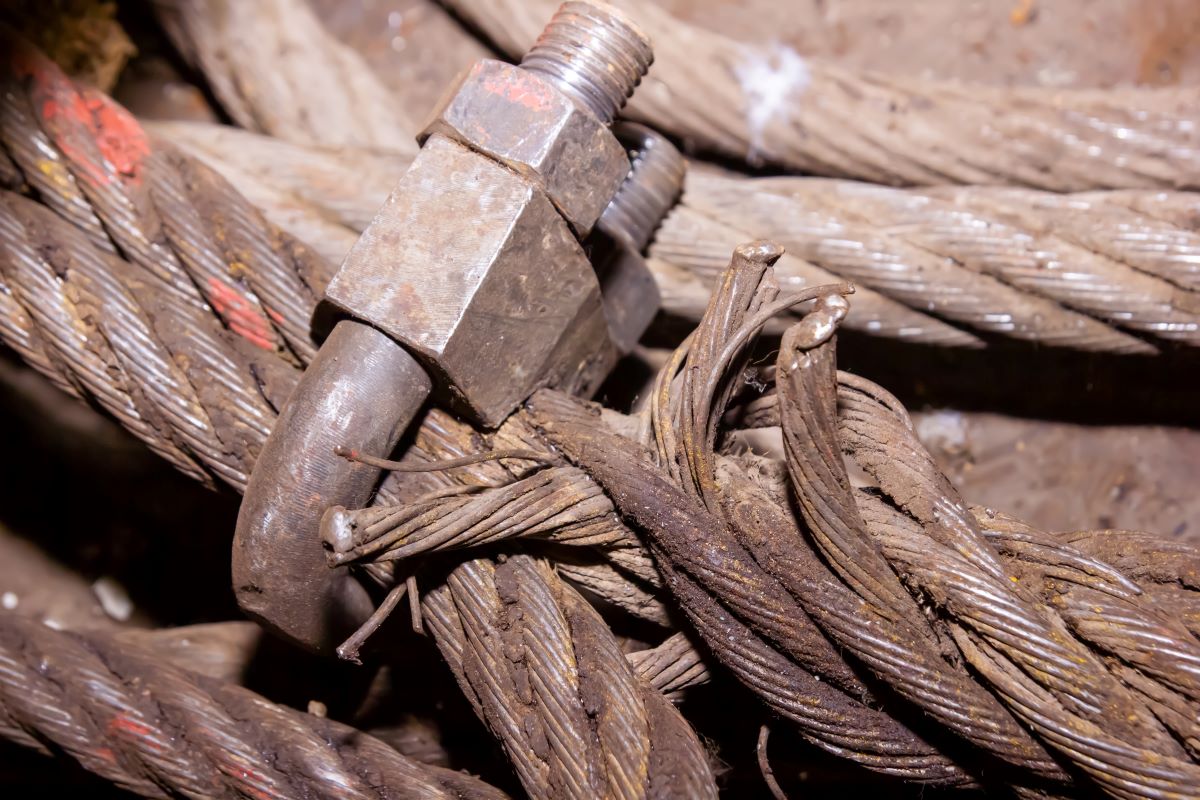
A wire rope clip has three parts: a saddle, a U-bolt and two nuts. Fold the rope back on itself, clamp it with clips, and you have an eye without a swaging press. That convenience is the point, and the danger. A wire rope clip is a termination tool for standing and adjustable rope: guy lines, mast stays, temporary rigging, anchoring, and any eye you may need to remake on site. It is not a lifting-sling tool, and almost every serious wire rope clip failure comes from ignoring that.
How Do You Fit a Wire Rope Clip Correctly?
One rule governs everything. The saddle sits on the live, load-bearing end; the U-bolt on the dead end, the short tail. Riggers say “never saddle a dead horse.” Reverse it and the U-bolt crushes the load-carrying wires where the rope works hardest, a recognised cause of premature failure.
The sequence follows. Turn back the correct length of rope through a thimble, which stops the eye crushing itself. Fit the first clip one saddle-width from the dead end, live end in the saddle, tightened to the maker’s torque. Fit the second near the thimble, nuts firm but not tight. Space any others evenly, about six rope diameters apart, then take up slack and tighten all nuts evenly.
The step everyone skips comes last: apply the first load, then re-torque every clip. Rope stretches and thins under load, so nuts that felt tight on the bench are loose after the first pull, and a clip left un-retorqued can let the rope slip.
How Many Wire Rope Clips Do You Need?
Too few clips, or clips too close together, and the termination will not hold. The number rises with rope diameter.
| Rope diameter | Minimum clips | Turn-back length |
| 6mm (1/4″) | 2 to 3 | About 120mm |
| 10mm (3/8″) | 2 to 3 | About 170mm |
| 13mm (1/2″) | 3 | About 290mm |
| 16mm (5/8″) | 3 | About 300mm |
| 20mm (3/4″) | 4 | About 460mm |
The safe rule for any termination that matters is a minimum of three clips, spaced about six rope diameters apart. If a sheave replaces the thimble, add one more. Use more clips than the table shows and you simply turn back proportionally more rope.
Why a Clipped Eye Is Not a Lifting Sling
Here is the number that settles it. A correctly fitted clipped eye develops only about 80 percent of the wire rope’s rated strength. A properly swaged eye, pressed with a ferrule, develops close to 100 percent. That gap is built into the method and no amount of tightening closes it.
A clipped eye also fails differently from a swaged one: it does not snap, it slips. Under a shock or a slowly rising load, the rope can pay out through under-torqued clips before anyone sees a problem, which is why re-torquing after the first load is not optional. A swaged eye has no slip path, it holds or it breaks, and it warns you honestly on the way.
So for overhead lifting, a clipped eye is the wrong termination. Recognised practice keeps clips for guy lines, stays and standing rope, not a sling that swings a load over people. When the job is lifting, the answer is a swaged wire rope sling, where an in-house swaging service earns its place over clips fitted in the field. Our wire rope sling safety guide covers how a rated sling is built and inspected.
Our wire rope sling safety guide covers how a rated sling is built and inspected, and how the eye connects to the load through a d shackle. A clipped eye, a swaged eye and a d shackle are only as strong as the weakest of the three.
The Stainless Steel Trap: Galvanic Corrosion
One mistake is unique to marine work. Clip a stainless steel wire rope with carbon-steel clips and you pair two dissimilar metals. In Singapore’s salt-laden air that sets up a galvanic cell, and the fitting corrodes far faster than either metal alone, so the rope can look fine while the clips waste away. The fix is simple: a stainless steel wire rope needs stainless steel clips. Any reputable wire rope Singapore supplier will match the materials if you ask.
“If it lifts, don’t clip it. A clipped eye is for a guy line, not a load over someone’s head.” – Denis Koh, Senior Technical Consultant, C&C International Trading
Frequently Asked Questions
Which way does a wire rope clip go on?
Saddle on the live, load-bearing end; U-bolt on the dead end, the short tail. The rule is “never saddle a dead horse.” Reversing it crushes the load-carrying wires and can cause the termination to fail.
How many wire rope clips do I need?
At least three for any prepared eye or thimble termination that matters, more as rope diameter increases. Space them about six rope diameters apart, and add one more if a sheave is used instead of a thimble.
Can you use wire rope clips for lifting?
Not for overhead lifting slings. A clipped eye develops only about 80 percent of the rope’s strength and is meant for guy lines and standing rope. For lifting, use a properly swaged wire rope sling instead.
Do stainless steel wire ropes need stainless clips?
Yes. Pairing a stainless steel wire rope with carbon-steel clips creates galvanic corrosion in marine air, and the fitting degrades quickly. Always match stainless rope with stainless clips.
Clip It Right, or Swage It Properly
A wire rope clip is a good tool for the job it was made for and a dangerous shortcut for the one it was not. Saddle on the live end, enough clips, re-torque after the first load, match the metals, and keep clips off anything that lifts overhead. Do that and the termination holds.
As a wire rope Singapore supplier, C&C International Trading stocks wire rope clips and fittings, and swages rated wire rope sling assemblies in-house for lifting work. As a MOM Authorised Examiner, we also test and certify lifting gear with full traceability. Talk to our team about the right termination for your job.
Author:
Written by the C&C International Trading technical team, reviewed by Denis Koh, Senior Technical Consultant, with over 25 years in wire rope and rigging.
Last updated: September 2026.