A plate can appear secure right up to the moment it slips. That is why lifting clamp safety requirements must be treated as a controlled lifting process, not a quick hardware selection. The clamp, material, lift geometry, surface condition, operator actions, and inspection records all have to match. If one element is wrong, a rated clamp can still become the point of failure.
For lifting supervisors, vessel operators, and site teams, clamp safety starts before the load leaves the ground. The objective is not simply to attach a clamp with adequate working load limit. It is to create a stable, predictable lift with equipment that is identified, inspected, correctly positioned, and used within the manufacturer’s instructions.
Start With the Right Clamp and Application
A lifting clamp is designed for a specific material, orientation, and method of use. Vertical plate clamps, horizontal plate clamps, beam clamps, rail clamps, and drum clamps are not interchangeable. A vertical plate clamp may be rated to lift a steel plate from the vertical position, but that does not automatically permit lifting the same plate horizontally, turning it over, or using two clamps at an angle.
Confirm the load’s weight, thickness, dimensions, center of gravity, material grade, and surface condition before selecting the clamp. This includes checking whether coatings, oil, moisture, rust, scale, paint, or galvanizing may reduce gripping performance. Many plate clamps rely on a serrated cam or jaw to bite into the material. A smooth, painted, or contaminated surface can prevent that engagement.
The material itself also matters. Hardened steel, stainless steel, aluminum, and other nonstandard materials can require a purpose-designed clamp or a different lifting method. Do not assume a clamp suitable for carbon steel will grip another material safely. Where there is uncertainty, the manufacturer’s guidance and the lift plan should determine the method.
Working Load Limit Is Not the Whole Rating
The working load limit, or WLL, is only valid under the conditions stated by the manufacturer. Those conditions may include a minimum and maximum plate thickness, a minimum load weight, a permitted lifting angle, and whether the clamp is approved for a single-leg or multi-leg arrangement.
Minimum load requirements are often overlooked. Certain vertical clamps need enough load weight to maintain positive grip. A light plate may not generate the necessary cam action, even when its thickness is within range. Similarly, using a pair of clamps with sling legs at an angle can introduce forces that exceed the individual clamp’s rated capacity.
A lifting plan should account for sling angle, load distribution, and any potential side loading. If two clamps do not share the load equally because of an off-center lifting point or uneven plate geometry, one clamp may carry far more than half the load. The answer is not to estimate generously in the field. Use an arrangement that is engineered or approved for the actual lift.
Inspection Is a Requirement, Not a Formality
Clamps are compact pieces of lifting hardware, but their internal components do demanding work. The jaw, cam, pivot pins, springs, locking lever, shackle connection, and body must remain in serviceable condition. Damage or wear in any of these areas can compromise grip or release control.
A pre-use inspection should be completed by the user before each shift or lifting operation. Check that the clamp is clearly marked with its WLL, identification, manufacturer information, and applicable plate-thickness range. If markings are missing or illegible, remove the clamp from service until its status is confirmed.
Examine the body for cracks, distortion, corrosion, unauthorized welding, and signs of overload. Inspect the jaw and cam teeth for wear, flattening, contamination, or damage. Worn teeth may not penetrate the plate surface sufficiently. Check pins, retainers, and springs for movement, deformation, and correct operation. The locking mechanism should engage and release as designed, without force or improvised tools.
Formal periodic inspection is also required under the applicable workplace regulations, site procedures, and manufacturer recommendations. In Singapore, lifting equipment must be managed under the relevant Workplace Safety and Health requirements, supported by inspection records and competent-person examinations where applicable. Marine and offshore operators may also work under client, class, flag-state, or project-specific rules that impose additional controls.
Inspection records should provide traceability. They should identify the clamp, inspection date, findings, corrective action, and next due date. For critical lifting operations, keeping the clamp’s certificate, load-test documentation where required, and service history available at the point of work avoids delays during audits and permit reviews.
Position the Clamp for a Stable Lift
Correct positioning is where many otherwise sound lifts go wrong. The clamp must be fully seated on the material, with the jaw contacting the plate in the intended gripping area. Do not attach a clamp to an edge that is damaged, tapered, excessively rounded, or too close to a cutout unless the manufacturer specifically permits it.
For vertical plate lifts, position the clamp directly above the load’s center of gravity whenever possible. This reduces the tendency for the plate to tilt, swing, or pull against the side of the clamp. If the plate must be lifted from a point that is not centered, the lift should be assessed for balance and side loading before proceeding.
Do not use a vertical plate clamp to drag, pull, or force a load into position. Avoid side loading, shock loading, and sudden hoist movements. A clamp is not a substitute for a purpose-designed pulling device, spreader beam, or turning arrangement.
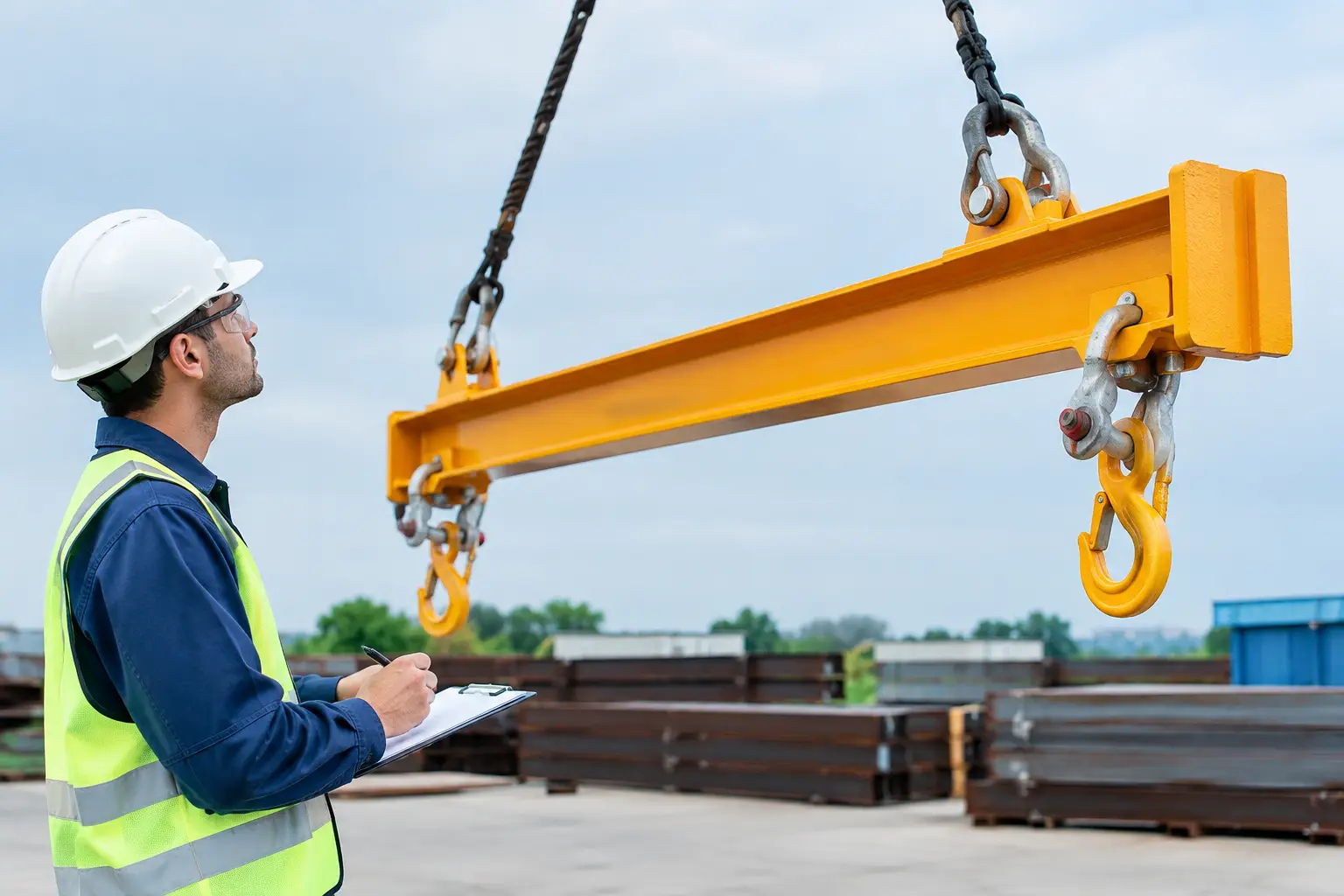
With multiple clamps, use a suitable lifting beam, spreader, or approved sling configuration to maintain the correct orientation. This is especially relevant for long plates, fabricated sections, and loads that can flex. A long plate lifted only at two points may bow, shifting the load path and reducing grip at one end.
Keep People Out of the Drop Zone
No lifting clamp safety procedure is complete without exclusion-zone control. Personnel must not stand beneath a suspended load, between the load and a fixed object, or in the path of a swinging plate. Tag lines may help control rotation and travel, but they must be handled from a safe position and should never be wrapped around a hand or body.
The lifting supervisor should ensure clear communication between the operator, rigger, and banksman or signal person. Before the full lift, raise the load slightly to conduct a controlled test lift. Check that the clamp has engaged, the load is balanced, and the rigging remains correctly aligned. If the load shifts, slips, or behaves unexpectedly, lower it immediately and reassess the method.
Use Certified Equipment and Maintain Traceability
A clamp with no clear origin, no identification, or no supporting documentation creates an avoidable risk. Procurement teams should specify the clamp type, WLL, plate range, intended material, and required certification at the point of purchase. This prevents a general-purpose item from being introduced into a specialized lifting task without proper review.
Equipment should be supplied with documentation appropriate to the project and regulatory requirements. Depending on the application, this may include a certificate of conformity, material or test records, proof-load test certification, and inspection documentation. For major projects, asset identification should align with the site’s lifting gear register so that inspection status can be verified quickly.
C&C International supports lifting operations with clamps and related rigging hardware selected for the application, together with certified load testing and documentation when specified. For unusual loads, the practical value is in reviewing the complete arrangement – clamp, sling, shackle, hoist connection, lift angle, and load behavior – rather than treating each item as an isolated purchase.
When a Clamp Is Not the Safest Choice
Lifting clamps are efficient when their intended conditions are met. They are not always the best option. A damaged plate edge, low-weight sheet, polished surface, irregular fabricated load, or requirement to rotate the load may call for lifting lugs, a spreader beam, web slings with edge protection, magnetic lifting equipment, or a custom lifting frame.
This is not overengineering. It is a practical response to the limits of friction, jaw engagement, and load geometry. Choosing a different method before the lift is faster than recovering from a dropped or damaged load afterward.
Treat every clamp as a controlled connection between the hoist and the load. When selection, inspection, positioning, documentation, and supervision are handled with the same discipline, lifting clamps remain what they should be: reliable tools for a planned lift, not a gamble made under schedule pressure.