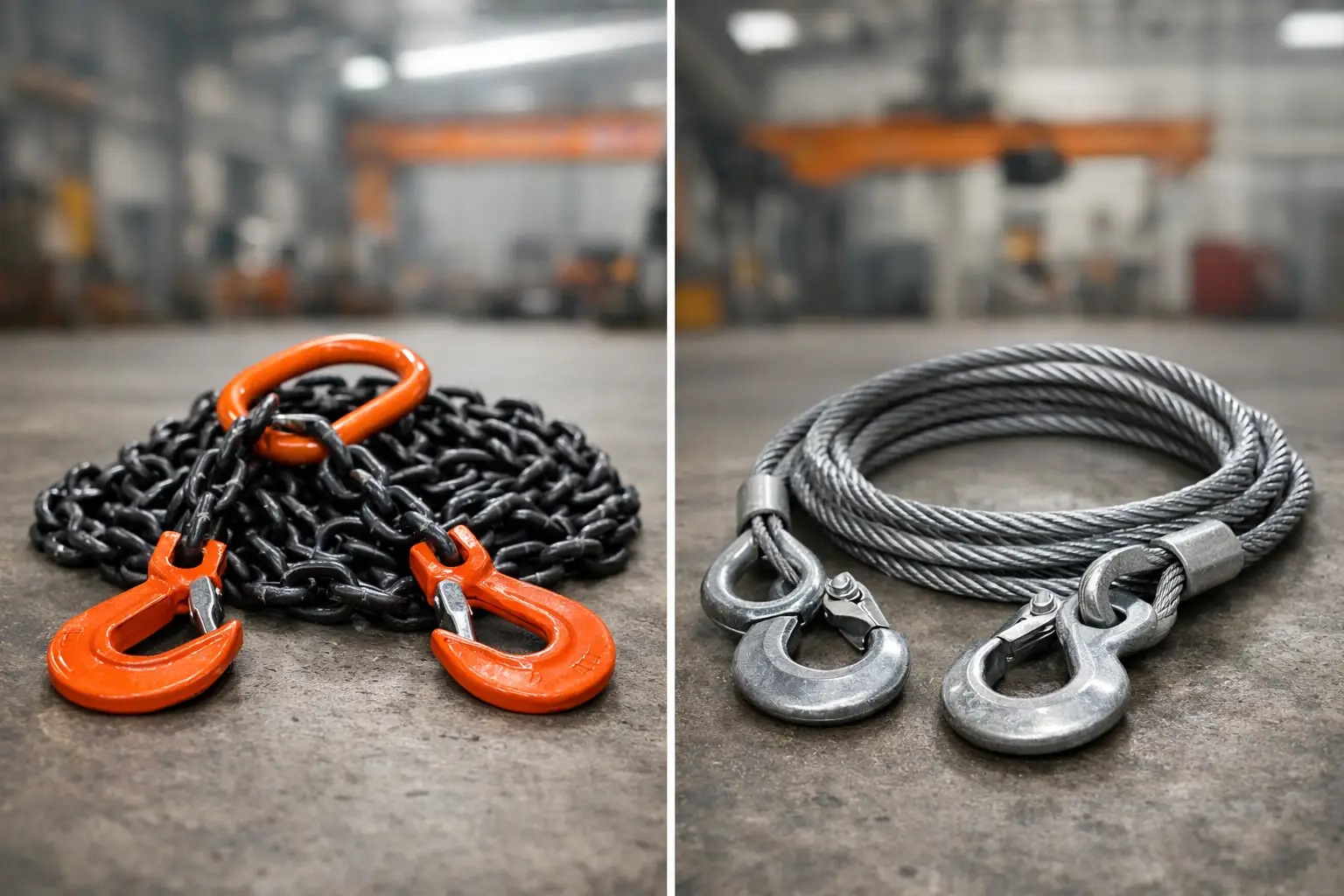
A wire rope assembly can look correct at a glance and still be unsuitable for service. The difference is often in the termination: the correct rope construction, a matching ferrule or sleeve, controlled swaging pressure, and documented verification of the finished assembly. Wire rope swaging services turn bulk rope and fittings into job-ready slings, pendants, bridle legs, lanyards, and marine assemblies built to the stated duty.
For lifting, marine, offshore, and industrial operations, this work is not simply a matter of attaching an eye. A properly processed assembly must match the load path, connection hardware, environmental exposure, handling method, and applicable project or class requirements. Getting those details right before the equipment reaches site reduces rework, delays, and avoidable lifting risk.
What Wire Rope Swaging Services Deliver
Swaging is a mechanical termination process in which a metal fitting is compressed onto wire rope using calibrated dies and controlled force. Depending on the application, the fitting may be an aluminum or steel ferrule, a stop sleeve, or a swage socket. The compression reshapes the fitting around the rope to create a secure termination when the rope, fitting, die set, and process are correctly matched.
The completed assembly may include one eye, two eyes, thimbles, hooks, shackles, master links, turnbuckles, or other specified hardware. For a vessel, that could mean a replacement wire pendant cut to the required length. For a construction lift, it may be a multi-leg sling with identified connection points and certified working load limits. For industrial maintenance, it may be a compact wire-rope lanyard or restraint assembly with specific end fittings.
The value is in receiving equipment that is cut and swaged to spec, rather than loose materials that must be processed elsewhere. A capable service provider confirms dimensions, selects compatible components, completes the termination, and issues the records required for release to service.
The Details That Determine a Safe Termination
Wire rope diameter is only one part of the specification. Rope grade, construction, lay, core type, finish, and nominal strength influence how a termination performs. A 6×36 IWRC galvanized rope and a stainless steel rope of the same diameter are not automatically interchangeable, nor should they be terminated with the same fitting without checking the manufacturer data and intended service.
The eye geometry also matters. A thimble protects the rope at a connection point where a shackle pin, hook, or other hardware will bear against the eye. Its size must suit both the rope and the connecting hardware. An undersized thimble can distort the eye, while an oversized one can allow unwanted movement. The fitting must be positioned correctly so the finished eye has the required dimensions without crushing, twisting, or damaging the rope.
Hardware selection needs the same discipline. The assembly’s working load limit is governed by its lowest-rated component, including the rope, termination efficiency, hook, shackle, master link, and any angle reduction in a bridle configuration. A high-capacity rope does not compensate for incorrectly selected end hardware.
Environmental conditions should be considered early. Galvanized wire rope is commonly specified for general outdoor and marine exposure, while stainless steel may be selected where corrosion resistance, cleanliness, or compatibility with a particular environment is required. Neither choice eliminates the need for inspection. Salt, chemical exposure, abrasion, heat, and repeated bending all affect service life.
Why Process Control Matters
A swaged termination depends on repeatability. The fitting must be the approved type and size for the rope. The dies must produce the required finished dimensions. The operator must follow the correct number and sequence of presses. Over-compression, under-compression, incorrect die selection, or a poorly positioned fitting can compromise the assembly even when the external appearance seems acceptable.
This is why field improvisation is a poor substitute for controlled processing. A termination should be produced with suitable equipment and checked against the relevant dimensional criteria. Where required, proof loading or load testing provides an additional verification step before delivery.
Load testing is not a replacement for correct manufacture. It is a confirmation that follows correct selection and processing. The test load, hold time, acceptance criteria, and documentation should align with the assembly type, project requirement, and governing standard. For critical lifting or marine work, traceability should connect the test certificate to the specific assembly through an identification tag, serial number, or other clear marking.
Specify the Assembly Before It Reaches the Workshop
Clear information at the quotation stage prevents the most common delays. The supplier needs the rope diameter and construction, finished length, end termination at each side, required eye dimensions, hardware requirements, working load limit, quantity, and intended application. If the assembly will be used for lifting, state whether it is a single-leg sling, bridle, choker, pendant, or restraint. If it is for marine service, identify whether it will be exposed to seawater, installed on deck, used with a winch, or subject to frequent handling.
Length requires particular care. Confirm whether the requested dimension is measured bearing-to-bearing, pin center-to-pin center, inside eye-to-eye, or overall end-to-end. For bridles, specify the leg length and master-link arrangement. A small ambiguity in the drawing or purchase order can create an assembly that is safe but unusable at the point of installation.
Where lifting angles are involved, provide the anticipated included angle. As the angle between sling legs increases, the tension in each leg rises. This is a frequent source of under-specification. The correct working load limit must reflect the actual configuration, not only the capacity of an individual vertical leg.
C&C International Trading Pte Ltd supports this process with in-house cutting and swaging, load-test certification, PE-endorsed documentation where required, and coordination of associated rigging hardware. That integrated scope helps procurement and site teams avoid splitting responsibility between a rope supplier, fabricator, test facility, and installer.
Swaged Assemblies Are Not the Answer to Every Job
Swaging is highly effective for many fixed-length wire-rope assemblies, but it is not universally the best termination method. Open or closed spelter sockets may be specified for high-capacity or specialized applications. Wedge sockets can be useful where a rope needs to be replaced in the field, subject to correct installation and inspection. Wire rope clips may be allowed for limited applications, but their capacity, installation requirements, and suitability differ significantly from a professionally swaged eye.
The duty cycle also matters. A static restraint, a lifting sling, a crane pendant, and a wire rope running repeatedly over sheaves impose different demands. If the rope will bend under load, the sheave diameter, fleet angle, drum arrangement, and fatigue exposure may be more significant than the end termination alone. A service provider should ask these questions rather than simply reproduce an existing assembly.
For urgent replacement work, matching an old wire rope sample can be helpful, but it should not be the only basis for specification. Confirm the equipment manual, rated capacity, rope certificate, and connection dimensions where possible. Old assemblies may have been modified, incorrectly specified, or damaged in a way that masks the original configuration.
Inspection After Delivery
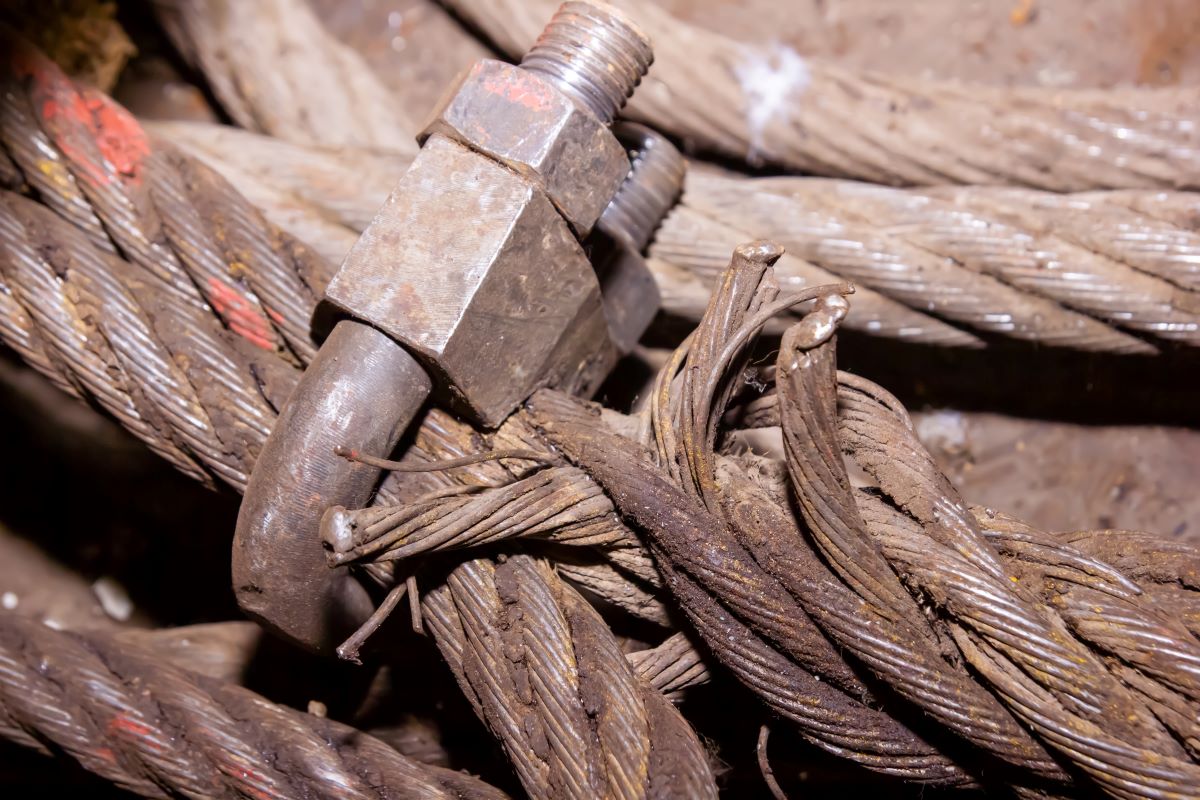
Certification supports release to service, but it does not remove the need for routine inspection. Before use, personnel should check the identification tag, overall length, fitting condition, eye and thimble alignment, and compatibility with the connection hardware. During service, inspect for broken wires, corrosion, abrasion, kinks, crushing, birdcaging, heat damage, and deformation or cracking at the swaged fitting.
Any assembly showing damage or uncertainty should be removed from service and assessed by a competent person. Do not attempt to straighten a kinked rope, weld a fitting, or modify a swaged eye in the field. These actions can alter the rope’s strength and invalidate the basis on which it was certified.
Storage has a direct effect on service condition. Keep finished assemblies clean, dry where practical, protected from chemical contamination, and off the ground. Avoid dragging slings across deck edges, concrete, or sharp steelwork. If abrasion is unavoidable, review the lifting method and consider suitable protection or a revised assembly design.
A Better Basis for Fast Turnaround
Fast delivery is most useful when it produces the right assembly the first time. Providing a clear specification, site photographs, connection dimensions, and the intended duty allows wire rope swaging services to move quickly without guessing at the critical details. Where the requirement is complex, a sketch, rigging plan, or sample assembly is often enough to confirm the configuration before production begins.
The finished wire rope assembly should arrive ready for the work ahead: correctly terminated, properly identified, tested when required, and supported by documentation that site teams can review with confidence. That is the practical standard for equipment used where a failed connection can stop a lift, delay a vessel, or put personnel at risk.