A delayed shackle, an undocumented sling, or a hoist with the wrong lift height can stop a vessel turnaround or maintenance shutdown before the job begins. Singapore rigging rental options should therefore be assessed as a complete lifting arrangement, not as a quick way to fill a gap in inventory. The right rental scope gives the lifting team equipment that is fit for the load, compatible with the lift plan, inspected, traceable, and ready for site conditions.
For ship repair, port operations, industrial maintenance, and short-duration construction work, renting can be the practical choice when equipment is required for a defined period, an unusual configuration, or an urgent mobilization. The value is not simply access to hardware. It is access to correctly selected, certified equipment with accountable technical support behind it.
When Rigging Rental Is the Better Option
Rental works well where demand is temporary, project-specific, or difficult to forecast. A planned dry-docking job may need chain blocks, beam clamps, wire-rope slings, shackles, and lifting beams for several weeks, while a terminal repair may require a short-term replacement for lifting gear removed from service. Buying these items can tie up capital and leave equipment idle after the work is complete.
It can also be the right route where a lift requires a configuration outside the contractor’s normal fleet. A heavy machinery move may call for higher-capacity shackles, multi-leg sling assemblies, spreader arrangements, or snatch blocks that are not routinely held on site. In these cases, the rental provider should confirm capacity, connection compatibility, sling angles, headroom, and environmental exposure before equipment is released.
Rental is not automatically the lowest-cost answer. For equipment used repeatedly across multiple jobs, ownership may provide better long-term value. The decision depends on utilization, inspection resources, storage conditions, transport requirements, and whether the team can maintain complete certification records over the equipment’s service life.
Singapore Rigging Rental Options by Job Requirement
A suitable rental package begins with the lift, not the catalog. The load weight is only one part of the selection. The lifting points, center of gravity, travel path, available headroom, required control of the load, and the interface with existing lifting equipment all affect the final arrangement.
Slings and lifting connections
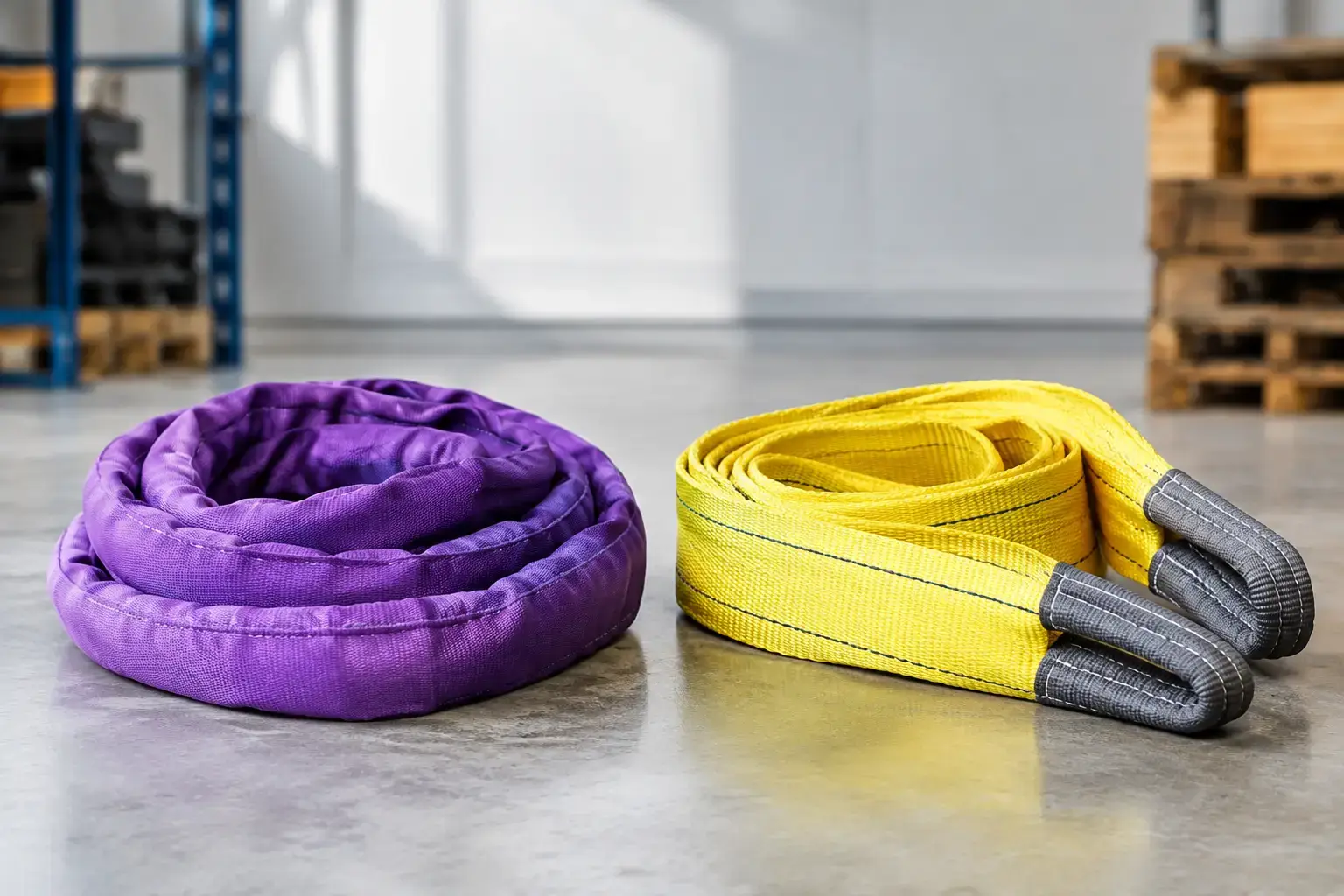
Wire-rope slings, polyester web slings, round slings, alloy chain slings, shackles, hooks, master links, and turnbuckles are commonly rented for lifting and securing applications. Each has a different role. Polyester slings may be suitable where painted, finished, or sensitive loads need protection, while wire-rope or chain assemblies may be better suited to abrasion, heat, sharp edges, or tougher marine-industrial conditions when correctly specified.
The assembly must be evaluated as a system. A high-capacity sling does not make a lift safe if its shackle, hook, lifting lug, or connection point has a lower working load limit. Sling angle reductions also matter. As the angle between sling legs becomes flatter, tension in each leg increases, often requiring a different configuration or larger-capacity components.
Hoists, blocks, and pulling equipment
Manual chain blocks, lever hoists, wire-rope hoists, snatch blocks, and related pulling equipment can support equipment positioning, maintenance lifts, recovery work, and controlled line handling. Selection should consider not only rated capacity but also lift height, hand-chain length, reeving arrangement, required line pull, and whether the equipment will be used vertically or for pulling.
A chain block rented for a confined engine-room space, for example, must physically fit the available headroom after allowing for the hook dimensions, chain collection, and load attachment. For pulling applications, line direction and anchor points need equal attention. Improvised redirection through unsuitable hardware can introduce side loading and damage equipment.
Cargo-securing and marine support equipment
Marine and logistics work may require rental arrangements that extend beyond a conventional lifting set. Lashing chains, tensioners, turnbuckles, wire-rope assemblies, cargo nets, and related securing hardware may be required for heavy cargo movement, temporary restraint, or specialized shipboard work.
These applications need clear separation between lifting and lashing use. Hardware intended for cargo securing should not be treated as lifting gear unless it has been designed, marked, certified, and approved for that purpose. The working load limit, intended application, and inspection status must be clear to the end user before deployment.
Documentation Is Part of the Rental Equipment
For safety-critical work, physical hardware without records is an incomplete delivery. Rental gear should be supplied with identification that can be matched to its certificate, inspection status, and rated capacity. Where project requirements call for it, documentation may include test certificates, inspection records, manufacturer information, and PE-endorsed documentation for the relevant scope.
The required documents vary by client, worksite, equipment type, and statutory or project controls. A vessel operator may have different acceptance requirements from an offshore contractor or a construction site. Raising those requirements at the quotation stage avoids a common failure point: suitable equipment arriving on site with records that do not meet the principal contractor’s submission process.
Before accepting rental equipment, the lifting supervisor should verify markings, working load limits, serial or identification numbers, condition, and certificate matching. Any discrepancy should be resolved before the equipment enters service. A certificate cannot compensate for visible damage, unauthorized modification, excessive wear, or use outside the equipment’s rated configuration.
Information to Confirm Before Mobilization
A clear inquiry reduces site delays and allows the supplier to configure the rental package correctly. Provide the following details as early as possible:
- Load weight, dimensions, center of gravity, and lifting-point information.
- Required lifting method, sling arrangement, lift height, headroom, and travel path.
- Equipment interface details, including crane hook size, padeye dimensions, beam size, or anchor-point capacity.
- Work location, access restrictions, delivery timing, rental duration, and return arrangements.
- Required certificates, inspection records, site induction requirements, and any PE endorsement or client documentation requirements.
Photos, sketches, and lift-plan extracts are often more useful than a general request for a certain tonnage. They allow the supplier to identify connection issues, clearance constraints, and potential need for custom-cut wire rope, swaged terminations, fabricated assemblies, or onsite rigging support.
Inspection, Condition, and Responsibility During Hire
The rental provider has a responsibility to release equipment in serviceable condition with the agreed documentation. The user also has a continuing responsibility to inspect equipment before use, protect it during the rental period, and remove it from service if damage or abnormal loading is suspected.
This matters in marine environments. Salt exposure, deck abrasion, sharp cargo edges, welding activity, chemical contact, and poor storage can quickly affect slings and hardware. Synthetic slings require protection from cuts and heat. Wire rope needs attention to crushing, kinks, broken wires, and corrosion. Shackles and hooks must not be side loaded or altered to fit an incompatible connection.
Responsibilities for routine checks, damage reporting, cleaning, transport, and loss should be defined in the rental agreement. Clear handover and return inspection records protect both parties and support better planning for the next mobilization.
Choosing a Rental Partner for Time-Critical Work
For urgent work, availability is only the starting point. A capable partner should be able to assess the requested equipment against the application, identify missing components, prepare traceable documentation, and arrange delivery around operational constraints. Where the job demands more than off-the-shelf gear, in-house cutting, swaging, load testing, fabrication, and onsite installation can reduce handoffs between suppliers.
C&C International supports this type of requirement by combining rental availability with lifting and rigging supply, custom processing, certified testing, and technical field support. That integrated approach is particularly useful when a standard rental item must be adapted into a job-ready assembly rather than delivered as an isolated component.
The safest rental decision is made before the equipment leaves the yard. Define the load and method clearly, confirm the documentation required by the worksite, and give the lifting team equipment that matches the job rather than forcing the job to match what happens to be available.