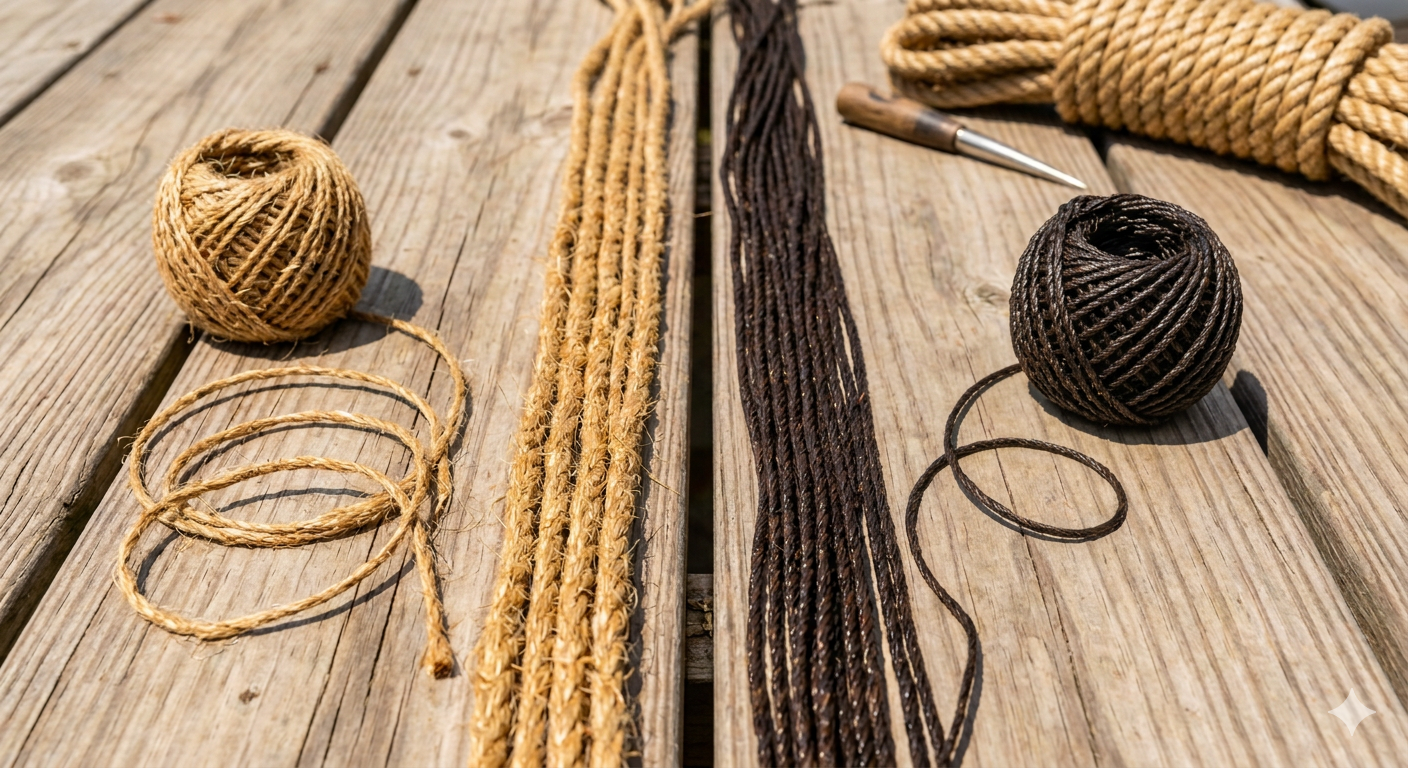
Manila Twine
Manila is made from the fibers of the abacá plant (a relative of the banana) and is often referred to as “manila hemp” despite not being true hemp. It is naturally treated with mineral oil to keep fibers from becoming brittle.
- Common Sizes: Often found in diameters ranging from 3 & 4mm for ropes, while twines are typically thin, multi-strand variants.
- Common Uses: Ideal for landscaping, marine knots, and obstacle courses due to its excellent grip even when wet.
- Pros:
- Low Stretch: Maintains consistent tension once set.
- UV Resistance: High resistance to sunlight, making it suitable for outdoor use.
- Grip: The coarse texture provides a secure hold, especially for physical activities.
- Cons:
- Water Absorption: Shrinks 10–15% in length and expands in diameter when wet.
- Rot Prone: Susceptible to mildew and rot if stored wet or used in constantly damp environments.
- Texture: Can leave painful splinters in bare hands during heavy handling.
Tarred Marline
Tarred marline consists of natural fibers (hemp or flax) that have been impregnated with wood tar. This treatment gives it a dark color and a distinct “nautical” scent.
- Common Sizes: Standard diameters include 3mm (Märling)and 4mm (Hysing), often sold in 250g or 1kg balls.
- Common Uses: Historically used for rigging, whipping wire splices, and serving (wrapping) larger ropes to protect them from the elements. Modern uses include garden lashing and bushcraft.
- Pros:
- Water Repellence: The tar coating effectively sheds water and protects the inner fibers from rot and decay.
- Knot Security: The sticky tar creates high friction, allowing knots to “bite” and stay secure without slipping.
- Durability: Offers enhanced resistance to UV rays and saltwater compared to untreated natural twines.
- Cons:
- Residue: The tar can transfer to hands, clothing, or other gear during handling.
- Scent: The strong wood tar smell may be undesirable for some indoor or craft applications.
- Maintenance: Natural wood tar can eventually wash out in heavy rain, occasionally requiring re-treatment to maintain protection.
Key Comparison Table
| Feature | Manila Twine | Tarred Marline |
| Base Material | Abacá (Banana plant) | Hemp or Flax |
| Coating | Light Mineral Oil | Wood Tar |
| Best For | Grip & Aesthetics | Weatherproof Lashing |
| Wet Behavior | Shrinks & Sinks | Repels Water |
| Feel | Coarse & Splintery | Sticky & Greasy |