Products

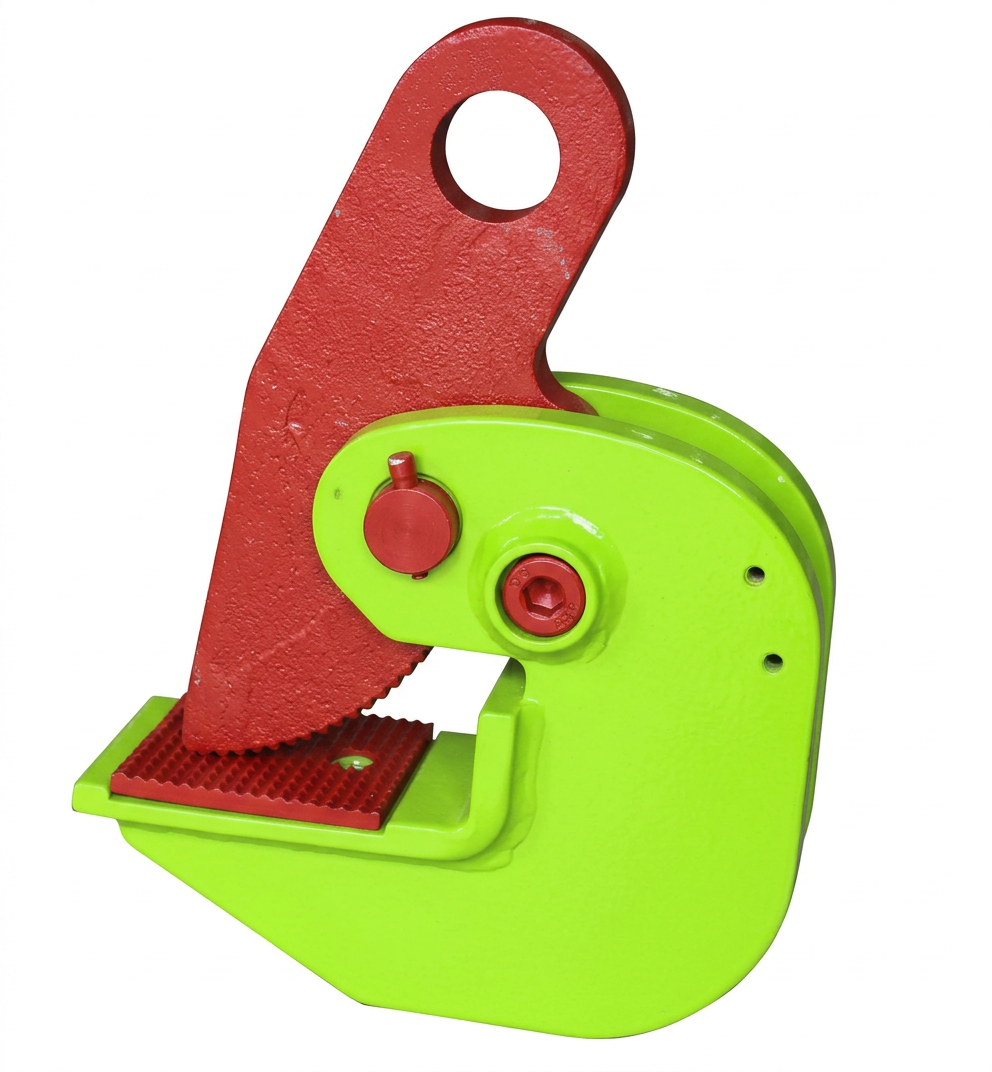
Horizontal Lifting Clamp – SB/ SP Type

The main differences between SB type and SP type horizontal lifting clamps lie in their specific lifting angle limitations and their rated capacity ranges. Both are designed for the horizontal transport of steel plates and profiled bars and must be used in pairs or multiples.

 Key Differences

Feature  SB Type Clamp SP Type Clamp
Lifting Angle Sling angle must not exceed 45° from the vertical. Rated based on a lift angle of 60°.
Capacity Range 0.8 to 10 Tons per pair. 1 to 10 Tons per pair.
Common Uses Securely gripping heavy plates in construction and metalworking. Efficient transportation of steel plates and construction bars.

Specifications

Usage Guide

  • Pairing: SB/ SP type clamps must be used in pairs or multiples (never a single clamp) to ensure the load is balanced.
  • Positioning: Place the clamps symmetrically over the center of gravity of the load. The material must be inserted to the full depth of the jaw opening (the “neck” of the clamp).
  • Angle of Lift: The Working Load Limit (WLL) is typically calculated based on a lift angle of 60°when used in pairs.
  • Securing: For long sheets that may sag, use a spreader beam in conjunction with multiple pairs of clamps to maintain stability.

Safety Precautions

  • No Vertical Lifting: Never use these clamps for vertical lifting or to rotate a load from horizontal to vertical.
  • Hardness Limit: Ensure the material being lifted does not exceed a surface hardness of 37 HRC(345 HB), as harder materials can prevent the clamp’s teeth from biting effectively.
  • Surface Condition: Gripping surfaces must be clean and free of scale, oil, paint, or ice, which can act as lubricants and cause slippage.
  • Single Plate Only: Do not attempt to lift more than one plate at a time with a single pair of clamps.
  • Shock Loading: Avoid abrupt movements or jerking the rigging; apply tension slowly and smoothly.


Let’s Discuss Your Project Needs