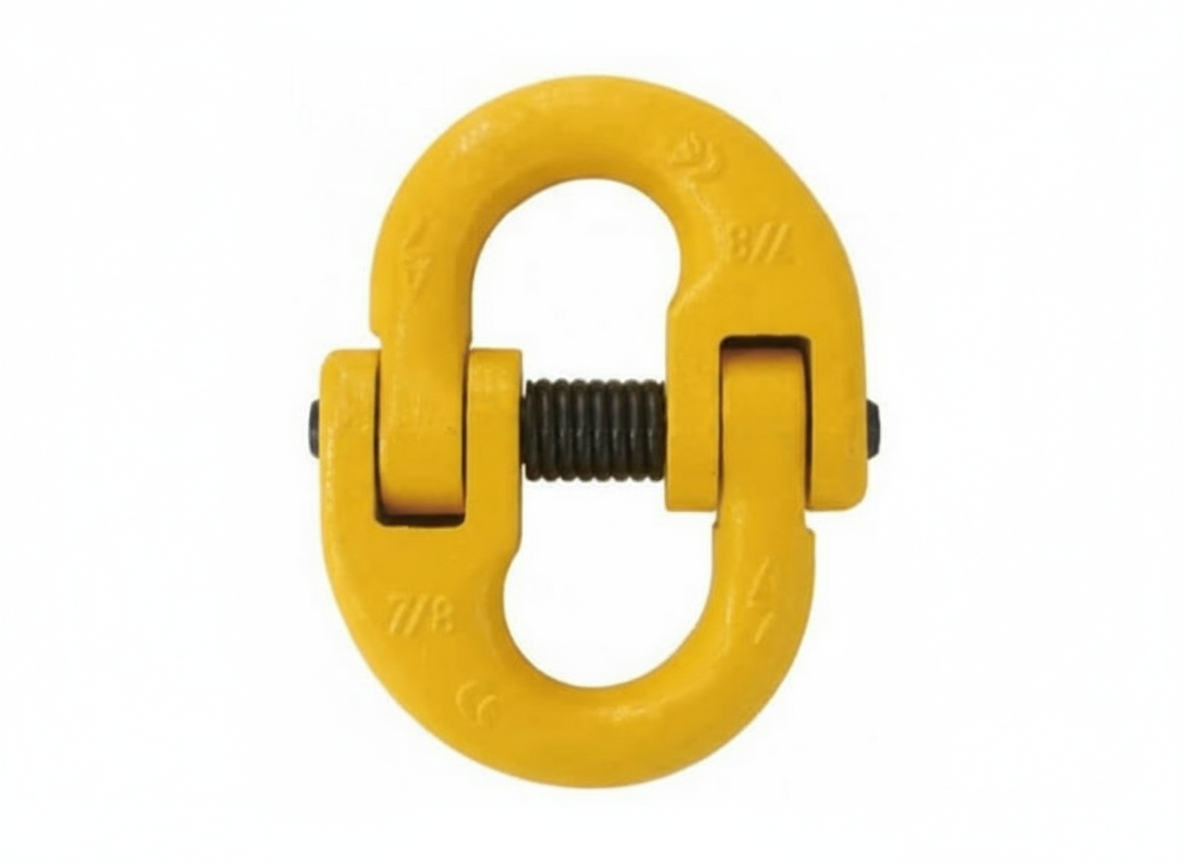
Product Characteristics:

Utility: Specifically engineered to bridge connections where chain link dimensions are restrictive. Acting as a robust intermediary, the link facilitates secure attachment to hooks, shackles, or master links when the chain’s internal clearance is insufficient.
Metallurgy: Forged from super alloy steel; Quenched and Tempered for high-tenacity performance.
Here are the key safety and precautions when using hammerloks:
Inspection Before Each Use
Check for Damage: Inspect for any signs of deformation, cracks, or corrosion.
Pin Integrity: Ensure the load pins are secure, properly seated, and not bent.
Wear Limits: Replace the unit if there is a 10% or more reduction in the original dimension at any point due to wear.
Discard Damaged Units: Never use a hammerlok that has been involved in an accident or shows signs of misuse.
Proper Installation and Use
Correct Orientation: Loop one half of the hammerlok through the towing vehicle’s attachment point (e.g., welded V-ring) and the other half through the end of the safety chain.
Drive the Pin: Secure the two halves by driving the load pin through, ensuring it is fully inserted.
Lubrication: Lubricate swivel joints to maintain smooth rotation.
Avoid Excessive Force: Do not use a hammerlok to “shorten” a chain by twisting it; instead, use it to permanently attach a properly sized chain extension.
Installation Tip: For easier installation, some users recommend placing the pin in the freezer overnight to slightly shrink it, and applying light lubrication.
Load and Rating Safety
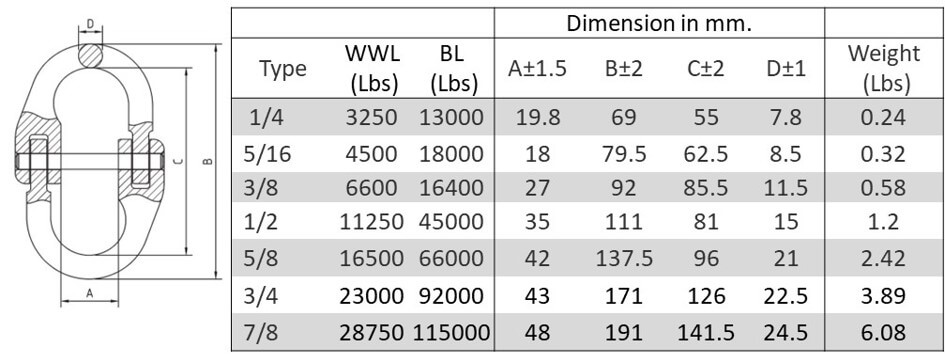
Working Load Limit (WLL): Never exceed the stamped WLL of the hammerlok.
Match Capacity: Ensure the hammerlok is rated for at least 1.5 times the Aggregate Trailer Mass (ATM) of the trailer.
No Modifications: Do not grind, weld, or alter the shape of the hammerlok.
Safety Considerations for Towing
Avoid Shock Loading: Prevent sudden, jarring, or jerky motions, which can exceed the breaking strength of the device.
Cross Chains: If using two chains, cross them under the coupling, creating a cradle that can catch the drawbar.
Secure Mounting Points: Only attach hammerloks to designated, rated safety chain attachment points on the towbar, not to random bolts or bumper bars.
Summary of Differences
Hammerlok: Used for a more permanent, high-strength connection.
D-Shackle: Often limited to one per safety chain and must also be rated.
Yellow Hooks: Frequently found to be non-compliant or illegal in some regions because they are not properly rated for the same load as a hammerlok or D-shackle.