Products

6-Strand (Various Models)

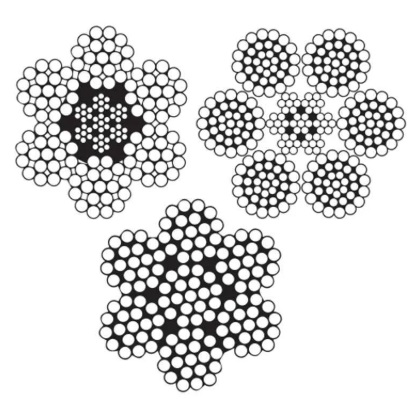
6-strand wire rope is the most common classification of wire rope, valued for its versatility in balancing strength, flexibility, and resistance to external wear. Its specific performance characteristics depend largely on the number of wires within each of the six strands and the type of core used.


Specifications

Core Characteristics

  • Crush Resistance: 6-strand ropes generally offer greater crush resistance than 8-strand ropes.
  • Core Impact:
    • Independent Wire Rope Core (IWRC): Provides maximum support to the outer strands, significantly increasing crush resistance and overall rope strength.
    • Fiber Core (FC): Offers higher flexibility and better cushioning but is more susceptible to crushing and heat damage.

Strand Construction & Performance

The ratio of wire size to quantity determines how the rope handles different stresses:

  • Fewer, Larger Wires (e.g., 6×7, 6×19):
    • High Abrasion Resistance: Better for dragging over surfaces or rollers.
    • High Crush Resistance: Robust against external pressure.
    • Lower Fatigue Resistance: Stiffer and more prone to bending fatigue.
  • More, Smaller Wires (e.g., 6×36, 6×37):
    • High Flexibility: Ideal for applications involving multiple sheaves and bending.
    • High Fatigue Resistance: Withstands repetitive bending cycles better than coarser ropes.
    • Lower Abrasion Resistance: The fine wires wear through more quickly when subjected to friction.

Key Classifications

Classification  Wires per Strand Primary Characteristic Common Applications
6×7 Class         6–8 Max abrasion resistance; very stiff. Draglines, guy wires, mine sloped transport.
6×19 Class 16–26 Best balance of wear resistance and flexibility. General purpose, cranes, drilling lines.
6×36/ 37 Class          27–49 Superior flexibility and fatigue resistance. Elevators, hoists, high-cycle cranes.


Let’s Discuss Your Project Needs