Key Specifications and Standards
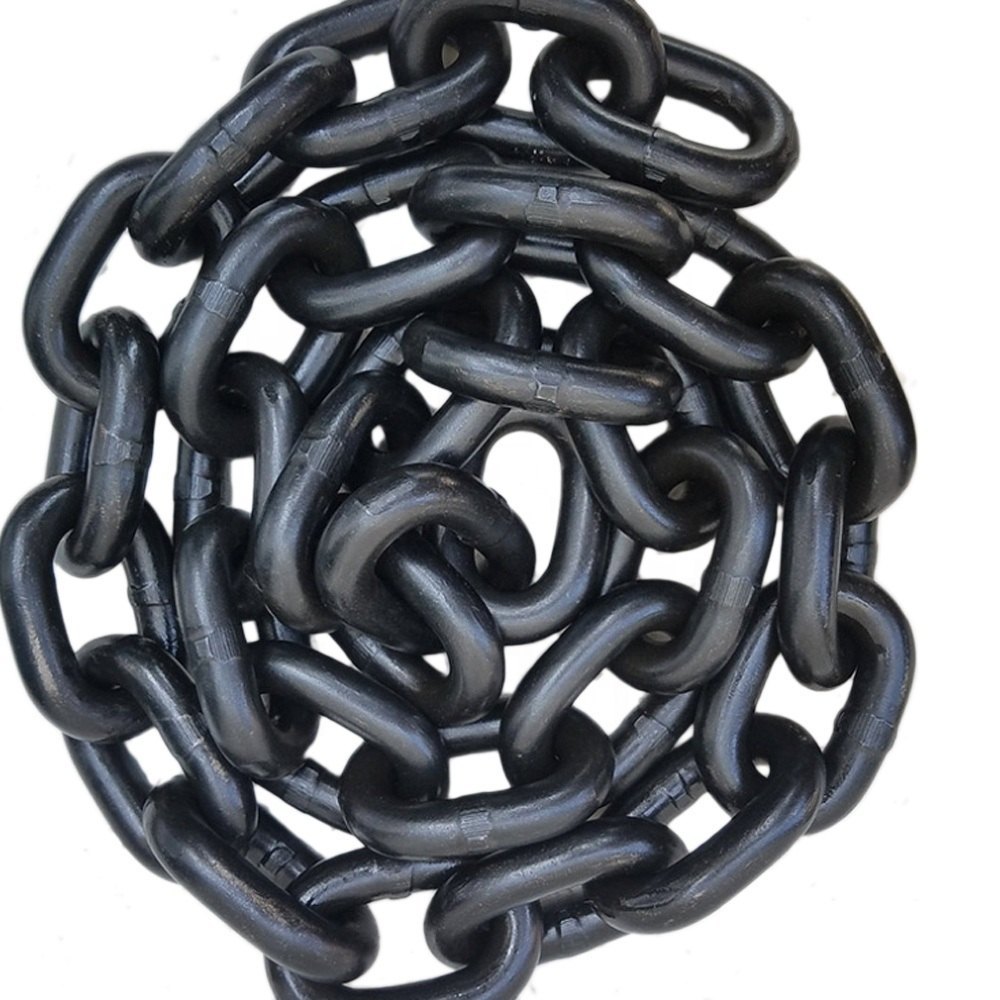
Grade 80 chains are manufactured to meet rigorous international safety requirements to ensure reliability under extreme stress.
Safety Factor: These chains typically feature a 4:1 safety factor, meaning the minimum breaking force is four times the Working Load Limit (WLL). Some specialized lifting slings may use a 5:1 factor.
Material: Constructed from heat-treated alloy steel, often containing manganese, nickel, chromium, and molybdenum for enhanced durability and impact resistance.
Standards Compliance: High-quality G80 chains conform to major standards such as EN 818-2 (European), ASME B30.9 (US), and ISO 7597.
Temperature Range: Generally usable from -40°F to 400°F (-40°C to 200°C) without reduction in WLL. At higher temperatures (up to 1000°F), the WLL must be significantly derated.
Common Applications
Due to its strength-to-weight ratio, G80 chain is the industry standard for various heavy-duty tasks.
Overhead Lifting: Used in cranes, hoists, and as the primary component in multi-leg lifting slings.
Load Securing: Employed in trucking and logistics for securing heavy cargo on flatbeds (G80 transport or binder chains).
Marine & Fishing: Often galvanized or painted (e.g., yellow) for mooring, towing, and dredging in corrosive saltwater environments.
Mining & Construction: Ideal for dragging and recovery operations due to high abrasion resistance.
Maintenance and Safety
Inspection: OSHA requires visual checks before every shift. Chains must be removed from service if wear exceeds 10% of the original link diameter or if any elongation (stretch) exceeds 3%.
Identification: Always verify the “G80” stamp and ensure all attached hardware (hooks, master links) is also Grade 80 or higher to maintain system integrity.
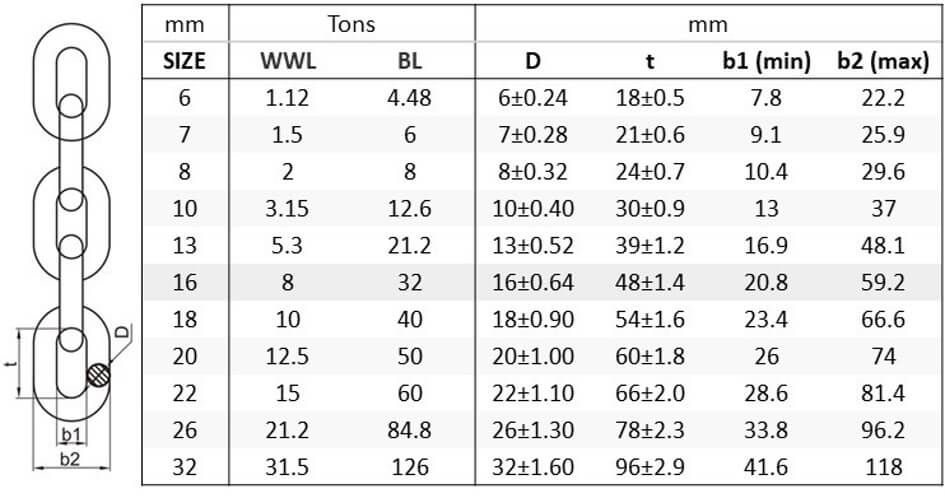
Common Sizes & Specifications: