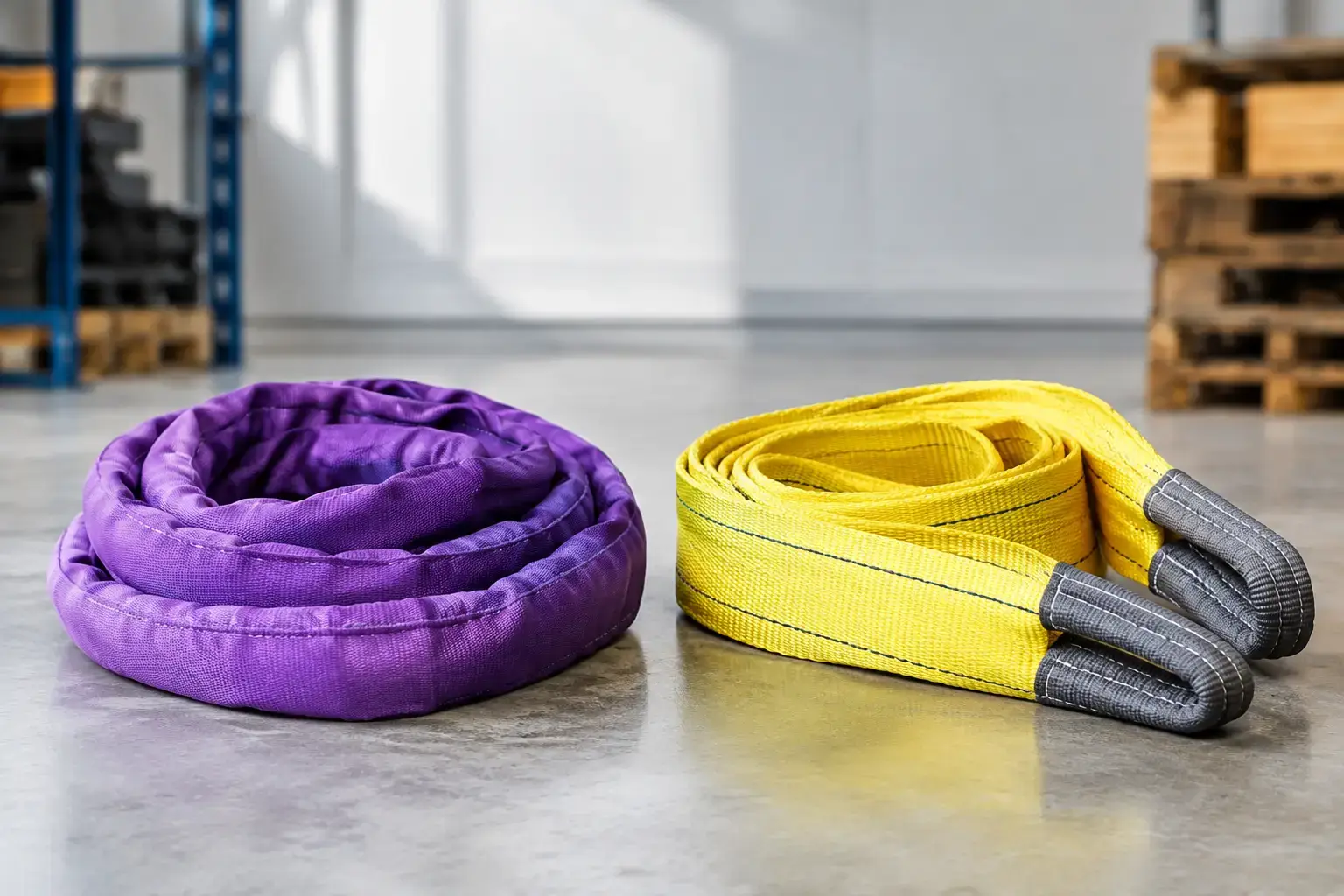
Any rigger can spot a badly damaged wire rope sling. The harder question in a Jurong yard or Tuas fabrication shop is where the line sits: how many broken wires, over what length, and which defects allow no tolerance at all. Below, our team sets out the numeric discard criteria in EN 13414-2, how they differ from ASME B30.9, what fails at the ferrule, and what Singapore’s WSH rules expect.
- Under EN 13414-2, a wire rope sling is withdrawn at 6 randomly distributed broken outer wires in 6d, 14 in 30d, or 3 adjacent breaks in one strand, and for kinking, birdcaging, a cracked ferrule or an illegible WLL marking.
- ASME B30.9 counts per rope lay instead (10 random, or 5 in one strand), so state which standard your inspection uses before you reject or pass a sling.
How Many Broken Wires Condemn a Wire Rope Sling under EN 13414-2?
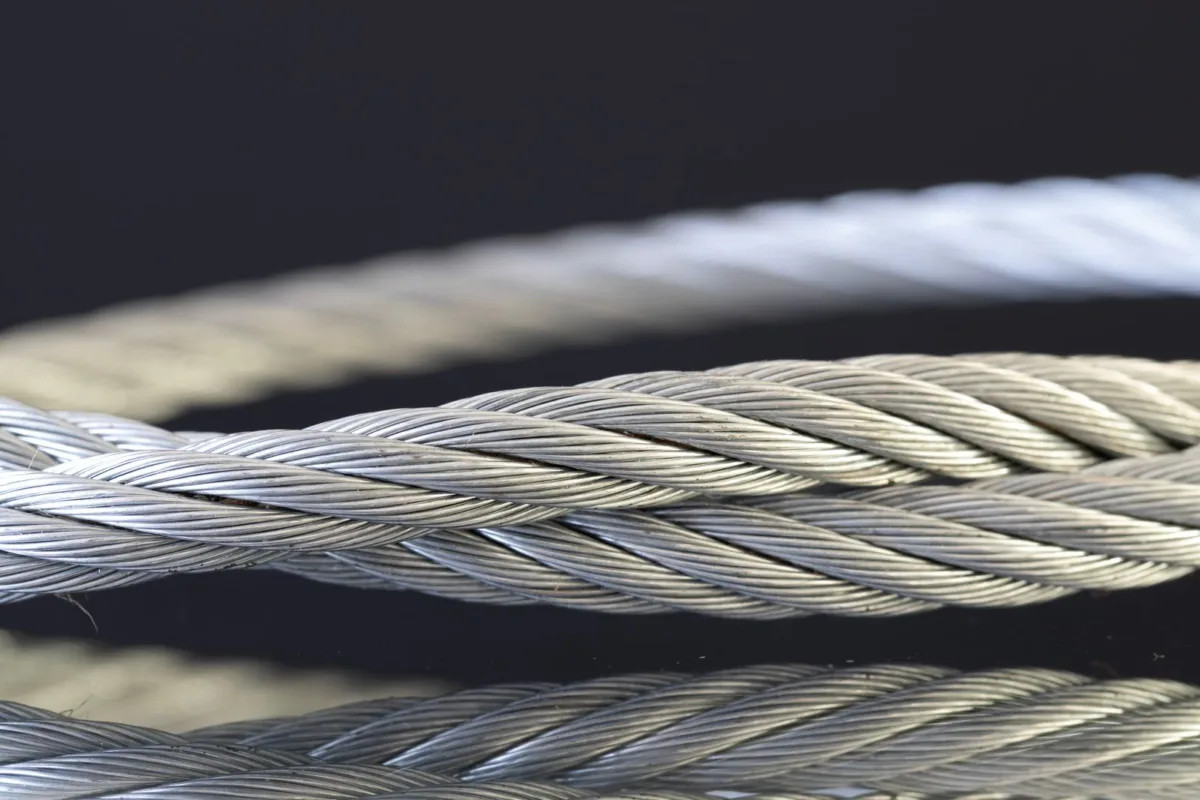
EN 13414-2 withdraws a sling at 6 randomly distributed broken outer wires in a length of 6d, more than 14 in 30d, or 3 adjacent broken outer wires in one strand, where d is the nominal rope diameter. For a 16 mm sling, 6d is 96 mm and 30d is 480 mm, so the inspector counts within a hand span, then over half a metre.
Concentration matters more than total count: three adjacent breaks in one strand point to local crushing or a sharp edge. During a wire rope inspection we flex the rope by hand at suspect spots, because valley breaks often show only when bent. ISO 4309:2017 has its own broken-wire tables, but it covers crane ropes, not slings, so do not apply crane limits to a steel wire rope sling.
How Do EN 13414-2 and ASME B30.9 Removal Criteria Compare?
Both standards remove a sling for kinks, crushing, birdcaging, heat damage, damaged end fittings and missing identification; the difference is how broken wires are counted. EN 13414-2 measures in multiples of rope diameter, while ASME B30.9 measures per rope lay.
| Criterion | EN 13414-2 | ASME B30.9 |
|---|---|---|
| Random broken wires | 6 outer wires in 6d; 14 in 30d | 10 in one rope lay (strand-laid, single-part) |
| Concentrated breaks | 3 adjacent outer wires in one strand | 5 in one strand in one rope lay |
| Wear | Withdraw at 10% of nominal d | Severe localised abrasion or scraping |
| Distortion | Kinking, crushing, birdcaging, core protrusion | Kinking, crushing, birdcaging |
| Heat | Discolouration, loss of lubricant, arc pitting | Metallic discolouration, fused wires |
| Identification | Illegible ID or WLL: withdraw | Missing or illegible tag: remove |
| Periodic examination | Thorough examination, max. 12 months | At least every 12 months; more often in severe service |
Sources: BS EN 13414-2:2003+A2:2008, Annex A; ASME B30.9 criteria as summarised by Mazzella. Always check the edition named on your sling certificate.
A rope lay on a typical 6-strand rope is roughly 6d to 7d, so ASME allows more breaks over a similar length. A sling certified to EN 13414-1 should be inspected to EN 13414-2, not passed on the looser figure.
Which Distortions Mean Immediate Withdrawal?
A kink, birdcage, crushed section or protruding core is a discard condition in its own right, with no broken-wire count to reach first; how severe the distortion is remains the competent person’s judgement. EN 13414-2 lists “kinking, crushing, birdcaging or core protrusion or other damage which distorts the rope structure” as a discard condition in its own right.
- Kink: a permanent set from a loop pulled tight; straightening does not restore strength.
- Birdcage: outer strands opened away from the core, usually after shock unloading or twisting.
- Crushing: flattening over an unpacked corner; measure diameter in two planes at 90° to confirm.
- Core protrusion: core forced between outer strands, often from repeated choking in one spot.
As Dave Tucker, Senior Training Specialist, and Dave Thomson, Training Manager at the Lifting Equipment Engineers Association (LEEA), explain:
Kinks lead to an imbalance of lay length which will cause excessive wear and in severe cases, the rope will be so distorted that it will have only retained a small proportion of its strength.
That is why a distorted sling goes to quarantine for a competent person to assess, rather than straight back on the rack.
What Ferrule and Termination Damage Fails a Sling?
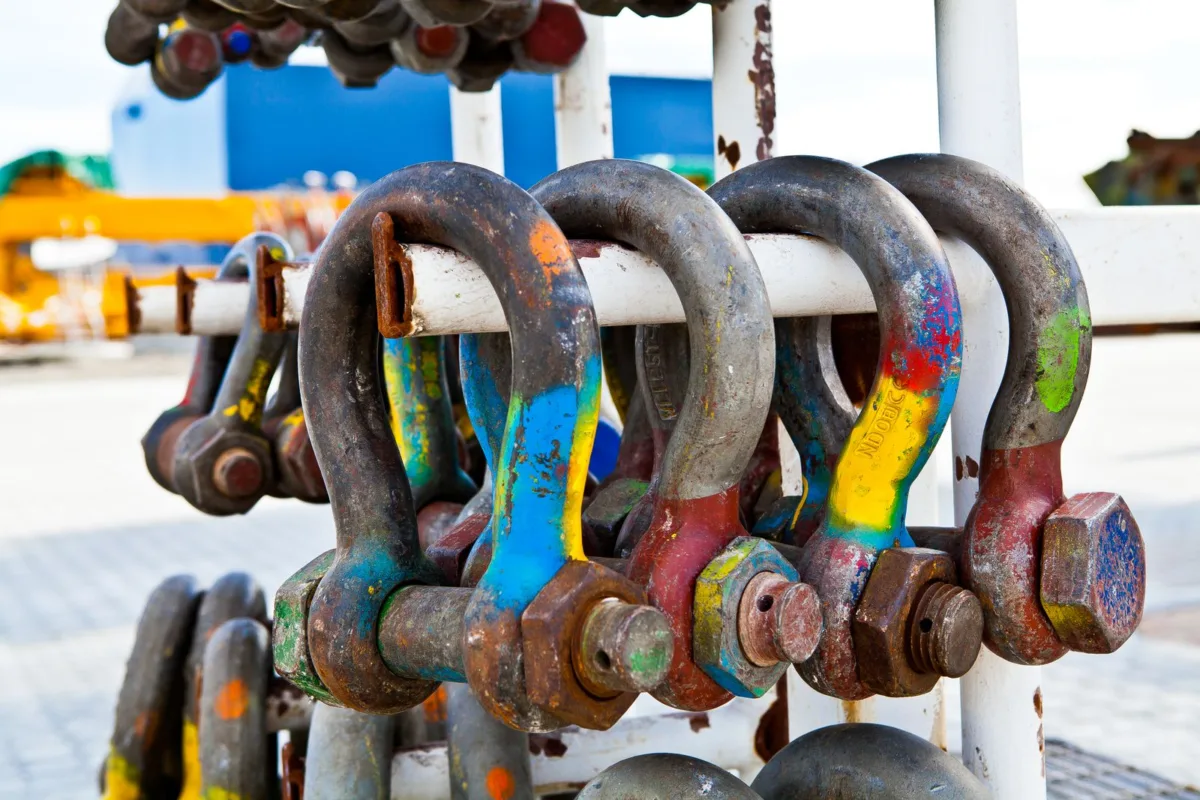
Withdraw the sling for any crack, wear or distortion of the ferrule, any rope pulling out of the ferrule or splice, and any broken wire where the rope enters the ferrule, where bending stress peaks.
Ferrule-secured eyes are made to EN 13411-3. In service, look for a crack along the ferrule, the rope tail no longer visible at the tail end, and corrosion bloom on aluminium ferrules in marine air. A closed thimble signals overload under EN 13414-2, as does an opened lifting hook or a bent d shackle pin on the same eye. Inspect the assembly together: a master link that has gone oval tells you the sling legs below it have seen the same overload. For shackle selection on sling eyes, see our guide to how a d shackle is used in lifting.
A damaged termination is never re-pressed in the field; re-termination means a new ferrule, proof load test and certificate, which our wire rope swaging service provides.
Who Must Examine a Steel Wire Rope Sling in Singapore, and How Often?
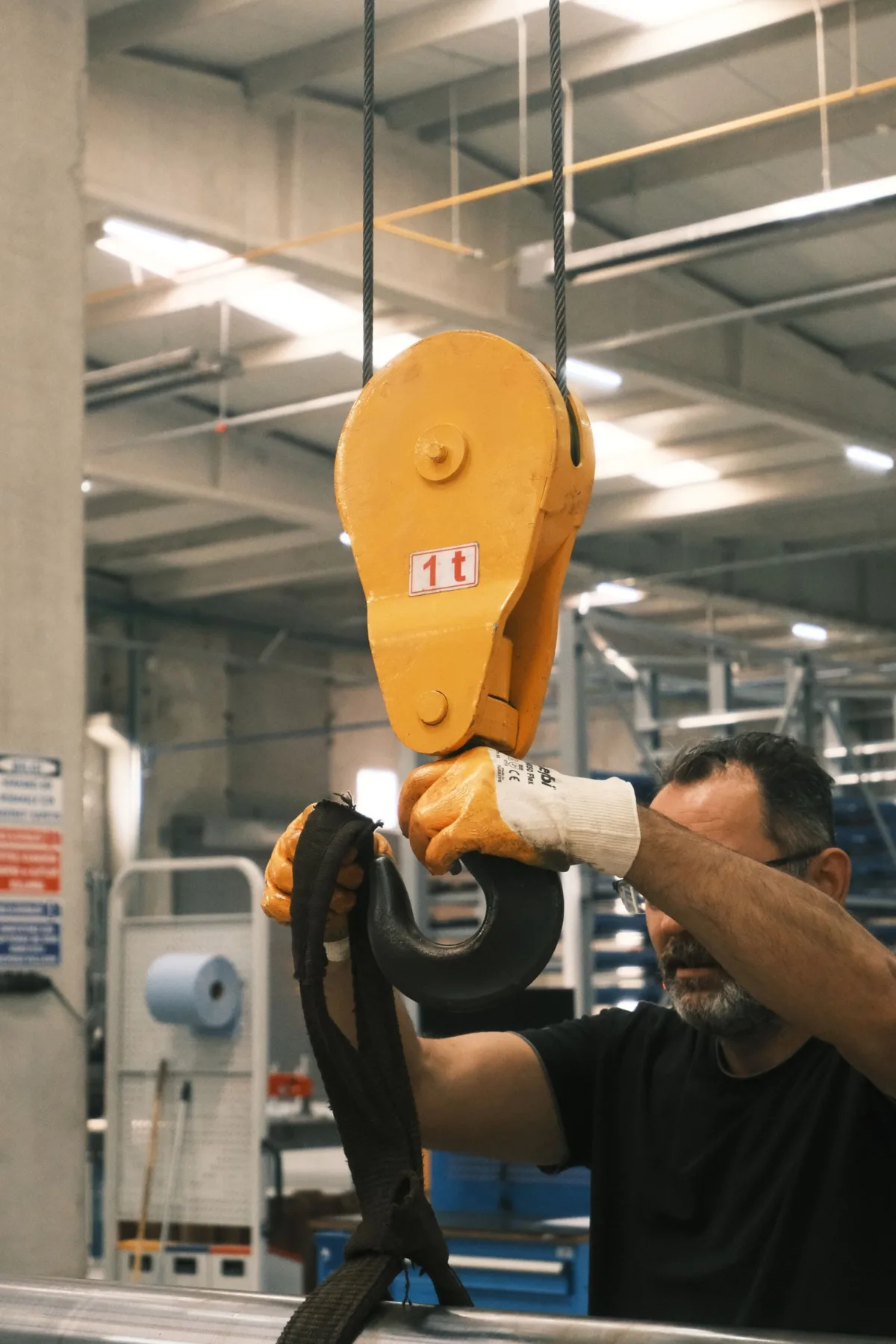
In Singapore, an Authorised Examiner must examine lifting gear before first use and after repair or modification; since 12 September 2025, occupiers may appoint competent persons for periodic re-examination, per MOM’s August 2025 announcement.
The MOM FAQ states that rigger or signalman training alone is not competence, and each re-examination needs a signed record with registration number, SWL and next due date. MOM’s WSH Report 2025 shows the construction sector’s fatal and major injury rate rose to 23.8 per 100,000 workers in 2025, from 18.4 in 2024, while manufacturing and transportation & storage improved.
What Should a Buyer Check on Delivery?
Check that the tag or ferrule shows the identification number and WLL, matching the manufacturer’s certificate, as EN 13414-2 requires.
- Certificate names the standard (EN 13414-1 or ASME B30.9), rope construction, diameter, grade and WLL.
- Multi-leg slings: WLL for the angle range; a 4-leg sling on 2 legs is rated at 2/3 (EN 13414-2 Table A.2).
- Choke hitch reduces WLL to no more than 80% of the marked value.
When comparing wire rope Singapore suppliers, ask who presses the ferrules and signs the test report. Our steel wire rope sling assemblies are supplied with test certificates, and our swaging and load testing services cover re-termination and proof testing. For general retirement signs, see our overview on when to replace wire slings.
Frequently Asked Questions
Can a wire rope sling with one broken wire stay in service?
Usually, if it is below the EN 13414-2 limits and not at the ferrule. Record it and re-check.
Does ISO 4309 apply to slings?
No. ISO 4309 covers wire ropes on cranes. Use EN 13414-2 or ASME B30.9 for a wire rope inspection on slings.
Can a kinked steel wire rope sling be straightened?
No. Straightening does not restore the strength a kink takes away, so quarantine the sling and let a competent person decide whether it must be discarded.
How often should slings be thoroughly examined?
At most every 12 months under EN 13414-2, plus pre-use checks.
Should I check the lifting hook and d shackle as well?
Yes. An opened lifting hook or bent d shackle pin is evidence the sling was overloaded too.
Discard by the Numbers, Not by Feel
A wire rope sling fails at the details: three clustered breaks, a cracked ferrule, an unreadable tag. Inspect to the standard on the certificate and quarantine anything in doubt. As a wire rope Singapore supplier, C&C International Trading provides certified slings and fittings backed by swaging and load testing services. Send us your sling list for replacement advice.
About the author
Written by the C&C International Trading technical team, reviewed by Denis Koh, Senior Technical Consultant at C&C International Trading. Last updated: November 2026.
Sources: EN 13414-2; Mazzella, How to Inspect Wire Rope Slings to ASME B30.9; Lifting Equipment Engineers Association (LEEA), Checking for Kinks; Ministry of Manpower, August 2025 press release and circular FAQ; MOM, Workplace Safety and Health Report 2025.