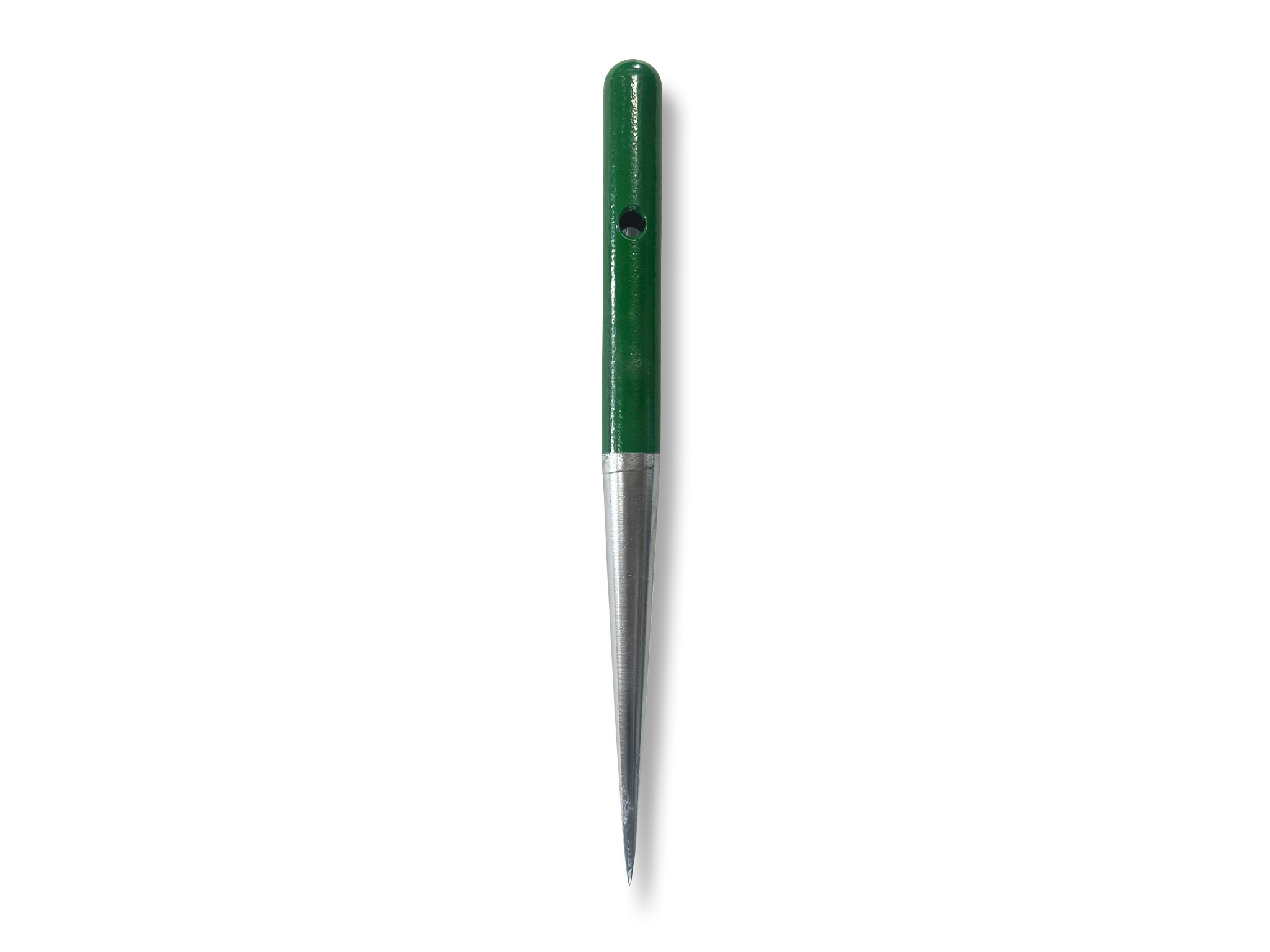
Steel Marlin Spikes
Steel spikes are favored for their durability and ability to handle high-tension tasks, such as splicing wire rope or prying open shackles. They are often used as levers to tighten knots like the “marlin spike hitch” or to loosen “impossibly tight” knots that have been tightened by extreme tension.
Wooden Fids and Marlin Spikes
Wooden tools, often called fids, are preferred for traditional ropework because they are smoother on natural fibers and typically float if dropped overboard. Larger wooden fids may be referred to as “commanders” when they require a mallet to be driven through heavy rope.
Comparison Table
| Feature |
Steel Marlin Spike |
Wooden Fid/Spike |
| Material |
Iron, Stainless Steel, or Carbon Steel |
Wood (e.g., Mahogany, Fruitwood) or Bone |
| Primary Use |
Wire rope, shackles, high-tension knots |
Natural/synthetic fiber rope, canvas work |
| Durability |
Extremely high; can be used as a pry bar or hammer |
Lower; prone to wear or bending if used on wire |
| Buoyancy |
Sinks if dropped |
Floats if dropped |