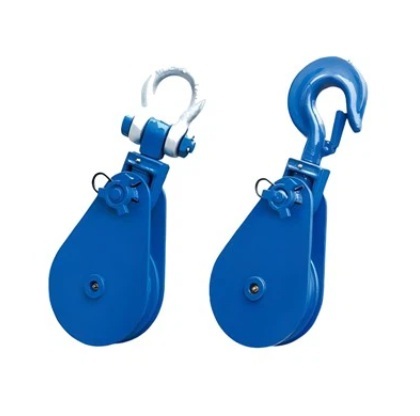
A snatch block is a heavy-duty pulley system encased in a metal housing, specifically designed for towing, recovery, and lifting. Unlike a standard fixed pulley, a snatch block features a side plate that opens (swings or slides), allowing you to insert a winch cable or rope into the pulley without having to unspool the entire line or remove the hook.
It serves two primary purposes in the field:
- Mechanical Advantage (The “Force Multiplier”)
By “doubling the line”—running the cable through the snatch block at the anchor point and back to your own vehicle—you effectively double the pulling power of your winch.
- How it works: If you have a 10,000-lb winch, using a snatch block in a double-line pull allows you to move a 20,000-lb load (though it moves at half the speed).
- Redirecting the Pull
It allows you to change the direction of a pull without damaging the cable.
- The Scenario: If your vehicle is stuck and the only solid anchor point (like a tree) is off to the side, you can use a snatch block to create a “corner” for your cable. This ensures the winch pulls the cable straight onto the drum, preventing “bunching” and internal winch damage.
Key Components
- Sheave: The internal wheel that the rope or cable sits on.
- Swivel/Side Plates: The metal “cheeks” that protect the rope and provide the attachment point.
- Attachment Point:Usually a hole for a shackle or a built-in hook to connect the block to an anchor.
Models and Mechanism Types
- Hook Snatch Blocks: Equipped with a swivel hook for rapid attachment to anchor points; ideal for temporary field adjustments and towing.
- Shackle Snatch Blocks: Feature a permanent or semi-permanent shackle connection, offering higher security for heavy-duty lifting and long-term use.