Products

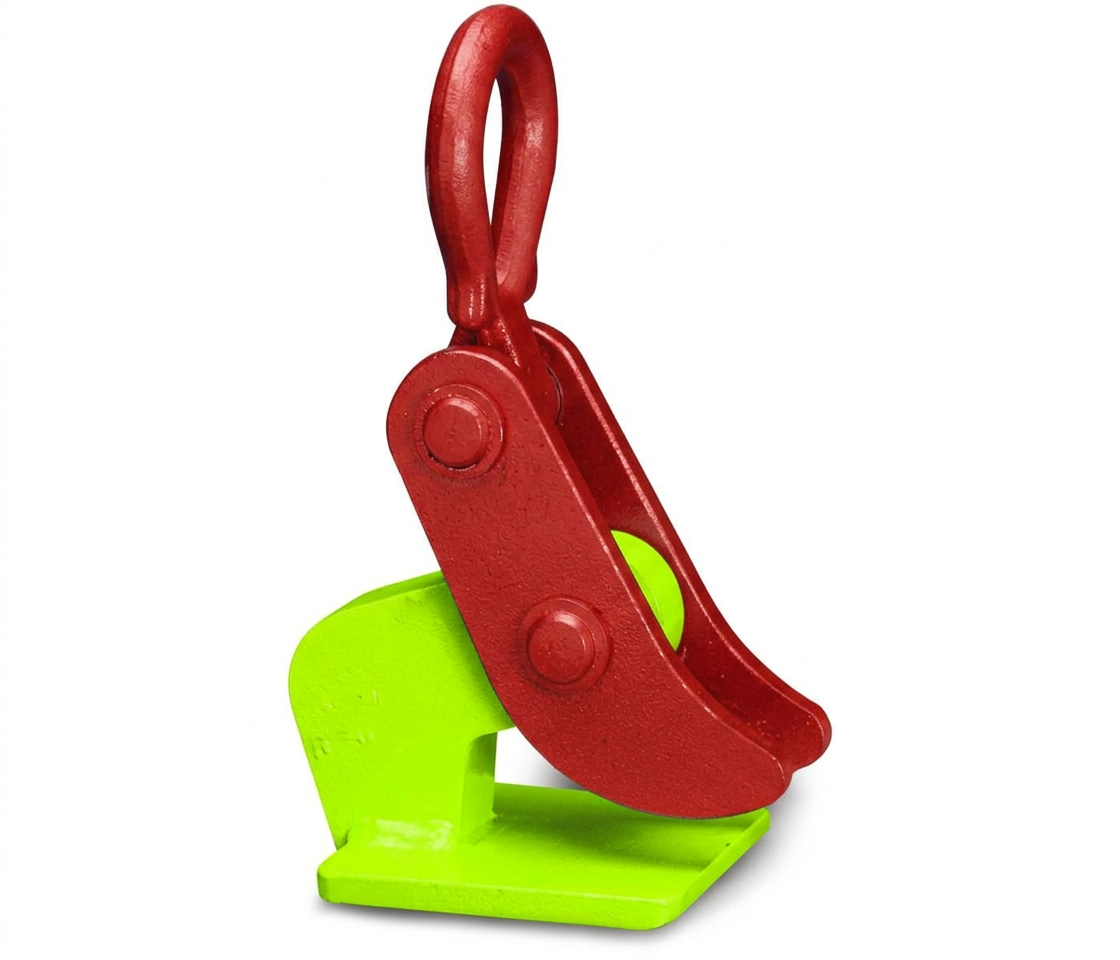
Horizontal lifting clamps of the CHG type

They are specialized devices designed for the safe, horizontal transportation of single steel plates or bundles of plates. They are primarily used in industrial environments like shipyards and steel fabrication shops where maintaining a flat, level orientation is critical to prevent the material from bending or warping.

Specifications

Usage Instructions

CHG type clamps are engineered to work through friction and direct pressure applied when the rigging is under tension.

  • Pair Requirement: These clamps must always be used in pairs or multiples thereof. A single pair with a two-legged chain sling is suitable for small plates, while larger plates require two pairs and a spreader beam to ensure balance.
  • Positioning: Place the clamps symmetrically around the center of gravity of the load to ensure a level lift and prevent tilting.
  • Insertion: Insert the plate or bundle into the clamp’s jaw as far as it will go (full depth of the throat) to ensure maximum contact and a secure grip.
  • Lifting: Apply tension slowly and smoothly. Avoid sudden jerks (shock loading) which can cause the clamps to slip.

Safety Precautions

  • Minimum Load: In principle, you should not lift any load that is less than 1/5 (20%) of the clamp’s rated lifting capacity. This ensures there is enough weight to engage the gripping force effectively.
  • Sling Angle: When using two-point lifts, maintain a lifting angle (between the sling legs) of 60 degrees or lessunless otherwise specified.
  • Prohibited Tasks:
    • Never use these for vertical lifting or to rotate a plate from horizontal to vertical.
    • Do not use them on materials with a hardness exceeding the manufacturer’s limit (often around 37 RC / 345 HB).
    • Never lift more than one plate at a time in a single clamp unless they are specifically bundled and the clamp is rated for bundles.
  • Surface Condition: Ensure the plate surface is clean and free of oil, paint, scale, or ice, as these contaminants act as lubricants and significantly reduce grip.

Common Sizes and Specifications

Model  Working Load Limit (WLL) Jaw Capacity (Thickness) Unit Weight
CH1 1,000 kg (1 Ton) 5 mm – 32 mm 8 kg
CH2 2,000 kg (2 Tons) 5 mm – 32 mm 11 kg
CH4 4,000 kg (4 Tons) 5 mm – 50 mm 17 kg
CH6 6,000 kg (6 Tons) 5 mm – 75 mm 46 kg
CH10 10,000 kg (10 Tons) 5 mm – 100 mm 95 kg
CH20 20,000 kg (20 Tons) 5 mm – 100 mm 165 kg


Let’s Discuss Your Project Needs