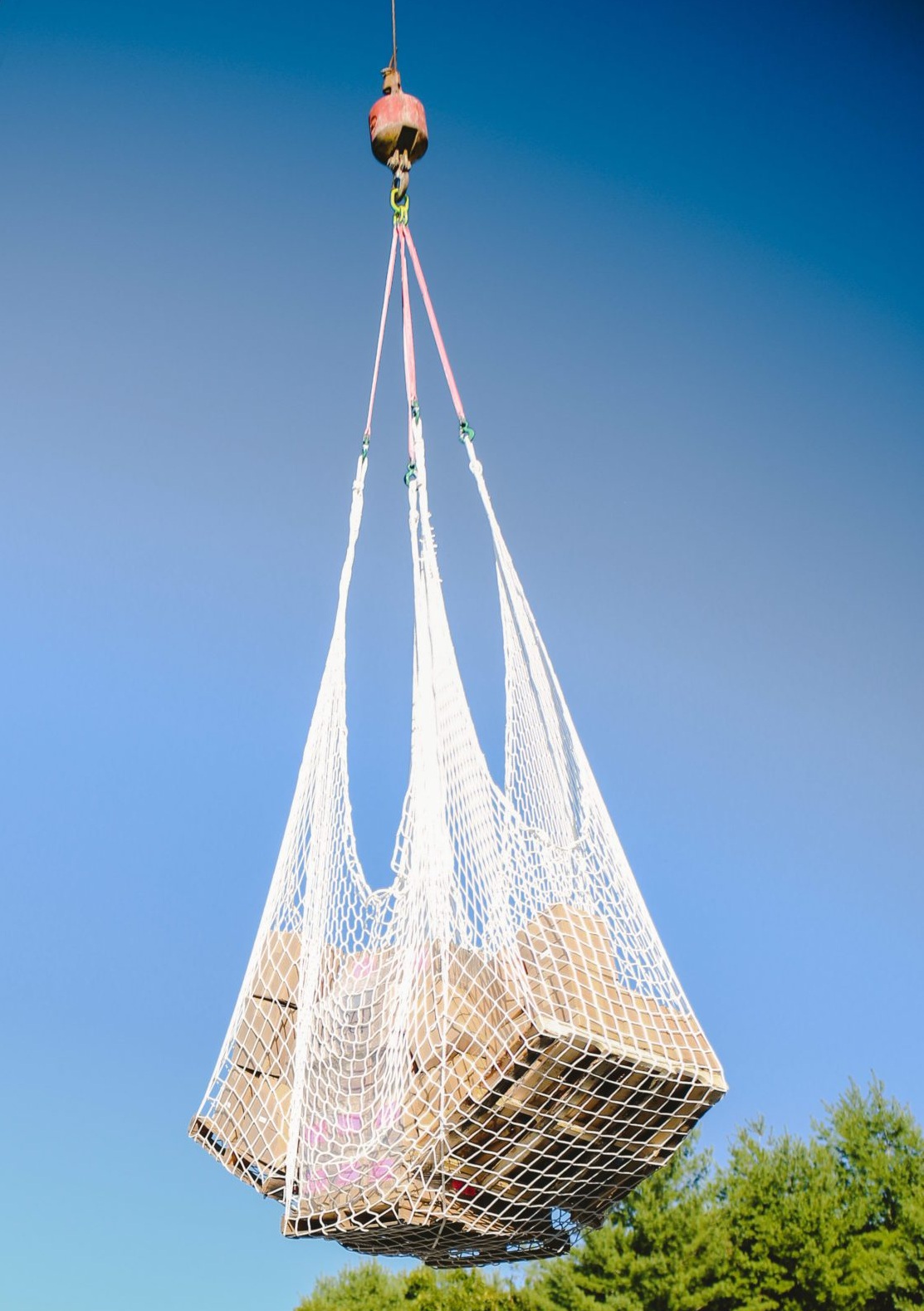
Standard Types and Materials
Rope cargo nets are generally categorized by their construction material, which determines their suitability for specific maritime environments:
- Polypropylene (PP) Rope Nets: The most common type in Singapore due to being lightweight, rot-proof, and resistant to oil and seawater. They float, making them ideal for vessel-to-wharf transfers.
- Polyester Webbing Nets: Feature 2-inch wide high-tenacity webbing that provides a flat, smooth contact surface, reducing the risk of crushing delicate cargo.
- Nylon Nets: High elasticity makes them suitable for dynamic loads, though they have more “stretch” than polyester.
- Safety/Gangway Nets: Often made of HDPE or nylon, these are not for lifting but are rigged between the ship and the wharf to catch falling personnel or cargo.
Common Dimensions and Capacities
Dimensions vary by standard sizes and custom fabrication for specific vessel needs.
| Net Size |
Mesh Type/Size |
Rope Diameter (Mesh/Rim) |
SWL (Safe Working Load) |
| 2.5m x 2.5m |
200mm square |
18mm / 24mm |
1.5 – 3.0 Tons |
| 3.0m x 3.0m |
200mm square |
18mm / 24mm |
1.5 – 5.0 Tons |
| 4.0m x 4.0m |
200mm – 250mm |
24mm / 32mm |
3.5 – 5.0 Tons |
| 10ft x 10ft |
Custom Webbing |
Variable |
Up to 5.0 Tons |
Do’s and Don’ts for Port Operations
Based on Singapore’s PSA and Jurong Port safety circulars, the belowmentioned is critical to avoid fines or stop-work orders.
PSA Singapore
Do:
- Inspect Before Use: Check for fraying, broken strands, cuts, or “stiff spots” signaling UV degradation or chemical damage.
- Use the “Apple in the Handkerchief” Effect: Center the load so that when the four corners are gathered to the crane hook, the net completely encapsulates the cargo.
- Use Taglines: Always use taglines to control and guide the movement of the suspended load, especially in windy conditions.
- Match Mesh to Cargo: Use nets with smaller mesh or a mesh lining when handling small or loose items to prevent them from slipping through.
www.jurongportonline.com +7
Don’t:
- Overload: Never exceed the marked Safe Working Load (SWL) or Working Load Limit (WLL).
- Lift Sharp Objects Directly: Avoid lifting scrap metal or sharp-edged crates without a metal cage or protective lining, as these can easily sever rope fibers.
- Stand Under the Load: Never position personnel directly beneath or in the “snap-back” zone of a tensioned net.
- Drag the Net: Dragging nets across rough wharf surfaces causes rapid abrasion and significantly reduces the net’s lifespan.
Safety Precautions
- Certification: Ensure the net has a valid test certificate and an individual serial number for traceability, as required by Singapore’s Workplace Safety and Health (WSH) regulations.
- Storage: Store ropes and nets in a cool, dry place away from direct sunlight and chemicals when not in use.
- Discarding: Retain a log of professional reviews. If a net fails a visual inspection or has been subjected to a shock load, it must be removed from service immediately.