Products

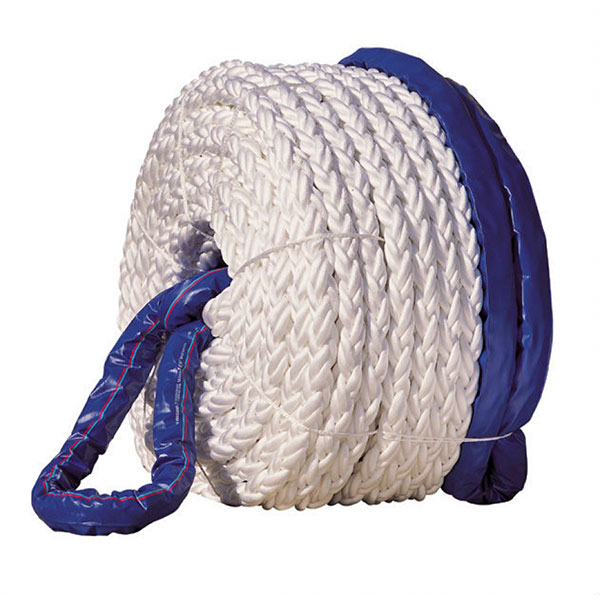
8 Strand Polypropylene Rope

8-strand polypropylene (PP) rope, often called 8-strand braided hawser, is a staple in maritime and offshore industries due to its positive buoyancy (it floats) and high strength-to-weight ratio. Its unique plaited construction consists of four pairs of strands that resist kinking and distribute loads more evenly than traditional 3-strand ropes.

Specifications

Common Sizes

Rope size is typically measured by diameter (mm) or circumference (inches). Standard lengths for shipping are often 200m or 220m.

Application  Common Diameter Typical Use
Commercial Shipping 40 mm – 80 mm Large vessel mooring, hawsers
Heavy Offshore Up to 140 mm+ Deep-water mooring, heavy towage

Usage

  • Mooring & Docking: Securing vessels to docks or buoys. The floating nature prevents the rope from sinking and tangling in propellers.
  • Towing: Used for ship-to-ship or ship-to-shore towing because it remains visible on the surface.
  • Offshore Operations: Station-keeping for platforms and securing floating structures.
  • Fishing & Aquaculture: Constructing large nets (gillnets, seines) and mooring fish farming cages.
  • Utility & Lashing: General onboard tasks like cargo securing and rigging.

How to Choose

  1. Breaking Strength vs. WLL: Calculate the Safe Working Load (SWL) or Working Load Limit (WLL) by applying a safety factor (typically 5:1 or up to 12:1 for critical tasks) to the Minimum Breaking Strength (MBS).
  2. Environmental Resistance: Ensure the rope is UV-stabilized if it will be exposed to prolonged sunlight, as standard polypropylene degrades faster than polyester.
  3. Vessel Displacement: Larger ships require thicker diameters; for boats under 60ft, a common rule is to add 2 to the boat’s length (m) to find the required diameter (mm).
  4. Certifications: For commercial or offshore use, look for ropes certified by societies like DNV, ABS, or Lloyd’s Register.

Precautions & Safety

  • Heat Sensitivity: Polypropylene has a low melting point (~165°C). Avoid friction-generated heat from fast-running winches or contact with hot exhausts.
  • UV Degradation: Regularly inspect for “chalking” or brittleness, signs that sunlight has weakened the fibers.
  • Snap-Back Danger: While PP has low stretch (3-5%), it can still store energy. Always stay clear of the “snap-back zone” during high-tension operations.
  • Inspection: Retire the rope if more than 10% of strands are damaged or if there is significant surface abrasion (flattening of the braid).
  • Splicing over Knots: Always use eye splices for terminations; knots can reduce a rope’s strength by up to 50%, whereas a proper splice retains 90-100%


Let’s Discuss Your Project Needs