Common Usage and Applications
Mixed mooring ropes are versatile and used across several maritime sectors:
- Commercial Shipping: Heavy-duty 8-strand or 12-strand ropes are used for tankers, bulk carriers, cargo vessels, and cruise ships.
- Offshore Operations: Used for oil exploration, offshore platforms, and FPSOs due to high strength and UV stability.
- Harbor Operations: Ideal for frequent docking/undocking at port terminals and for tugboats.
- Marine Terminals: Used as “uniform mooring” lines to ensure even load distribution across all lines during cargo transfer.
Common Sizes and Specifications
Sizes vary based on vessel tonnage and operational requirements:
- Diameter: Typically ranges from 6″ circumference (48mm diameter) – 12″ circumference (96mm diameter) for large vessels.
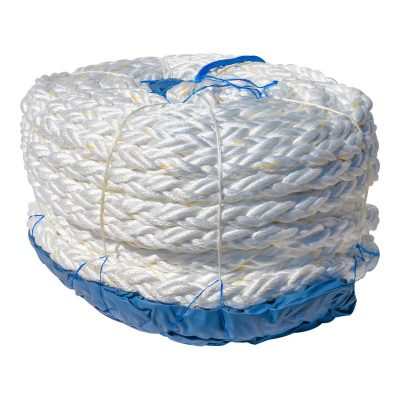
- Standard Length: Usually provided in coils of 200/ 220 meters.
- Construction: Most common are 8-strand (plaited) for flexibility and 12-strand (braided) for higher abrasion resistance and strength.
- Breaking Strength: Can range from 33 – over 50 tons depending on the specific diameter and fiber blend.
How to Choose the Right Mixed Rope
Selection is based on matching engineering data to vessel and environmental needs:
- Breaking Load (MBL): The rope’s Line Design Break Force (LDBF) should be 100%–105% of the Ship Design Minimum Breaking Load (MBLsd) found in the vessel’s mooring maintenance plan.
- Vessel Displacement: A general rule of thumb is 1 mm of diameter for every 1,000 tonnes of displacement.
- Environmental Conditions:
- Calm Harbors: Polyester-heavy blends offer low stretch and stable positioning.
- Rough Seas/Dynamic Loads: Nylon-blended ropes provide better shock absorption.
- Operational Needs: If buoyancy is required to prevent ropes from sinking into propellers, choose blends with a specific gravity less than 1.0 (typically around 0.98).
- Compliance: Ensure ropes meet international standards like OCIMF MEG4 and are certified by bodies like DNV, LR, ABS, or CCS.
Safety and Maintenance Precautions
- Uniform Mooring: Never mix ropes of different materials (e.g., steel wire with synthetic) in the same mooring group, as the stiffer line will take the entire load and potentially fail.
- Regular Inspection: Inspect monthly for fraying, cuts, discoloration (UV damage), or “soft spots” indicating internal wear.
- Snap-back Hazard: Be aware of snap-back zones; though some mixed ropes have lower stretch, any line under tension can recoil violently if it parts.
- Storage: Store in clean, dry areas out of direct sunlight to prevent UV degradation.
- Handling: Use chafe guards or protective sleeves in high-abrasion areas like fairleads to extend service life.