Products

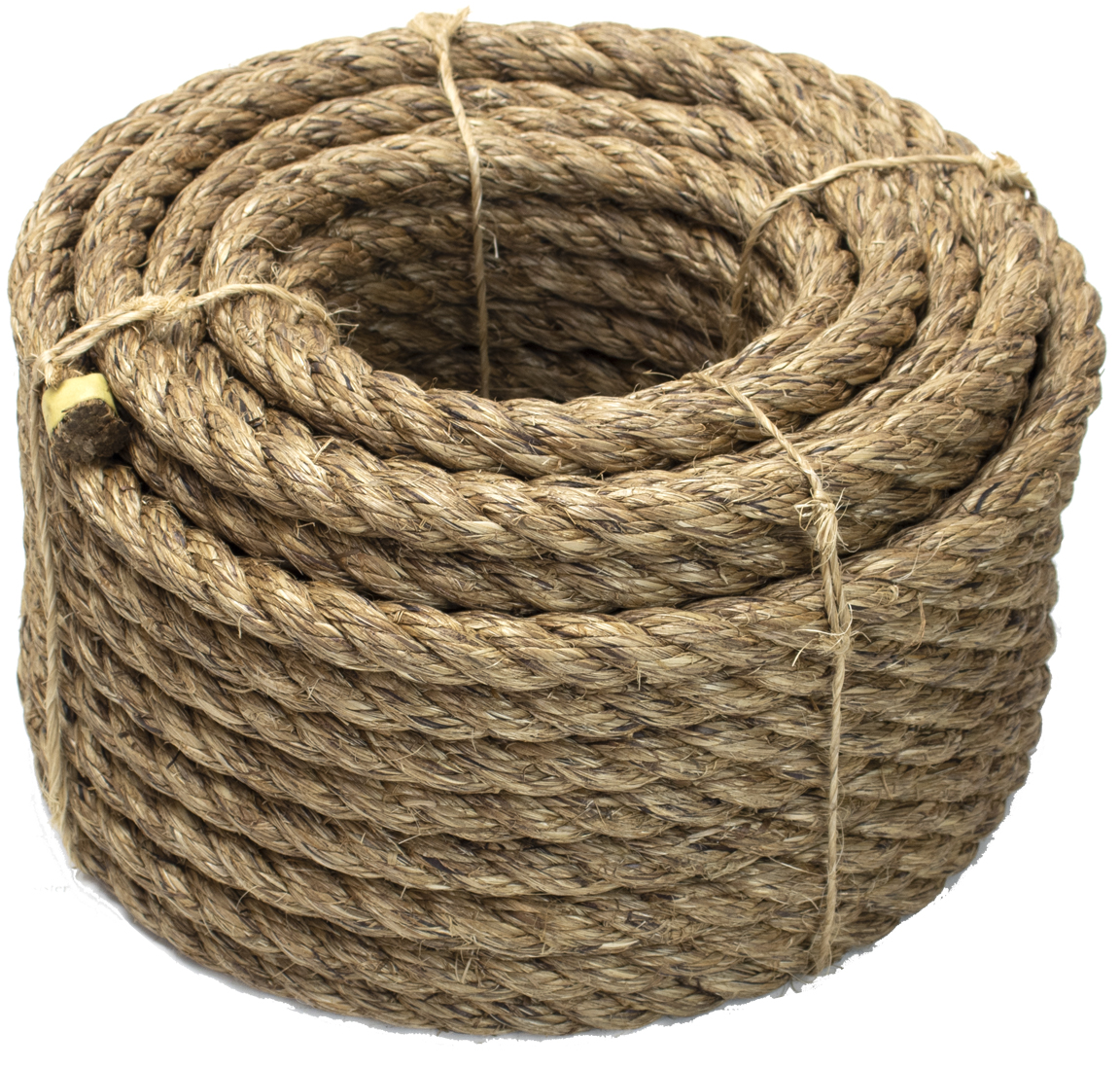
3-Strand Manila Rope

3-strand Manila rope, crafted from the natural fibers of the abaca plant, remains a staple in shipping and offshore industries due to its high tensile strength, excellent grip, and unique safety characteristics. Unlike synthetic ropes, it does not snap back violently upon failure, but instead frays gradually, providing a critical safety margin for crew members.

Specifications

Common Sizes (Shipping & Offshore)

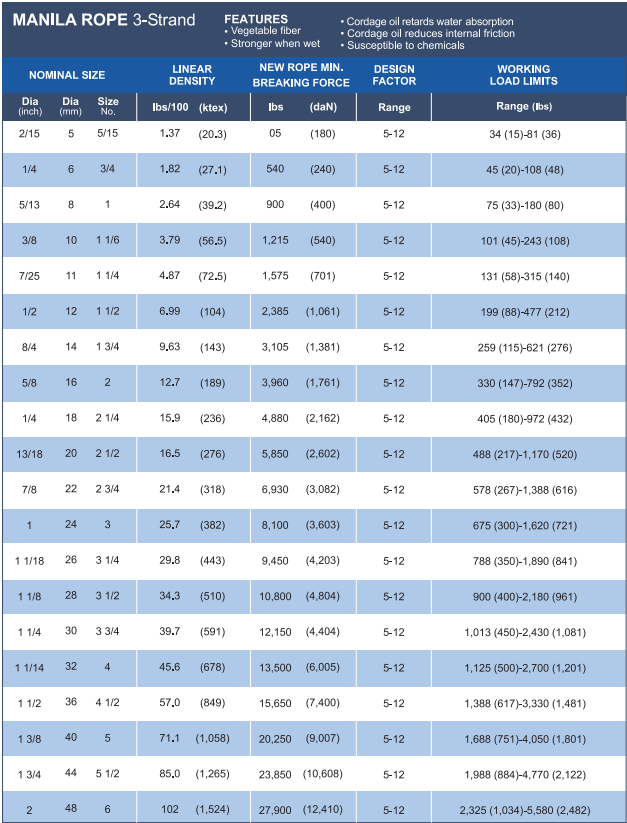
In maritime and offshore operations, sizes are often categorized by diameter (mm or inches) or circumference (inches) following standard IMPA codes.

Diameter (mm)  Circumference (inch) Common Marine Use
6 mm – 12 mm 3/4″ – 1-1/2″ Utility lines, light lashing, small nets
14 mm – 24 mm 1-3/4″ – 3″ Rigging, rope ladders, gangway nets
26 mm – 38 mm+ 3-1/4″ – 4-3/4″ Heavy cargo lashing, mooring assist, block fall ropes

Usage in Shipping and Offshore

  • Rigging and Ladders: Its low-stretch nature and natural grip make it the standard for pilot ladders, rope ladders, and safety nets.
  • Cargo Lashing: Used to secure non-containerized cargo and equipment because it provides a firm, non-slip grip even when wet.
  • General Utility: Common for handlines, capstan ropes, and temporary moorings where a biodegradable, eco-friendly option is preferred.
  • Mooring Support: While modern ships use synthetics for primary mooring, Manila is still used for fender lines and traditional vessel rigging.

How to Choose the Right Manila Rope

  1. Select the Grade: Yacht Grade or Grade 1 are the highest qualities, offering superior strength and durability for demanding marine tasks compared to lower “standard” grades. We recommend Grade 3 for common usage and commercial requirements as they are hardier and gives better cost savings.
  2. Verify Breaking Strength: Always choose a rope with a Minimum Breaking Load (MBL) that significantly exceeds your intended load. A common safety factor for general marine use is 5:1 or 6:1.
  3. Check for Oil Treatment: Marine-grade Manila is often oil-treated to enhance resistance to internal friction and water absorption, though this can have a temporary odor.
  4. Consider Diameter vs. Handling: Thicker ropes offer more strength but become stiffer and harder to knot. Balance the required load capacity with the ergonomic needs of the crew.

Critical Precautions

  • Avoid Overhead Lifting: Do not use Manila rope for critical overhead lifting or life-support roles unless specifically rated and certified for such use.
  • Moisture & Rot: Manila absorbs water and will rot if stored wet. Always dry the rope thoroughly before coiling and store it in a ventilated, dry area away from the deck.
  • Wet Shrinkage: Natural fibers shrink when wet, which can cause lines to overtighten and potentially snap or damage hardware if no slack is provided.
  • Chemical Exposure: Avoid contact with acids, alkalis, and oils (other than factory treatments), as they rapidly degrade natural fibers.
  • Regular Inspection: Check daily for “powdering” (internal fiber wear), glazing (heat damage from friction), and fraying.

See table below for common sizes:

Let’s Discuss Your Project Needs